
“The Chicago Bulls will be sellers at the trade deadline.” That has been said for the past three years. Three years ago… nothing. Two years ago… nothing.
Last year, they traded Zach LaVine, a move that seemed to signal a fire sale, but made no other moves after.
Again, Bulls fans heard “The Chicago Bulls will be sellers at the trade deadline” since the beginning of the season. Then, on Feb. 1, the Chicago Bulls made a trade. The trade hinted that the Chicago Bulls would actually be sellers. And they were. The Bulls made seven trades at the deadline, the most in the NBA.
These trades are graded in a vacuum without context on how they affected other trades.
Trade 1: Bulls Receive Dario Saric, B+
Bulls send: Emanuel Miller
Bulls receive: Dario Saric, 2027 second-round pick (Denver), 2029 second-round pick (Sacramento)
The Bulls joined in on a trade between the Sacramento Kings and the Cleveland Cavaliers to help the money match up. Chicago had to take on Dario Saric’s contract, and in return, they received two second-round picks.
The Bulls basically got two second-round picks for free. Saric’s contract expires at the end of this season, so it didn’t come with any cap space concerns for the offseason.
The reason this isn’t an A trade is that seconds aren’t that valuable, and Chicago got an old player on an expiring deal. If the Bulls got a younger player on an expiring contract–wink-wink– then they could hold a 30-game tryout to see if they wanted to re-sign him. Saric has no future in Chicago, but he did give the Bulls two seconds.
Bulls send: Kevin Huerter, Dario Saric
Bulls receive: Jaden Ivey, Mike Conley Jr.
This is the reason the “wink-wink” was added. Chicago was part of another three-team trade, this time with a more prominent role. They packaged Saric’s expiring contract with Kevin Huerter’s expiring contract, two players who didn’t have a future with the Bulls, for Jaden Ivey, a player who might have a future in Chicago.
Ivey is 23 and was the fifth pick in the 2022 NBA Draft. He made the all-rookie team and was primed to break out last season before breaking his left leg. Ivey was stuck on the bench when he returned this season, lacking the athleticism that made him special. Ivey’s contract is up at the end of the season, and he is a restricted free agent. Chicago will get around a 30-game sample size to see if they want to re-sign him.
This is a low-risk, high-reward move for the Bulls. There are concerns that he will never get back to his pre-injury self. Even though Ivey is playing basketball, major injuries can take a year or two to fully get back to the pre-injury level. Ivey isn’t a player to give up on, and the Bulls didn’t risk much to get him.
An added plus is that Ivey is a restricted free agent. Chicago will be able to pay him whatever his market value is to keep him. Ivey’s upside is another athletic, downhill point guard off the bench, and he could even break into the starting lineup with Josh Giddey as a primary ball handler.
The Mike Conley Jr. part of this deal isn’t as exciting. They got him knowing they were going to flip him in another deal.
Bulls send: Nikola Vucevic, 2027 second-round pick (Denver)
Bulls receive: Anfernee Simons, 2026 second-round pick (most favorable of Minnesota, New Orleans, New York Knicks, Portland)
It finally happened. Nikola Vucevic has been traded. It seemed that there was no longer a market for Vucevic after Chicago failed to trade him at last year’s deadline and during the offseason, but thankfully, the first and second aprons exist.
The Bulls and Celtics swapped expiring contracts. Vucevic has been outspoken about wanting to play for a contender and would not have signed with Chicago. Anfernee Simons wouldn’t have re-signed with the Celtics, opting to leave for a larger role. Simons could have a future in Chicago if he becomes a starter in the Coby White role. The players aren’t the reason why this trade is an A.
On paper, it may seem like the second-rounders are just a swap, but they are the best part of this trade. The Bulls give up Denver’s 2027 second, which they got in the Saric trade, for New Orleans’ 2026 second-rounder. That is as close to a first-round pick that you could get for Vucevic. A top-four pick in the second round in a deep draft compared to a late second in a projected weak class.
As I suspected. This is really good value for Chicago. Pelicans pick would be 32nd today. Denver’s will likely be mid-50s next year. https://t.co/klKmlQxXzQ
— Will Gottlieb (@Will_Gottlieb) February 3, 2026
Nobody thought Vucevic could be moved, and this haul is better than anyone thought he was worth.
Trade 4: Bulls Trade Coby White, C-
Bulls send: Coby White, Mike Conley Jr.
Bulls receive: Collin Sexton, Ousmane Dieng, 2029 second-round pick (least favorable Denver/Charlotte), 2031 second-round pick (New York Knicks), 2031 second-round pick (Denver)
Coby White was the last player from the pre-Arturas Karnisovas Bulls, and this trade perfectly symbolizes what Karnisovas has done since taking over. Most of the disappointment from this trade is from Karnisovas waiting too long to trade White. Last year, the Magic offered a haul for White, including two firsts, but Chicago declined. White reportedly was not even worth a first this year.
They weren’t all bad moves in isolation, but the fact that the Bulls turned Coby White, Nikola Vucevic, Zach LaVine, Lonzo Ball, DeMar DeRozan and Alex Caruso into just one first-rounder is emblematic of the problem here.
— Mark Deeks (@MarkDeeksNBA) February 4, 2026
Sexton is on an expiring deal and is another player the Bulls tried to flip before the deadline. He immediately fills the Ayo Dosunmu role as a high-effort, defensive guard off the bench who shoots 40% from three. White and Sexton have similar stats per 36 minutes; both average 23 points and six assists, while Sexton has a higher field goal percentage.
Dieng is intriguing. The Bulls attempted to trade White to Houston in exchange for Jabari Smith Jr., but the Rockets declined. Dieng is a former lottery pick who won the 2024 G-League Finals MVP with a similar playstyle to Smith Jr. He’s a tall forward who has shown the ability to put the ball on the floor, create his own shot, and be a high-percentage three-point shooter. The problem is that he hasn’t played many minutes in the NBA and is the prototype of a player Chicago hopes Noa Essengue turns into. Dieng is on an expiring contract and probably won’t get an offer from Chicago in free agency.
The picks aren’t that great. Just more late seconds, most likely to be used in trades rather than the draft.
Chicago’s front office likely wanted to do right by White, sending him to his hometown team.
Bulls send: Dalen Terry
Bulls receive: Guerschon Yabusele
Another one-for-one deal for Karnisovas. The Bulls trade for size after getting mostly guards in previous trades. The Bulls did this trade simply because Yabusele is a better player than Dalen Terry. Yabusele had a good season with the 76ers last season, before getting buried on the Knicks bench.
The one negative to this deal was Yabusele’s contract. He had a player option for next season, but the Knicks amended the contract, and he is now an unrestricted free agent next season. Chicago got the best player in the trade without having to take on a worse contract.
Guerschon Yabusele no longer has a player option for next season and will be a UFA this offseason, sources can confirm. He had worked with Knicks to amend contract before the Dalen Terry trade.
— K.C. Johnson (@KCJHoop) February 5, 2026
Trade 6: Bulls Trade Ayo Dosunmu, D
Bulls send: Ayo Dosunmu, Julian Phillips
Bulls receive: Rob Dillingham, Leonard Miller, 2026 second-round pick (least favorable Denver/Golden State), 2027 second-round pick (Cleveland), 2031 second-round pick (most favorable Minnesota/Golden State), 2032 second-round pick (most favorable Houston/Phoenix)
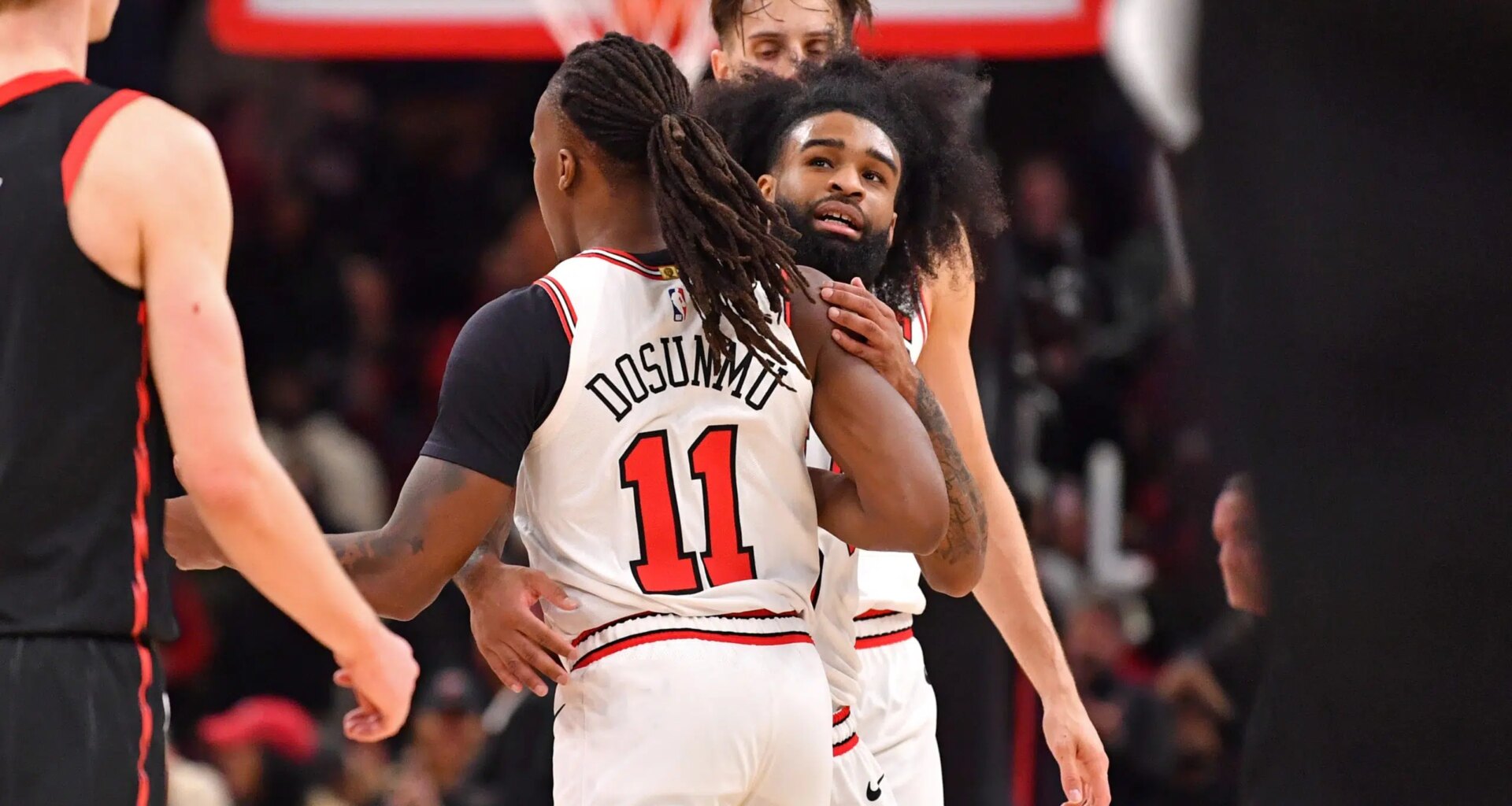
Dosunmu was one of the hottest names at the trade deadline and the Bulls player with the most trade value. He was expected to be traded for a first-round pick from a competing team or another great young player. When fans saw the Timberwolves, they expected Joan Beringer, a rookie center, to be the return since Minnesota does not have a first-round pick to trade.
Instead, the Bulls get Dillingham, Miller, and four second-round picks. Another guard and more second-round picks. Dillingham is not on an expiring contract and was selected 8th overall in the 2024 NBA Draft. He hasn’t got much playing time due to his size and poor efficiency. He is a weird fit with head coach Billy Donovan, who usually has a short leash with young players he doesn’t trust. Even though he has the most potential out of everyone in this trade, he might not get playing time to develop.
Miller is another young player, this time from the 2023 draft. He adds length and height to a guard-heavy Bulls roster. He sat behind one of the best front courts in the NBA, so there haven’t been many opportunities to showcase his potential. Miller has a club option next year on his contract. If he shows flashes, the Bulls will pick up the option, most likely to replace Phillips, who was traded.
The only reason to add guys like Jaden Ivey, Rob Dillingham, and Leonard Miller is to play them a ton and see if they can develop.
But if Sexton, Simons, and Yabusele stick around, are we sure Billy Donovan does that? He’s consistently coached to win.
— Elias Schuster (@Schuster_Elias) February 5, 2026
Bulls acquire more draft capital and continue to stack future assets in exchange for current production.
Trade 7: Bulls Trade Ousmane Dieng, C+
Bulls send: Ousmane Dieng
Bulls receive: Nick Richards
Dieng was a questionable fit for Chicago. He was a young, potential-filled player who was never going to get extended because of Essengue. The Bulls solved that problem by trading him to get Nick Richards in another three-team trade.
Richards is a true center. At 6’11”, he is now the tallest player on the Bulls roster. The best part of the trade? He is in the last year of his contract and won’t put money on the books for the 2026-27 season.
Richards was a starting center for the Hornets in 2023-24 and the Suns in 2025. Richards averaged 9.7 points and 8.9 rebounds as a starter last season. He should fit perfectly in the backup center role that has been left vacant by Zach Collins‘ injury.
Overall Grade: B
Second-round picks received: 9
Guards on roster: 7 (Including Yuki Kawamura)
Could be wrong after 7 (!) trades but believe this is Bulls’ depth chart:
PG: Giddey, Jones, Dillingham
SG: Simons, Sexton, Ivey
SF: Buzelis, Okoro
PF: Smith, Williams, Miller
C: Richards, Yabusele
Injured long-term: Collins, Essengue
— K.C. Johnson (@KCJHoop) February 5, 2026
Two eras of the Chicago Bulls ended this week. White was the last player of the John Paxton and Gar Forman era. Dosunmu, Vucevic and White were on Karnisovas’ first attempt at building a team. Only Patrick Williams remains from the Bulls’ last playoff birth.
The trades all had the same purpose: acquiring assets. The Bulls targeted tradable, expiring contracts and draft picks. They also received young, former lottery picks in Ivey and Dillingham.
This trade deadline is the starting point of a new era in Chicago. Whether it be a “soft” tank or an obvious tank for the rest of the season, the Bulls have shifted focus to the draft and their future.
The Bulls get a B grade this deadline, finally pulling the plug and making the needed change. But it is a year too late. Last year, the Bulls could have gotten multiple firsts for White. The front office knew that Darryn Peterson, Cam Boozer and AJ Dybantsa were in this draft. They could’ve loaded up on first last year and tanked this year, but didn’t.
The front office did its best to make up for its previous blunders, including trading players even if they “lose” the trade on paper. What was most important for the Bulls was starting this rebuild and building assets. There is just more to be desired in some of the packages for White and Dosunmu.