
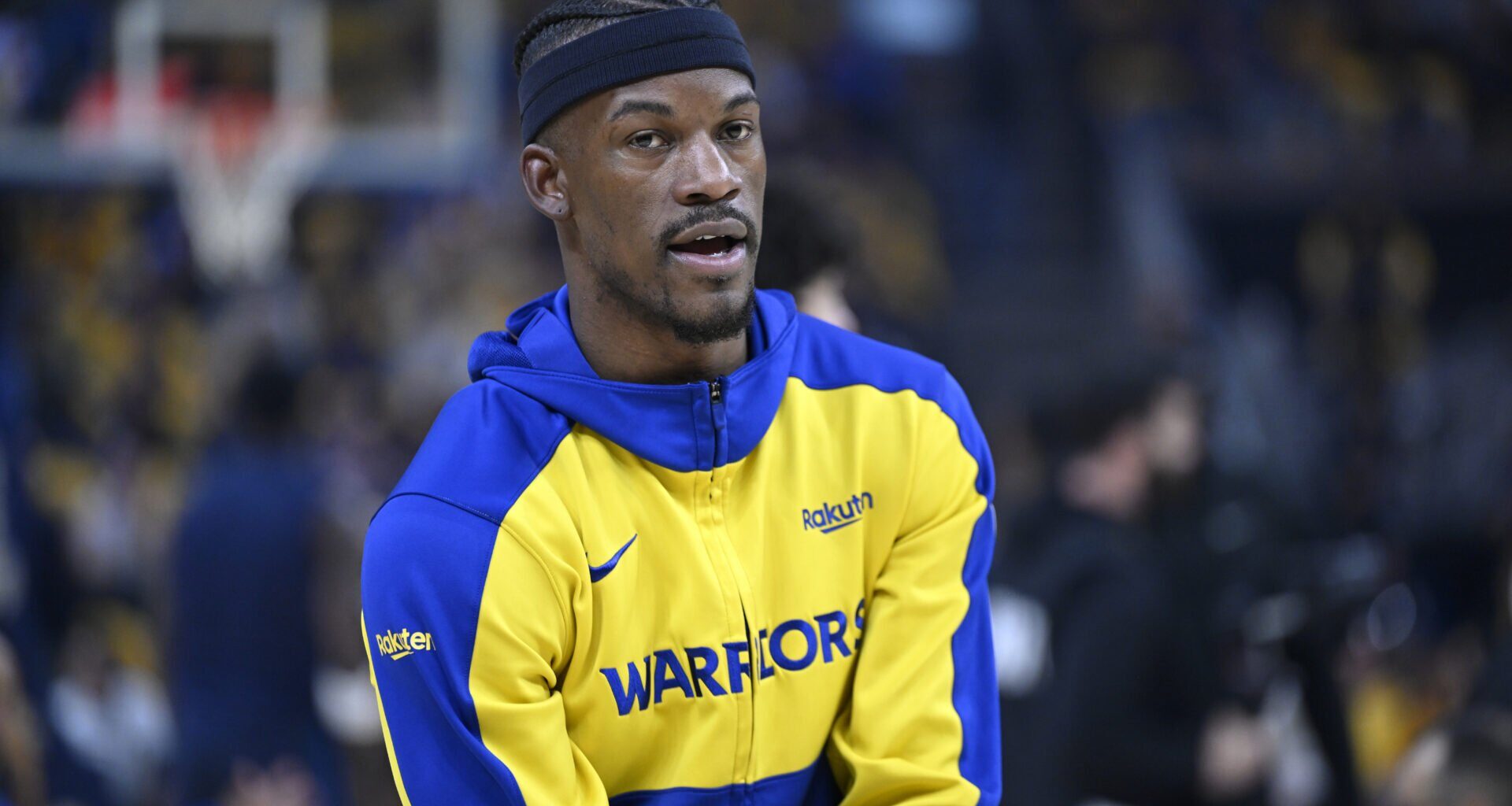
Jimmy Butler is already with the Golden State Warriors, but the story about his messy departure from Miami continues to dominate NBA conversations. The drama between Butler and Heat owner Pat Riley remains a hot topic.
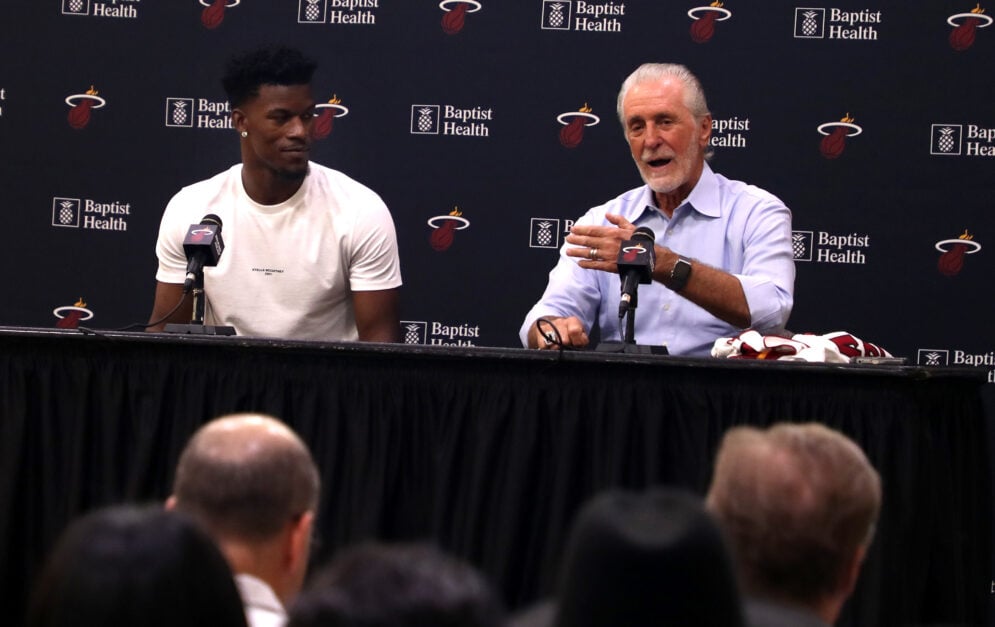
Recent discussions have focused on the deteriorating relationship between the two sides. Most reports center around Pat Riley’s reluctance to extend Butler’s contract due to concerns about the star’s commitment and availability.
The saga began in summer 2024 when Butler sought a two-year, $113 million extension from Miami. However, Riley declined, citing concerns about Butler’s long-term performance and injury history. This refusal sparked escalating tensions that eventually boiled over during the season.
George Niang sees both sides of contract standoff
Butler was suspended multiple times for conduct detrimental to the team and publicly criticized Heat management. The situation reached a breaking point on February 5, 2025, when Miami traded Butler to Golden State, where he signed a two-year, $121 million extension through the 2026-27 season.
Speaking about this situation, Atlanta Hawks player Georges Niang offered his perspective as someone experienced in contract negotiations. The veteran understands the complexity of these business decisions and believes both sides acted in their own best interests.
“They [Management] have to look at what’s best for the team, and players are like ‘I have to look at what’s best for me’,” Niang said on the Run It Back Podcast.
“And I think Jimmy Butler looked at ‘what was best for me’ and they weren’t offering him the money that he wanted, so I mean at the end of the day negotiations are ugly.”
 Carline Jean/South Florida Sun Sentinel/Tribune News Service via Getty ImagesLou Williams sets high expectations for star contracts
Niang’s podcast co-host and former Sixth Man of the Year Lou Williams provided another angle on the situation. Williams believes both Miami and Golden State have every right to demand elite production from Butler given his massive contract.
According to Williams, if the Heat felt they wouldn’t receive that level of performance, letting Butler go made perfect sense from a business standpoint.
“$60 million, that should be worth 25 points a game. You got to put 25 points on the board or you are either going to give me 10 or 12 assists. That should be a non-negotiable,” Williams explained.
“When you are a superstar caliber guy at whatever stage in your career, $60 million, we’re expecting a certain level of production on both ends.”
Mixed results for both franchises post-trade
The trade created contrasting storylines for both organizations. Miami successfully reached the playoffs through the play-in tournament but suffered an embarrassing first-round sweep against the Cleveland Cavaliers.
Meanwhile, Butler found immediate success with the Warriors, averaging 17.9 points, 5.5 rebounds, and 5.9 assists while helping them secure a playoff spot.
However, Golden State was eliminated in the Western Conference Semifinals by the Minnesota Timberwolves, with Butler unable to carry the team during Stephen Curry’s absence.
The mixed results suggest both franchises are still searching for the championship formula that initially brought Butler and Riley together in Miami.
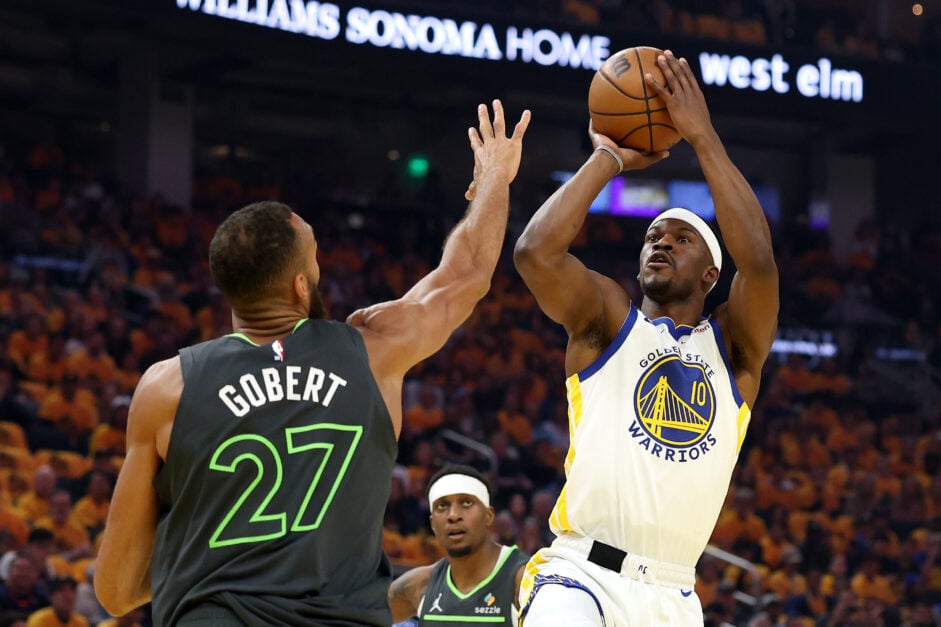 Photo by Ezra Shaw/Getty Images