
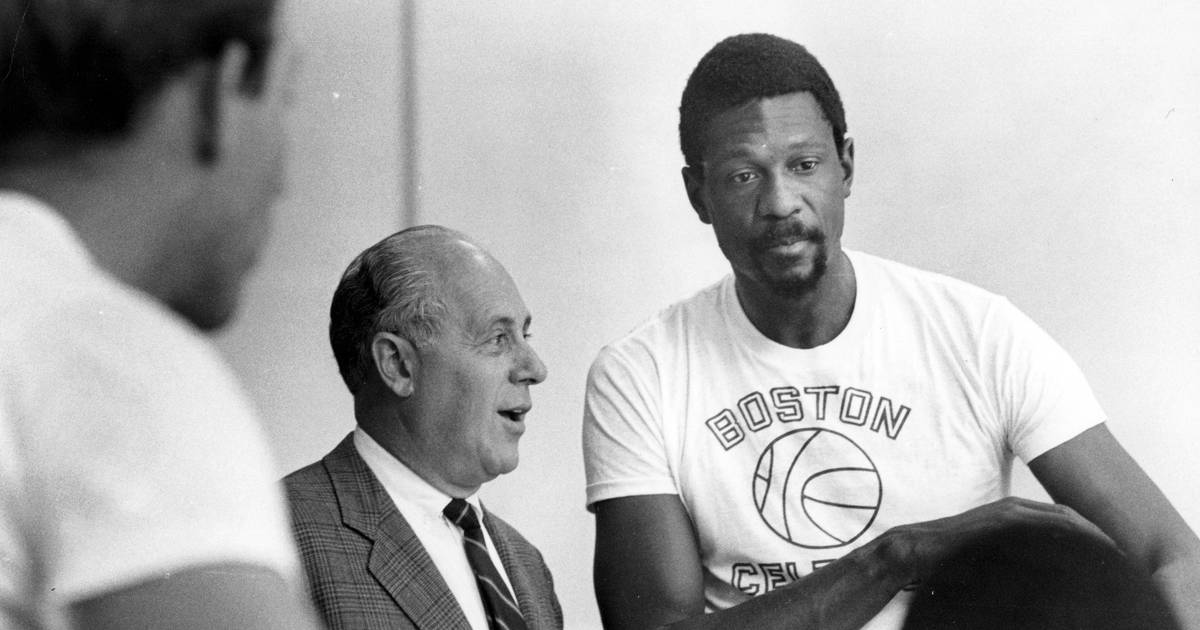
On April 17, 1966, the landscape of North American professional sports shifted when the Boston Celtics named Bill Russell as their next head coach. The decision made by outgoing coach and general manager Red Auerbach established Russell as the first Black head coach in the history of the NBA, a landmark moment that occurred as the team was in the midst of its most dominant era.
The transition began when Auerbach decided to retire from coaching at age 48 after leading the franchise to nine championships. Before settling on Russell, Auerbach approached several former Celtics stars, including Bob Cousy, Frank Ramsey, and Tom Heinsohn. Cousy remained committed to his coaching role at Boston College, while Ramsey chose to focus on his business interests in Kentucky. Heinsohn suggested that coaching a player of Russell’s caliber would be a unique challenge and proposed that the star center take on the role himself.
Russell accepted the position 11 days before the Celtics defeated the Los Angeles Lakers in Game 7 of the 1966 NBA Finals. While other players like Richie Guerin and Dave DeBusschere had served as player-coaches for other franchises, Russell’s appointment broke a significant racial barrier. He became the second Black coach in professional basketball history, following John McClendon, who coached the Cleveland Pipers in the American Basketball League in 1961.
During his three-season tenure as player-coach, Russell maintained his status as the team’s defensive anchor while managing the bench. Under his leadership, the Celtics secured two more NBA championships, including a title in 1969, which served as his final season as a player. Russell’s coaching career continued after he left Boston, with stints as head coach and general manager of the Seattle SuperSonics from 1973 to 1977 and the Sacramento Kings during the 1987-88 season.
His contributions to the game led to his induction into the Naismith Memorial Basketball Hall of Fame as a player in 1975 and again as a coach in 2021. This dual recognition places him in an elite group of basketball figures, including former teammates Bill Sharman and Heinsohn, who have been honored for both their on-court performance and their leadership from the sidelines.