
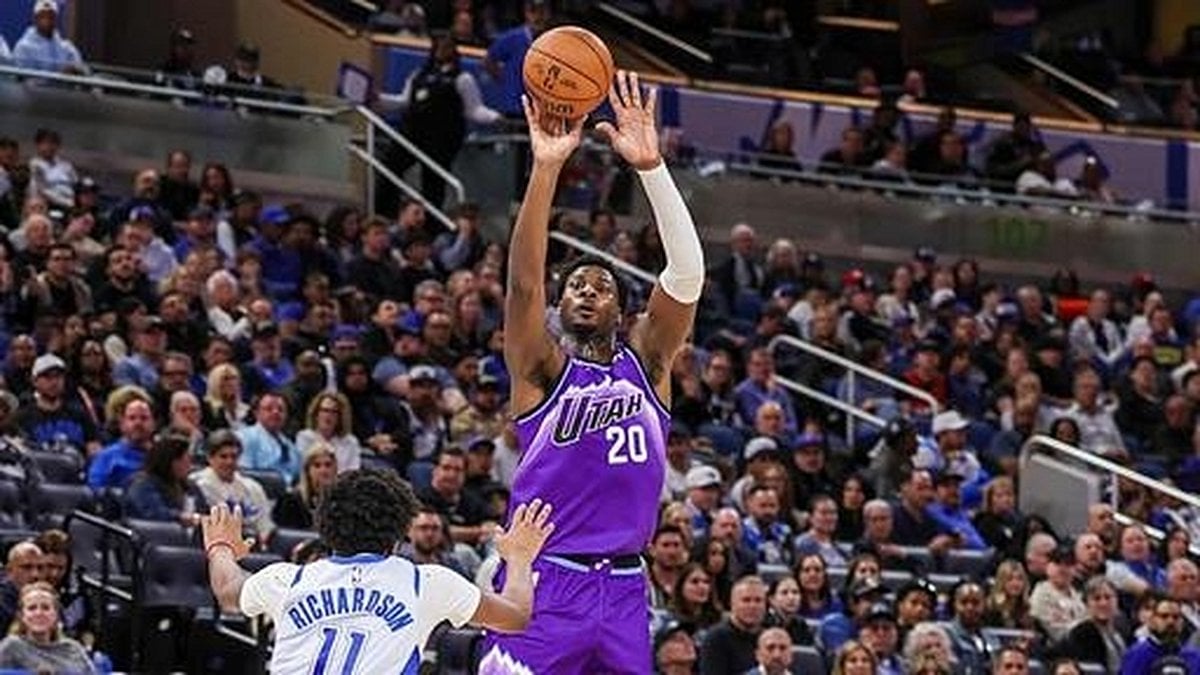
The Utah Jazz wrapped up their grueling five-game road trip on Monday night, squaring off against the Miami Heat at the Kaseya Center in Miami, Florida. With both teams navigating their own sets of challenges and storylines, the matchup promised intrigue well before tipoff at 7:30 p.m. ET, broadcast across FDSSUN, KJZZ, and Jazz+.
Coming into this matchup, the Jazz were looking to snap a two-game skid, having just ended a brutal six-game losing streak with a much-needed win in Indiana. Their record stood at 16-37, a stark reflection of a season marred by inconsistency and injury woes. The Heat, on the other hand, boasted a 28-26 record and were riding high after a dominant 132-101 victory over Washington. Miami had also claimed victory in their last meeting with Utah, a commanding 147-116 win in Salt Lake City back in January 2026.
The pregame betting lines told their own story. The Heat were widely favored, with spreads ranging from -5.5 to -8.5 across different sportsbooks, and moneyline odds putting Miami at -270 to -340, while Utah’s underdog status was reflected at +200 to +270. The over/under hovered between 236.5 and 244.5 points, a nod to both teams’ offensive capabilities and defensive lapses.
Utah entered the contest with a depleted roster. Point guard Keyonte George was ruled out with an ankle injury, and they were also missing Walker Kessler (shoulder) for the season and Kevin Love (rest). Miami was not without its own concerns: Tyler Herro was sidelined with a ribs injury, Norman Powell was questionable due to back soreness, Pelle Larsson was day-to-day with an elbow issue, and Bam Adebayo was listed as probable (hip). Terry Rozier was also out for the Heat, adding another wrinkle to their rotation decisions.
This game carried extra weight for the Jazz, who were firmly in evaluation mode as the regular season wound down. The franchise’s long-term priorities have become a topic of conversation, especially after their recent 120-117 loss to Orlando, when head coach Will Hardy sat Lauri Markkanen and Jaren Jackson Jr. in the fourth quarter despite a slim lead. That decision, viewed by many as a sign of strategic tanking, has only fueled speculation about the team’s future direction.
Despite the swirling rumors and the tough road stretch, Markkanen continued to be a beacon of consistency for Utah, entering the Miami matchup averaging 27.1 points per game. Jaren Jackson Jr., a recent addition to the Jazz, wasted no time making his presence felt. In his debut against Orlando, Jackson poured in 22 points on 9-of-17 shooting, including two triples, while adding four rebounds and three assists. His performance was right in line with his season averages of 19.3 points, 5.7 rebounds, and 1.9 assists, and marked the seventh consecutive game where he surpassed 23.5 PRA (points, rebounds, assists) — a testament to his seamless transition into Utah’s system.
Miami, meanwhile, looked to build on their recent momentum. Their victory over Washington was a statement, but it came with a caveat: All-Star forward Norman Powell exited early due to back soreness, casting some doubt over his availability for the Utah game. One silver lining for the Heat was the emergence of rookie Kasparas Jakucionis, who erupted for a career-high 22 points, draining six three-pointers in an efficient display off the bench. His performance added a new dimension to Miami’s offense, giving head coach Erik Spoelstra another weapon as the team navigates the ups and downs of a long NBA campaign.
Statistically, the matchup was intriguing. Miami averaged 119.7 points per game, giving up 117.3 to opponents. Utah, for their part, put up 118.3 points per contest but surrendered a whopping 126.7 on the defensive end. That slight offensive edge for the Jazz was offset by their defensive struggles, a trend that has haunted them throughout the season and contributed to their 6-20 record away from the Delta Center.
As for the Heat, their recent form against Utah was impressive, having won eight of the last ten meetings. But Miami has developed a reputation for methodical, rather than explosive, starts. This tendency, combined with Utah’s willingness to play aggressively and freely early in games, prompted some analysts to favor the Jazz on the first half moneyline, with odds as high as +170. According to one preview, “Our NBA system titled ‘First Half ‘Dog vs. Coasting Teams’ highlights spots where underdogs face high-quality opponents that may not bring peak urgency from the opening tip.” The thinking was clear: Miami’s depth and second-half adjustments often allow them to pull away late, but Utah’s underdog energy could make the opening half interesting.
Injury management was another subplot. Miami’s bench was tested, with Powell’s status up in the air and Herro out. Bam Adebayo, listed as probable, was expected to play through hip soreness. For Utah, missing Keyonte George and Walker Kessler limited their backcourt creativity and interior defense, respectively. The absence of Kevin Love, though for rest, also shortened their rotation.
Looking at the broader context, Utah’s season has been defined by adversity and transition. The front office’s focus on long-term evaluation, combined with the development of young talent like Jaren Jackson Jr., has given fans glimpses of hope amid a tough campaign. Miami, by contrast, is aiming for consistency and health as they eye a playoff push in the Eastern Conference. Their ability to weather injuries and integrate new contributors like Jakucionis could be pivotal in the weeks ahead.
As the game tipped off, all eyes were on whether Utah could capitalize on Miami’s methodical start and steal some early momentum. Could Markkanen and Jackson Jr. continue their strong play? Would Miami’s bench step up in the absence of key contributors? With both teams navigating injuries and shifting priorities, the outcome remained far from certain as the action unfolded in Miami.
With the Heat favored but the Jazz eager to finish their road trip on a high note, fans were treated to a contest rich in subplots and statistical intrigue. As the final buzzer approached, the questions lingered: Would Miami’s depth and home-court advantage prove decisive, or could Utah’s underdog spirit spring a surprise? For now, the result remains in the balance, but one thing is clear — both teams left it all on the floor in South Florida.