
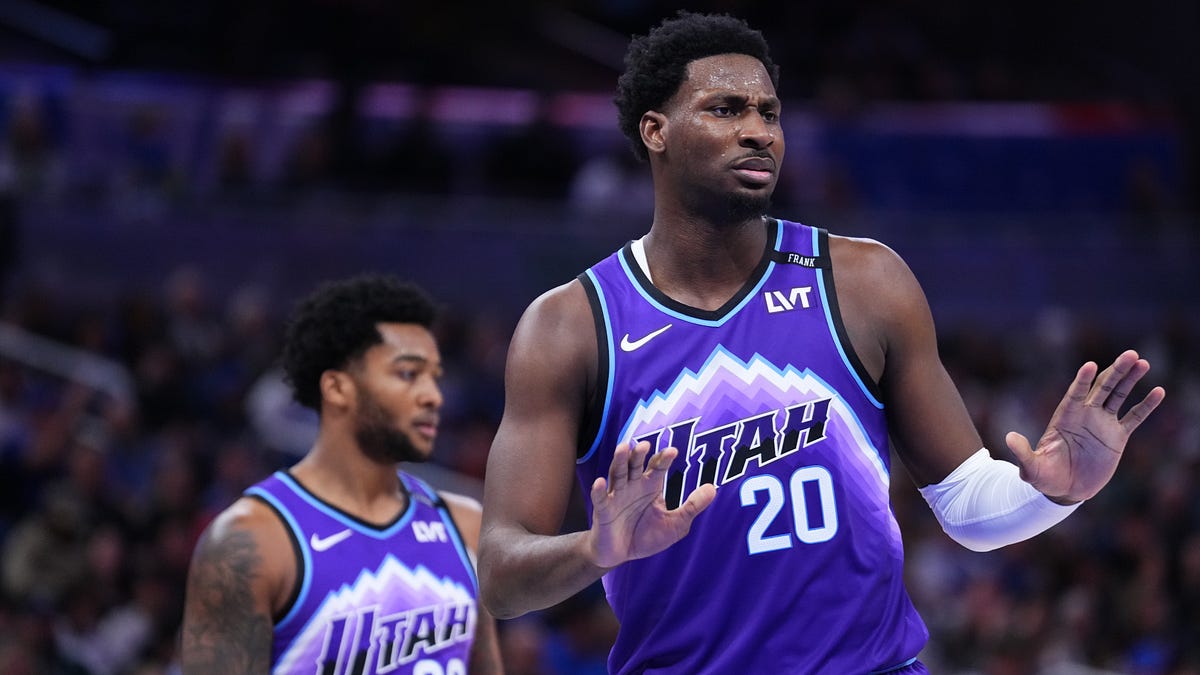
 Jaren Jackson Jr. of the Utah Jazz looks on against the Orlando Magic during the first half at Kia Center on February 07, 2026 in Orlando, Florida. (Rich Storry/Getty Images)
Ahead of last week’s NBA trade deadline, I wrote about which teams’ playoff and championship odds were the most sensitive to adding talent, operating on the premise that those facing the most pressure — or those who stood to benefit the most — might also be the ones most motivated to make a splash on the trade market.
But that theory only works when we can trace a direct line between teams’ moves and the expected benefits of those transactions, particularly as it pertains to their odds this season. And while that tends to be the case in other sports, such as baseball (where buyers and sellers can be clearly delineated and tend to behave as such), the NBA broke a lot of people’s brains at this year’s deadline because it didn’t follow the rules that tend to underpin our usual buyer-or-seller logic.
True, there was no shortage of deal-making in the lead-up to Thursday afternoon’s deadline. A total of 56 different players were on the move either on Tuesday, Wednesday or Thursday of last week — enough volume to spark some crowing from those pushing back on the idea that the league’s new financial rules have choked off player movement altogether.
However, one of the reasons all that movement felt so strange and inconsequential centered around who was dealing for whom — and the data helps make the disconnect in that department clear.
First, here’s a plot of net LAKER Wins Above Replacement (WAR) per 82 team games added versus subtracted at the deadline by each NBA team — both in 2025-26 alone and the player’s 3-year Established Level of performance — against a special metric I calculated last week, measuring how sensitive a team’s playoff odds were to adding talent: