
Getty
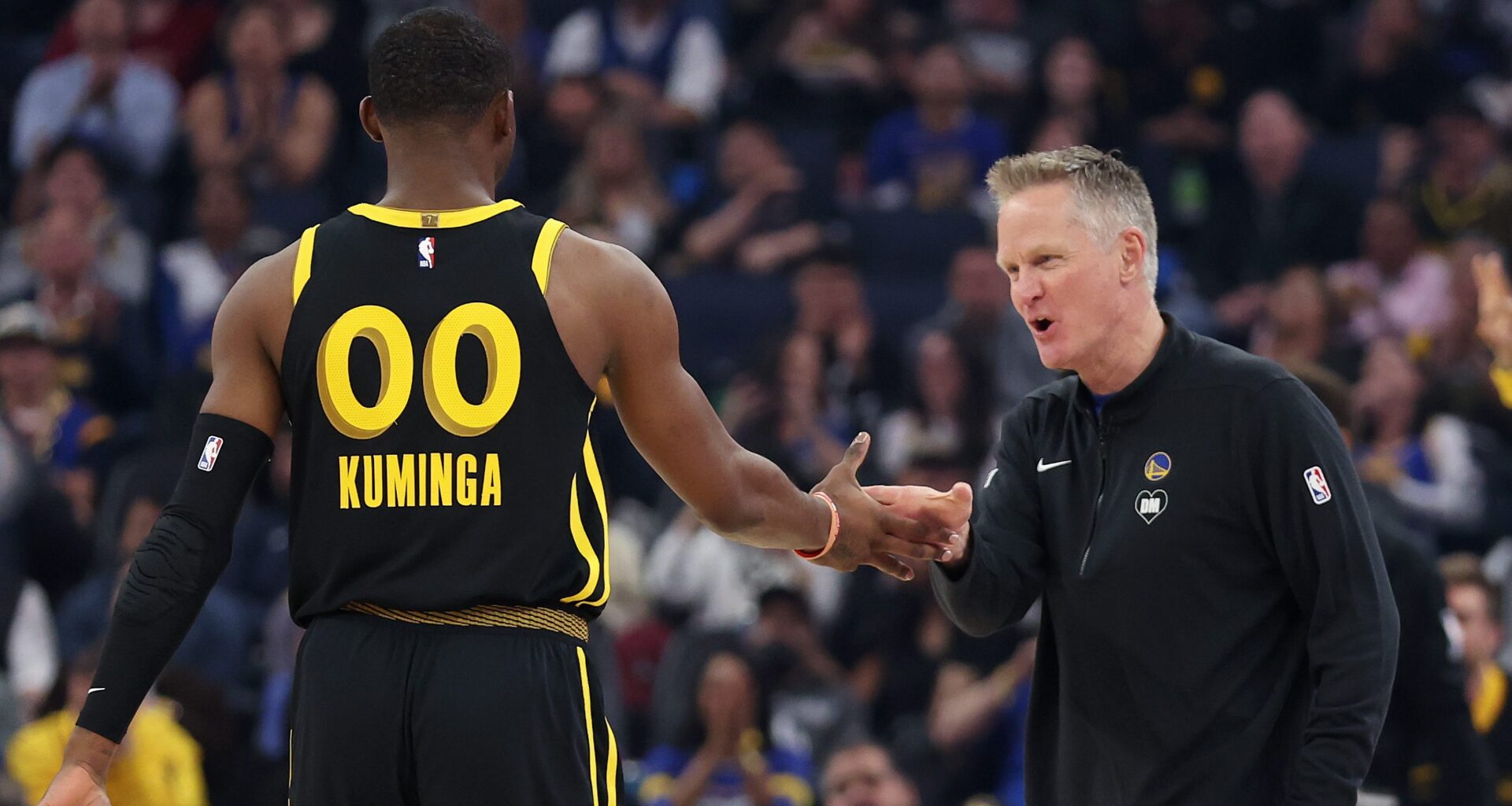
After a tumultuous relationship head coach Steve Kerr, the Golden State Warriors traded Jonathan Kuminga to the Atlanta Hawks at the deadline.
A tense Dec. 10 meeting between Jonathan Kuminga and Steve Kerr is now widely viewed inside the organization as the breaking point that accelerated Kuminga’s eventual exit from the Golden State Warriors at the trade deadline.
According to ESPN’s Anthony Slater, that closed-door conversation represented “the most tense flare-up” in what team sources otherwise described as a long-running but largely restrained standoff between player and coach.
“Inside Kerr’s office that afternoon, exasperation boiled over,” Slater reported. “The discussion went from small picture to bigger picture. Frustrations were let out on both sides — Kerr voicing his displeasure with Kuminga’s lack of buy-in and competitiveness toward team goals, and Kuminga letting out his hurt about Kerr’s longtime lack of belief in him as a player.”
The meeting ended dramatically, Slater wrote, with Kerr slamming his whiteboard in frustration — a moment that symbolized how far the relationship had deteriorated.
Sixteen Straight DNPs Deepen Kerr-Kuminga Divide
What followed was swift and consequential.
Kuminga was hit with 16 consecutive coach’s decision DNPs, a stretch that effectively erased any remaining trust between player, coach, and franchise. While the Warriors publicly framed the absences as matchup- and rotation-based, internally, the disconnect had hardened.
Yet Slater’s reporting makes clear the breakdown was not due to indifference.
“Kerr never had much success reaching Kuminga on a deeper level, typically one of his coaching superpowers,” Slater wrote. “He’d given him handwritten notes, sent long text messages, tried to connect. But Kuminga rarely reciprocated.”
Team sources described Kuminga’s responses as “dispassionate and sporadic,” reinforcing a growing belief that communication — once fractured — was no longer salvageable, according to Slater.
Warriors’ Draft-Day Roots of a Philosophical Misalignment
The tension, however, did not begin in December.
According to Slater, the philosophical divide dates back to the 2021 NBA Draft, when Kerr and members of the Warriors’ scouting department preferred Franz Wagner, viewing him as a cleaner fit in Golden State’s system. Ownership ultimately selected Kuminga at No. 7, one spot ahead of Wagner, prioritizing athletic upside.
Slater described the internal debate as “style over substance,” with scouts favoring Wagner’s feel and versatility in Kerr’s motion offense, while ownership sought a higher-ceiling athlete.
That decision set the stage for a four-and-a-half-year tenure defined by flashes of brilliance, long stretches of inconsistency, and an unresolved identity crisis.
Role Dispute: Finisher vs. Creator
At the heart of the conflict was how Kuminga saw himself — and how the Warriors saw him.
Kerr consistently envisioned Kuminga as a finisher, pointing to archetypes like Shawn Marion and Aaron Gordon — elite athletes who impacted winning without dominating the ball.
Kuminga, by contrast, believed he had earned the right to be a primary creator.
“Kuminga believed he’d shown enough in supplementary roles to have earned more consistent trust and on-ball opportunity,” Slater wrote. “Neither happened to his liking.”
Inside the organization, executives and coaches cited Kuminga’s efficiency struggles — particularly in isolation and the midrange — as justification for limiting his responsibilities. Those concerns only deepened during contract negotiations, where questions emerged about priorities.
“The disconnect affected contract negotiations,” Slater reported, “and multiple members of the organization questioned whether it was more important for him to win or to win his way.”
Trade Deadline Ends a Turbulent Chapter
By the eve of the trade deadline, the outcome felt inevitable.
Golden State ultimately moved Kuminga and Buddy Hield in a deal centered on the expiring contract of Kristaps Porziņģis, closing the book on a tenure that never fully aligned with the franchise’s championship infrastructure built around Stephen Curry.
What began as a bet on elite athleticism ended as a cautionary tale about fit, communication, and timing — a reminder that talent alone is rarely enough in Golden State’s ecosystem.
In the end, the Dec. 10 meeting didn’t start the fracture. It merely confirmed that the breakup was inevitable.
Alder Almo is a sports journalist covering the NBA for Heavy.com. He has more than 20 years of experience in local and international media, including broadcast, print and digital. He previously covered the Knicks for Empire Sports Media and the NBA for Off the Glass. Alder is from the Philippines and is now based in Jersey City, New Jersey. More about Alder Almo
More Heavy on Warriors
Loading more stories