
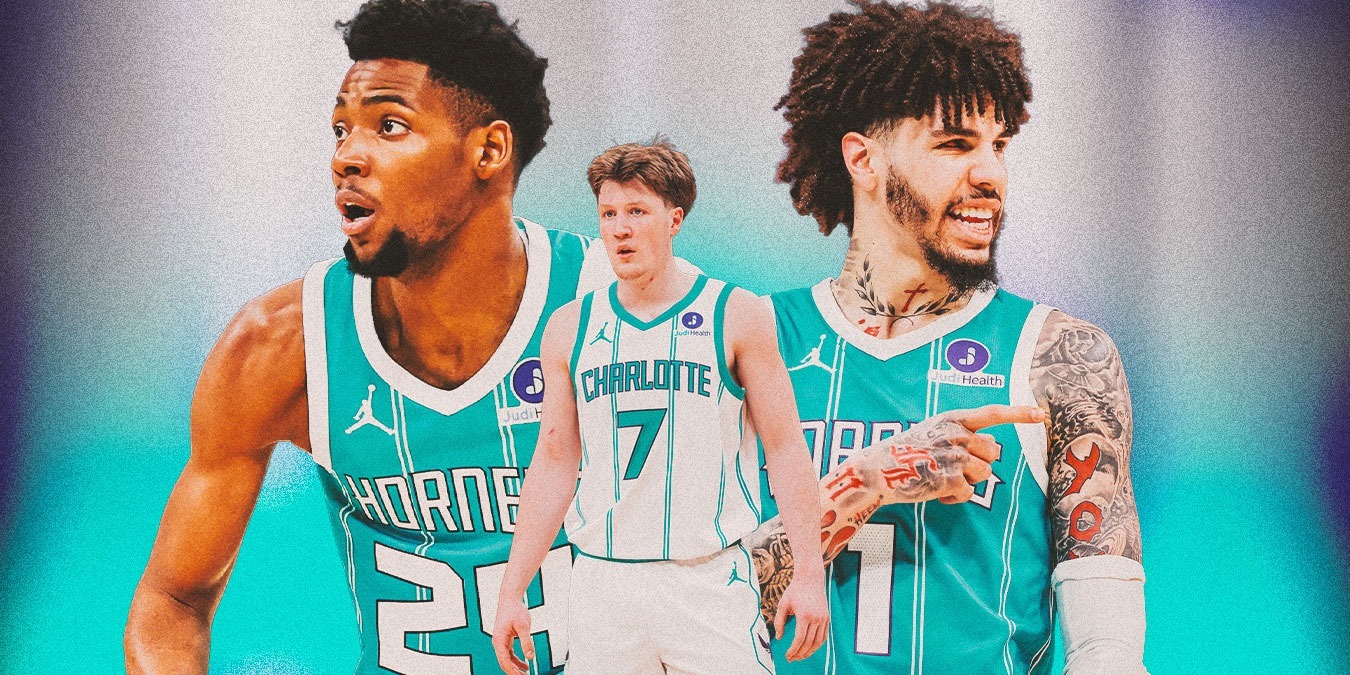
The NBA season started like it usually does in Charlotte – with the Hornets struggling. But as they reach the All-Star break amid a 15-6 stretch, they can be thinking playoffs.
The Charlotte Hornets and Detroit Pistons made news on Monday after some chippiness between players led to one of the larger on-court altercations in recent memory.
Normally, an incident like this is the only way the Hornets would ever see their team in the tabloids.
However, these Hornets don’t appear to be the same ones your father grew up with.
To them, their version of “Monday Night Raw” was merely a blimp in the road for what has been the organization’s greatest stretch in recent history.
How Are the Charlotte Hornets So Good?
The Hornets may just be 26-29 at the NBA All-Star break, but they’re 15-6 in their last 21 games, which is the league’s third-best record during that stretch, and it’s put them in position to chase their first playoff berth in 10 years.
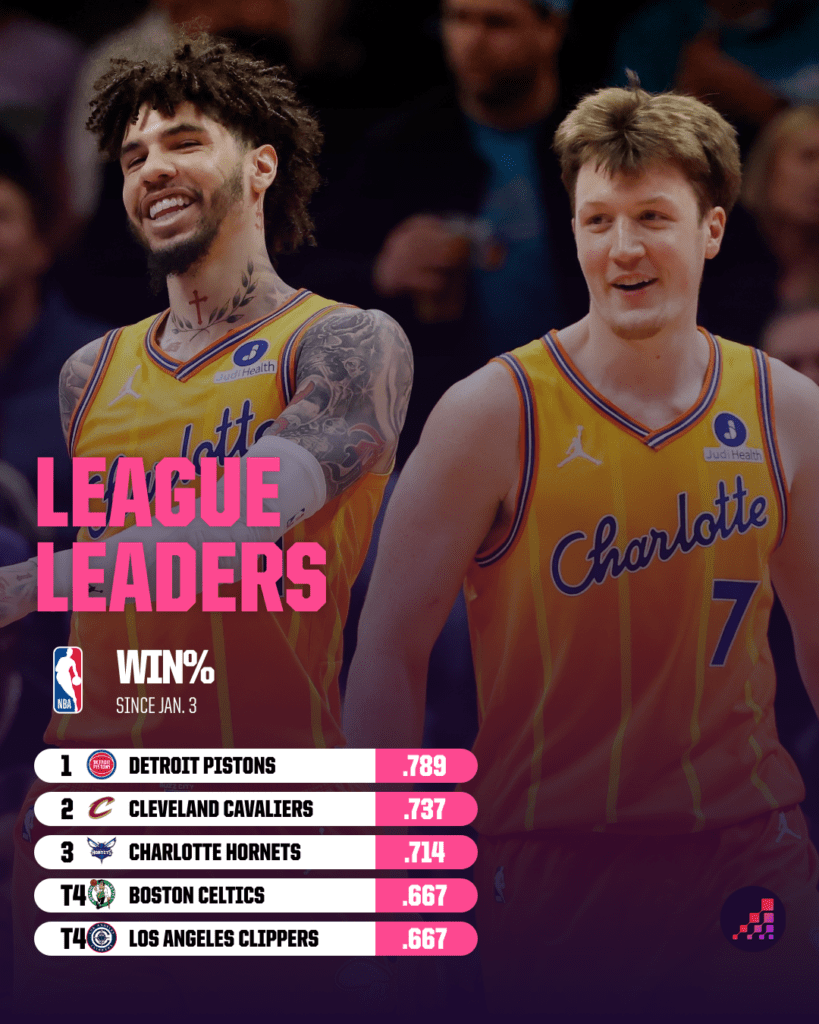 Through Feb. 11 games.
When you look at their team on paper, many people would guess this run has been fueled by the Hornets offense. After all, LaMelo Ball, Kon Knueppel and Brandon Miller all boast offensive DRIP scores that rank in the top 50 in the NBA. At the NBA trade deadline last week, they added Coby White, who also ranks 48th.
So the assumption would be correct because since Jan. 3, the Hornets rank second in offensive rating. Overall, they are eighth in offensive TRACR, our net efficiency metric that calculates how well a team performs based on who it plays and who is on the court. It gives extra weight to recent performances – like Charlotte’s.
The Hornets are armed to the teeth with deadly shooters (namely, the three-headed monster we cited above – Brian Geisinger does a great job of cataloguing all the different actions in which they deploy these three). On the season, the Hornets are fourth in 3-point attempts per game, and during this stretch, those shots are falling at a high mark (38.1%, third in the league since Jan. 3).
Normally, one should be skeptical of a team that’s winning a lot of games because they’re hitting a lot of 3s, but given the acumen of Charlotte’s shooters, relying so heavily on such a volatile shot feels sustainable.
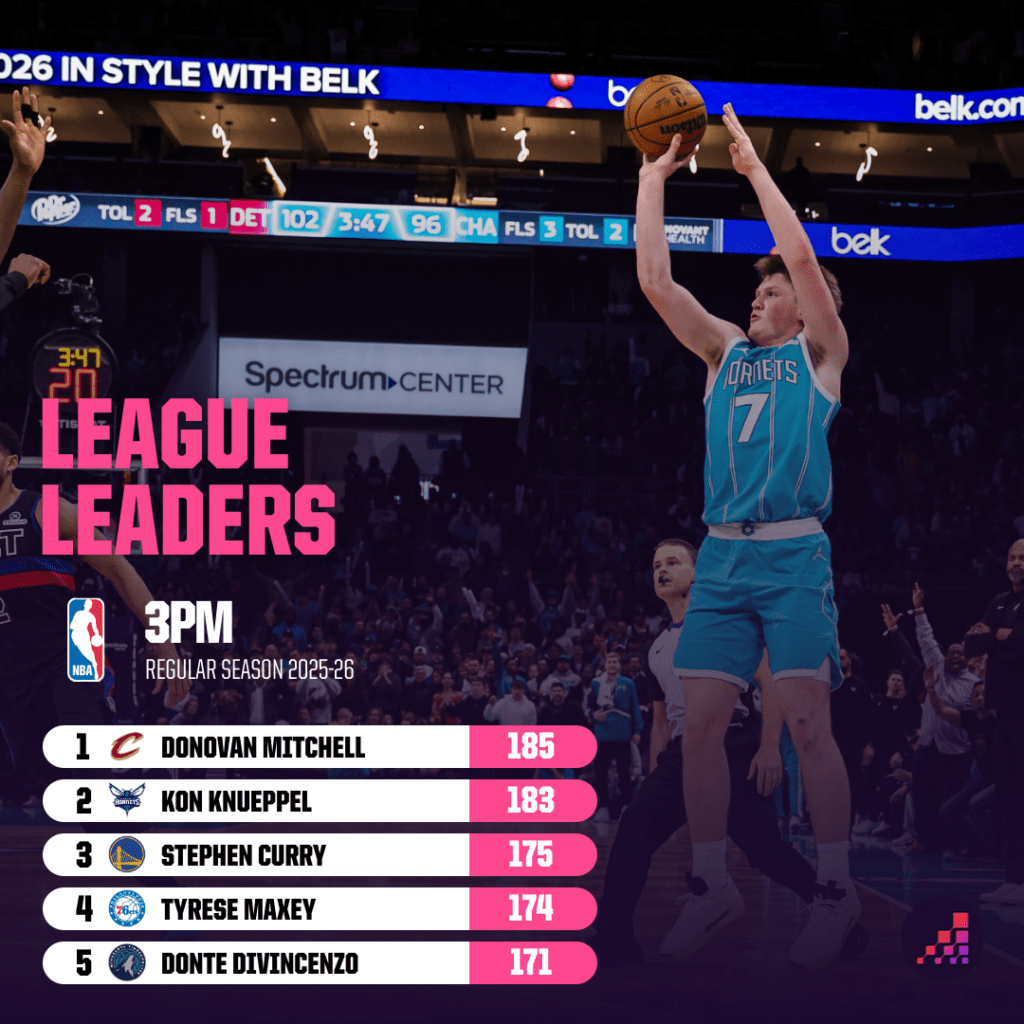
There are people who dislike jump shooting teams because they think it’s a lazy way to play the sport. However, what they miss is one of the hidden benefits of taking a lot of longer shots: more offensive rebounding opportunities.
Think about the physics of it all. The further away a player shoots from the rim, where it will go is less predictable, which, in turn, makes it harder for the defense to locate the ball. Few teams profit off this phenomenon more than the Hornets, who are fourth in the NBA in offensive rebounding percentage. Remember, the more second chance opportunities a team creates, the better chance it has with scoring (see the Houston Rockets).
Rebounding is a team effort, and multiple players deserve credit for this aspect of Charlotte’s success, but the primary catalyst is center Moussa Diabete (a player we have long been fond of at Opta Analyst). The 6-foot-9 Diabete may not be as burly as Steven Adams or as towering as Victor Wembanyama, but his motor contends with anyone in the NBA, and the dude just has a knack for locating the ball. He’s seventh in the NBA in offensive rebounds per 36 minutes (5.2).
What Has Changed With the Hornets?
Here’s the thing: While the Hornets are hitting more shots and Ball has been healthier, they also had an intact team when they started the season 11-23.
The key change in the turnaround has been their defense. After being a bottom-five defense for the first part of the season (26th in defensive rating), the Hornets have had the third-best defense in the league since Jan. 3.
Charlotte is an incredibly young team (second-youngest when you factor in minutes played), so it’s reasonable to expect them to improve in the final third of the regular season, including with executing different coverages. Head coach Charles Lee – an NBA Coach of the Year candidate? – also has done a great job of getting his players to compete on that end of the floor. Plus, it’s helped getting two experienced, defense-first veterans back in the rotation in small forwards Grant Williams and Josh Green.
But again, the primary engine in all this is Diabate. A few games before Charlotte went on its winning spree, he was permanently inserted into the starting lineup in place of Ryan Kalkbrenner (who has had a nice rookie season in his own right). Since Jan. 3, the Hornets have a 108.7 defensive rating with Diabate on the floor, nearly seven points per 100 possessions lower than the league average.
24yo Moussa Diabaté has developed into a huge-impact big…
Elite o-glass cleaner. Highly disruptive, versatile, & physical defender with his 7’2 wingspan. Motor runs HOT. Developing short roll passing. Hornets excellent when he plays. Underrated gem! pic.twitter.com/hf739zyluq
— Basketball University (@UofBasketball) February 2, 2026
When you look at the Hornets’ defensive four factors, it makes a lot of sense why Diabate is so integral to their success. On the season, they’re second in defensive rebounding percentage and third in opponent free throws per field goal attempts. We’ve already established Diabate’s excellence on the glass, and when a team has a strong rim protector like him anchoring its defense (86th percentile block rate), it greatly suppresses the opposing team’s free throw numbers (the defense doesn’t need to foul as much when offensive players enter the paint).
How Real Are the Charlotte Hornets?
This Charlotte team has the offensive personnel to be top 10 in the NBA. What doesn’t feel sustainable is the top-five defense of the last 21 games.
We say that because the Hornets have surrendered the league’s lowest opponent 3-point percentage (32.6%) in this stretch. As we’ve noted numerous times here, defenses have very little to do with how well the other team shoots from behind the arc.
It’s worth noting the Hornets had the highest opponent 3-point percentage (38.6%) in their first 34 games, but while they may not be a top-five defense, they also aren’t the bottom-five unit they looked like to start the season.
All this points to the Hornets being a strong offense and an average/slightly below-average defense. Historically, those teams are pretty good, but far from true title contenders.
But given how young they are and how bad things have been for them since … well, forever … the future looks bright in Charlotte for the first time in a while.
For more coverage, follow on social media at Instagram, Bluesky, Facebook and X.