
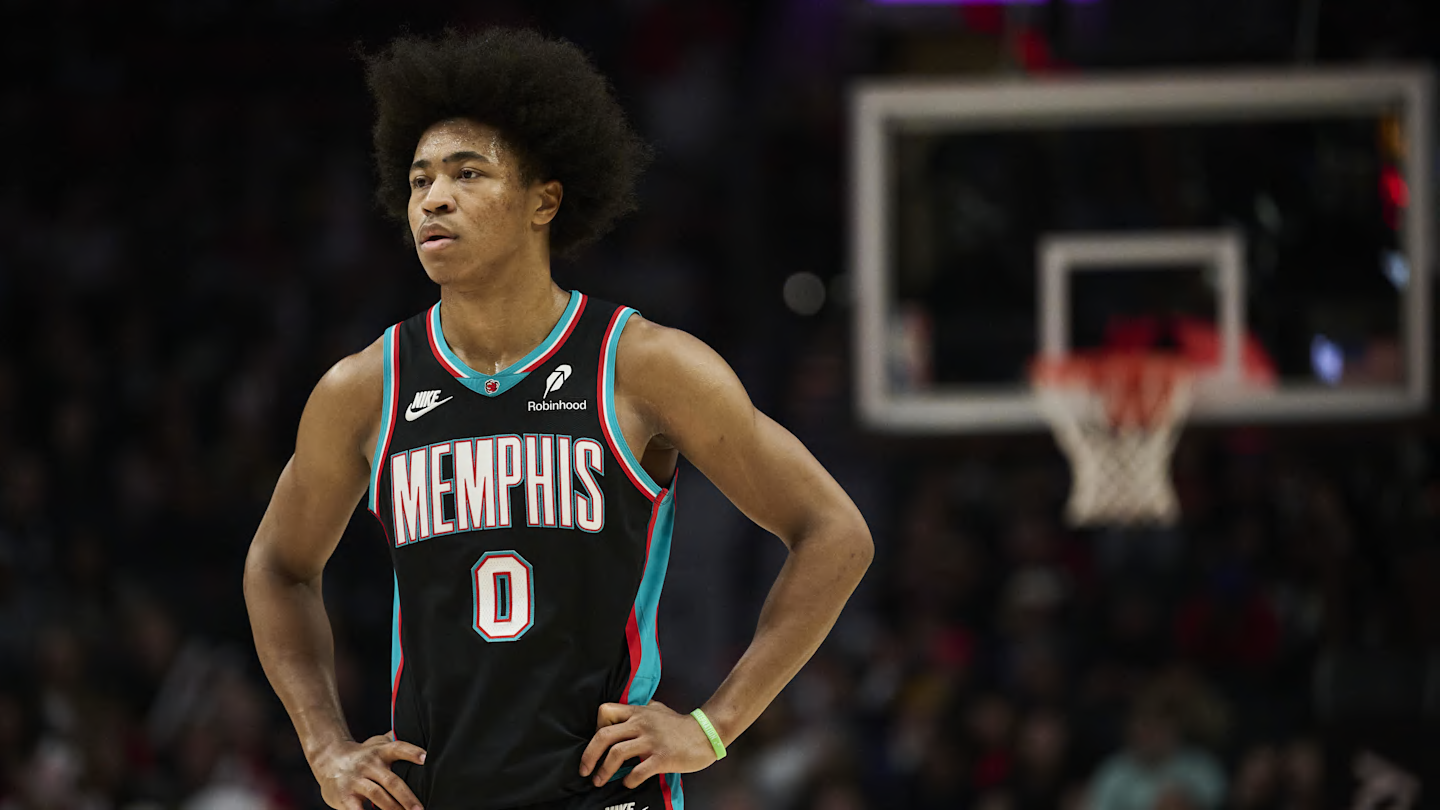
When you talk to Jaylen Wells, the first thing that stands out isn’t flash. It’s intention.
The young wing for the Memphis Grizzlies doesn’t frame his development around highlight reels or shot attempts. He talks about impact. About winning. About doing the small things that matter.
“Going into the NBA it was guys like Trey Murphy and Herb Jones, two-way players that I feel like made an impact on winning,” Wells said during the Rising Stars media availability at NBA All-Star Weekend. “That was my main goal.”
It’s an answer that says as much about Wells as it does about the players he admires.
Wells, who has carved out a steady role on the wing in Memphis, has quietly become the type of connective piece every young team needs. At 6-foot-7 with length and mobility, he spaces the floor, defends multiple positions and doesn’t demand the ball to influence a game. His scoring has ticked upward this season, but his value has always been rooted in versatility and effort.
That’s where Trey Murphy III and Herb Jones come in.
Murphy has developed into one of the league’s most dangerous off-ball scorers for the New Orleans Pelicans, a rangy 6-8 wing who thrives as a cutter, transition finisher and high-volume three-point shooter. He doesn’t dominate possessions, but he punishes defenses that lose track of him.
Jones, meanwhile, built his reputation on the defensive end from the moment he entered the league. A former second-round pick, he quickly became one of the NBA’s most disruptive perimeter defenders, capable of guarding elite scorers across positions. Offensively, he keeps it simple: attack closeouts, move the ball, make the right play.
Examples to follow
David Gonzales-Imagn Images
Both players embody the modern two-way archetype Wells is chasing.
“I’m a really big fan of Jimmy Butler,” Wells added. “I like the simplicity to his game. He’s a winner. He’s going to do whatever it takes to win.”
That admiration points to an even deeper layer. Jimmy Butler, the former cornerstone of the Miami Heat, has built a career on efficiency, physicality and competitive edge. Butler doesn’t overwhelm with flair. He gets to his spots, lives at the free-throw line, defends at a high level and elevates in big moments. His playoff resume has cemented his identity as one of the league’s ultimate tone-setters.
For Wells, the through line is clear: impact over aesthetics.
In Memphis, that mindset matters. The Grizzlies are in the midst of reshaping their rotation around youth, depth and defensive identity. Wings who can guard, shoot and make quick decisions are currency. Wells fits that mold. He’s not chasing stardom. He’s chasing reliability.
There’s something telling about a young player entering the league and choosing defensive-minded, team-first wings as his blueprint. It suggests self-awareness. It suggests patience. And it suggests that Wells understands how winning actually happens in the NBA.
If he continues along that path, Memphis may have more than just a role player on its hands. It may have the kind of two-way glue guy every contender eventually needs.