

Hi, everyone. It’s been a while since I had something to say here.
The past two years have been pretty difficult for me as a fan. In February 2024, I lost the most important Celtics fan in my life, my dad, and just a few months later, I lost my father-in-law, who was another lifelong Celtics fan. With them gone, a lot of the fun went out of rooting for the Cs.
Advertisement
But I’m back, and I’m looking at this column as a way of continuing the conversations I used to have with them.
Now that that’s out of the way, I want to talk about the Minnesota Vikings — no, seriously, this relates back to the Celtics, I promise.
When you look at the list of Vikings that have made All-Pro teams, you’ll notice that it’s dominated by offensive and defensive linemen. In fact, the top seven players are exclusively linemen. Ten of the sixteen Vikings in the Hall of Fame are linemen.
So what’s the point? Five of the top seven Vikings in terms of All-Pro selections and eight of the ten linemen in the Hall of Fame were scouted by the same guy, Jerry Reichow. The man knew what a good lineman looked like.
Advertisement
In other words, success starts off the field—or the court, as the case may be. It starts with people whose responsibilities include finding the right players, training them, and fitting them into the roster.
What makes the Celtics so interesting to me, this year, is that they’ve exceeded my expectations, and my expectations were higher than most of the fans I know. My thought was that the Cs would be a slightly better than .500 team, and thus would end up in the playoffs, because the NBA lets more than half the league into the playoffs every year.
I was not expecting them to be this good.
How did this happen?
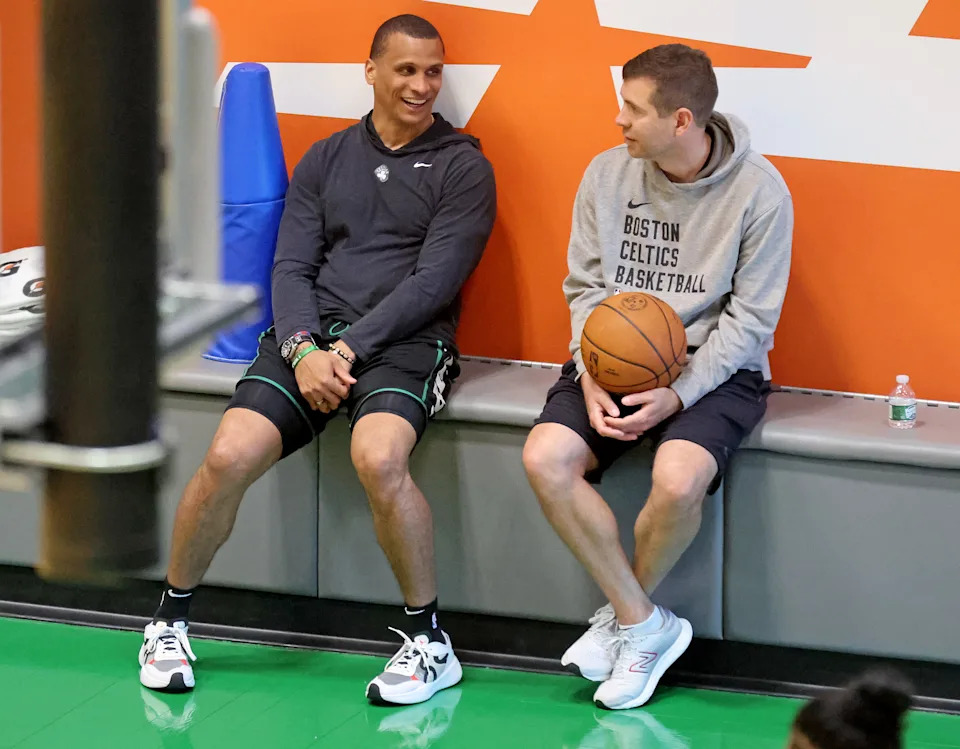
Boston, MA – May 31: Boston Celtics head coach Joe Mazzulla talks with Brad Stevens, president of basketball operations during practice at the Auerbach Center. (Photo By Matt Stone/Boston Herald) | MediaNews Group via Getty Images
The answer starts off the court. About a year and a half ago, this site published an in-depth look at the C’s player development staff. But that’s not the only piece of the puzzle — after all, player development coaches can only work with the players that they’re given. Indeed, the C’s have done a remarkable job finding diamonds in the rough, not just through the draft, but through trades and the bargain bin side of the free agent market that few people pay attention to.
Advertisement
Much of this can be attributed to the influence of Brad Stevens. Before Stevens took a job in the front office, the Celtics did a good job drafting (for example, they were smart enough to pick Jayson Tatum over Markelle Fultz and Lonzo Ball), but there were other aspects with room for improvement. The C’s player development crew likely missed an opportunity to help Guerschon Yabusele mature into a solid contributor, and pro scouting did not lead to the sort of quality free agent signings at the lower end of the salary scale that have become an expected part of the Celtics roster construction these days.
The Celtics, these days, have done a remarkable job matching the players they’ve signed and drafted to the team’s overall philosophy, and Baylor Scheierman is a classic example of this. The C’s were scouting Scheierman while he was still at South Dakota State, and they interviewed him when he declared for the draft in 2022. He took their feedback to heart, transferred to Creighton, and got Boston’s call with the final pick in the first round in 2024. He’s since made continuous improvement in his game, and has become a key piece of the Cs bench. Sure, it seemed like the Cs were taking a flyer on him in 2024, but they had been scouting him for years beforehand, and they had a pretty good idea what they were getting.
But there’s more to roster construction in today’s NBA than just good scouting and good player development. The salary cap, with its convoluted rules and its escalating penalties, has become a major factor in how rosters are assembled. With the most recent CBA, limits on trades and the ability to sign players were stiffened, so much so that even if the new owners of the team were willing to “pay” the tax (that is, to accept a lower profit from the Celtics than they would otherwise get), there were substantial limitations on how the Celtics could fill out the back end of their roster.
They therefore did a massive salary dump in the offseason, trading away Jrue Holiday for essentially Nicola Vucevic, and Kristaps Porzingis for nothing. Further work by Mike Zarren has put Boston in a position to squeak under the tax line entirely, thus breaking a string of tax-paying seasons that puts the Celtics on the hook for the CBA’s repeater penalties.
Advertisement
Mike Zarren has almost certainly had invitations to interview for GM jobs around the league, and he may have even been the Cs first choice when Danny Ainge stepped down, but he seems to like where he’s at, and his skill at navigating the new CBA has left the number two team in the East is sitting under the tax line, with one of the best players in the NBA rehabbing an injury and nearing a return, and a dark horse MVP candidate leading the team.
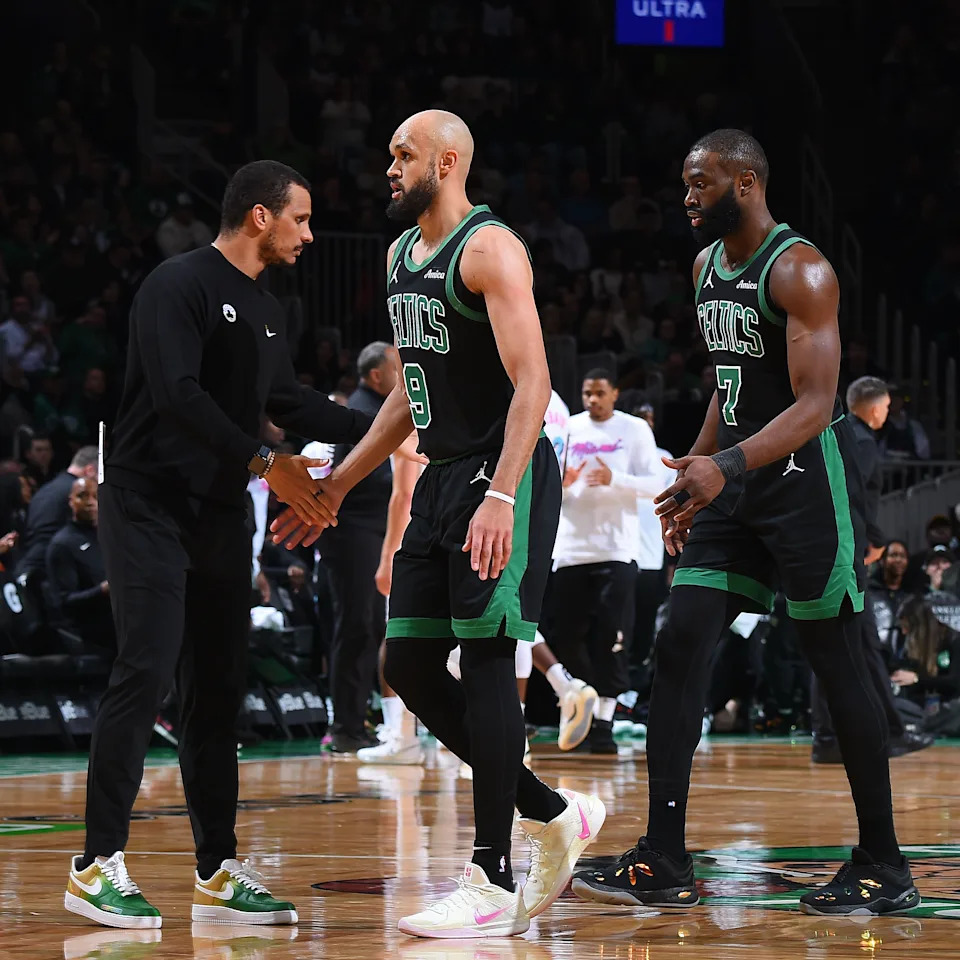
BOSTON, MA – APRIL 2: Head Coach Joe Mazzulla of the Boston Celtics high fives Derrick White #9 and Jaylen Brown #7 during the game against the Miami Heat on April 2, 2025 at TD Garden in Boston, Massachusetts. NOTE TO USER: User expressly acknowledges and agrees that, by downloading and/or using this Photograph, user is consenting to the terms and conditions of the Getty Images License Agreement. Mandatory Copyright Notice: Copyright 2025 NBAE(Photo by Brian Babineau/NBAE via Getty Images) | NBAE via Getty Images
Of course, the Celtics also have a gem in head coach Joe Mazzulla, who has skillfully managed to keep his players bought in during a season where there is no clear pecking order outside of Jaylen Brown, Derrick White, and Payton Pritchard.
Believe me, this is an achievement in and of itself. Mazzulla has kept players that routinely draw “DNP-Coach’s Decision” lines in the box scores invested in their success and the team’s success, and honestly, I have no idea how he does this. When you’re down at the end of the bench, too often your competition isn’t just the other team, it’s the guys ahead of you on your own team.
Advertisement
The other thing that Mazzulla and his staff do is put their players in a position to succeed.
Here, Mazzulla is just continuing what Brad Stevens excelled at when he was on the bench. Stevens had a knack for running schemes that let players play to their strengths, and that’s a rarity in the NBA. Perhaps only Erik Spoelstra in Miami is in the same league as Mazzulla and Stevens when it comes to getting the most out of his players.
Ultimately, the C’s success comes down to the simple fact that there’s no salary cap on basketball IQ. You can hoard it Smaug style, cramming it into every nook and cranny of your organization from the general manager on down to the 15th guy on the roster.