
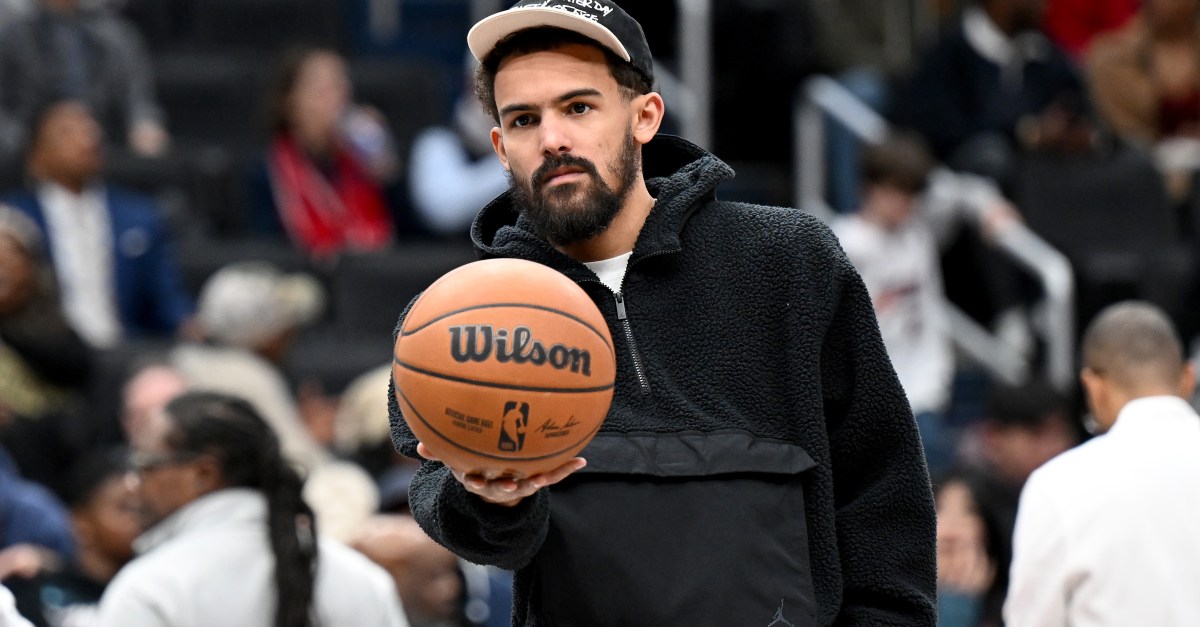
Washington Wizards guard Trae Young is the team’s biggest acquisition since Will Dawkins became the team’s General Manager. However, Young has an MCL sprain in his right knee and has yet to play a game. It’s possible that he may not play until the start of the 2026-27 NBA season.
So what are these injuries like?
Dr. Robert Volk, a board-certified orthopaedic surgeon for The Centers for Advanced Orthopaedics, gave us some time to break down what this injury is, how long it takes to recover from it and more. Dr. Volk has experience working as a physician for numerous professional sports teams like the NFL’s Tampa Bay Buccaneers, the NHL’s Florida Panthers and in NCAA Division I athletics for Florida International University. He has also been a U.S. Navy physician at Walter Reed Navy Medical Center in Bethesda, Md. and has treated several members of the U.S. Congress.
As a disclaimer, Dr. Volk’s statements are spoke in the aggregate and aren’t specific to Young’s situation. They are also not official diagnoses. Please consult your physician for your situation.
BF: What is the typical recovery time for this type of injury?
Dr. Volk: The recovery really depends on the severity of the sprain. A mild MCL sprain can improve within a couple of weeks, while a moderate sprain often takes four to six weeks or longer. When you add a quadriceps strain to the equation, it can extend the timeline because you’re not just waiting for the ligament to heal — you also need full strength, explosiveness, and endurance back in the quad before returning to NBA-level intensity. For a player who relies heavily on quickness and change of direction, that’s critical.
What key aspects of basketball does this injury affect the most?
Volk: The MCL helps stabilize the inside of the knee, especially with side-to-side movement. In basketball, that affects cutting, defensive slides, sudden stops, and absorbing contact. The quadriceps is essential for acceleration, jumping, and overall burst. So, this combination primarily impacts lateral movement, explosiveness, and the ability to decelerate and re-accelerate — which are foundational to a guard’s game.
Should Young be worried about repeating this injury again once he’s back?
Volk: The good news is that isolated MCL sprains generally heal well without surgery, and reinjury rates are relatively low when rehabilitation is thorough. The biggest concern isn’t the ligament itself — it’s making sure strength, balance, and neuromuscular control are fully restored before returning to play. At the professional level, return-to-play decisions are based on objective functional milestones, not just the calendar, which significantly reduces recurrence risk.
Anything else to note about this injury?
Volk: With injuries like this, healing on imaging is only part of the story. The real test is whether the athlete can cut at full speed, absorb contact, and perform under game fatigue without hesitation. If rehab is completed properly and strength symmetry is restored, most athletes are able to return to their prior level of performance.