
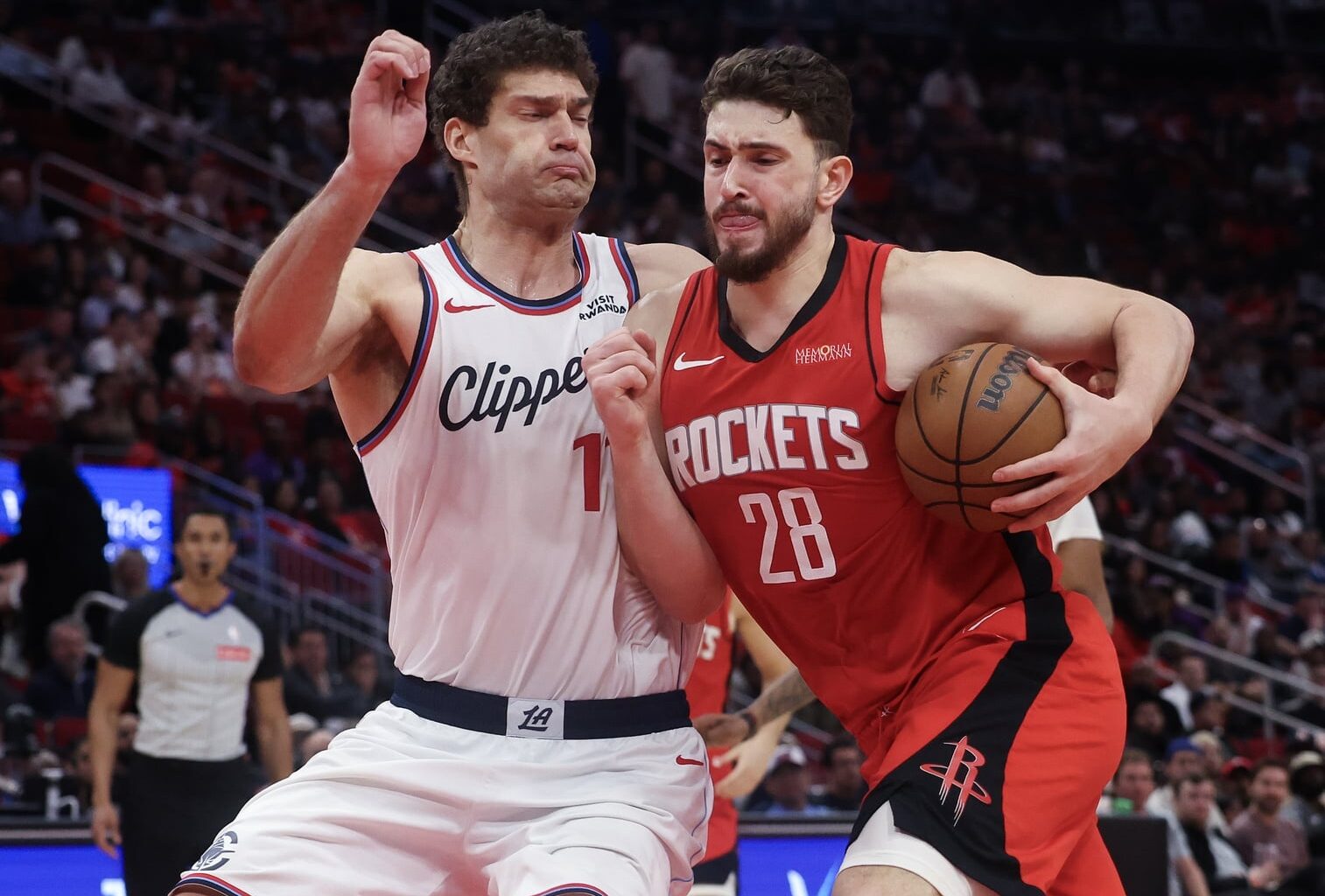
The Houston Rockets find themselves in an interesting position at the All-Star break. The team has a 33-20 record, good for fourth in the Western Conference. Yet, according to Tankathon, the Rockets have the sixth weakest remaining strength of schedule in the NBA after the All-Star break. That’s in stark contrast to their opposition at the top of the conference. So should the Rockets be standings risers after the break?
Rockets are Strength of Schedule Outliers at the All-Star Break
Rockets fans have plenty of cause to enjoy the All-Star festivities this year. Sophomore guard Reed Sheppard excelled in the Rising Stars event. Star center Alperen Sengun will aim to excel for Team World after sneaking into proceedings as an injury replacement. And superstar forward Kevin Durant has been expertly selling drama in All-Star media interviews. But Rockets fans may also be looking ahead to what’s left of the season after the All-Star break. Consulting the team’s strength of schedule could help.
The most interesting thing about the Rockets’ remaining strength of schedule is how it compares to the teams currently ahead of them in the standings. The Rockets are the fourth seed right now. The Oklahoma City Thunder, San Antonio Spurs, and Denver Nuggets are the three teams ahead of them. All three of those teams are in the top-10 for remaining strength of schedule.
Denver and OKC are number one and two, respectively. The Los Angeles Lakers and Minnesota Timberwolves are fifth and sixth in the standings, each only half a game behind Houston. The Lakers are eighth in remaining strength of schedule, and the Timberwolves are third. Even the Phoenix Suns, who are only two games behind in the standings and are looking to climb out of the Play-in Tournament, have the ninth hardest schedule remaining.
In short, according to Tankathon at least, the Rockets are clear outliers in the West. They are the only team that is already high in the standings, and is theoretically set for easier games to come.
The Rockets’ Opponents Going Forward
But theory doesn’t always reflect reality. Even the Rockets’ first game back after the break is a good example of this. The Rockets will next play the Charlotte Hornets on the road on February 19th. The Hornets are currently a sub-.500 team at just 26-29. However, they’re also 9-1 in their last 10 games.
The Rockets do have a few games left to play against less complex cases. In February alone, they will play the Utah Jazz and the Sacramento Kings. There’s a reason Commissioner Adam Silver is talking about overhauling the NBA draft system to disincentivize tanking. Teams like the Jazz and the Kings may be trying just as hard to lose as Houston would be trying to win.
Beyond February, the Rockets will play the Jazz again as well as the Washington Wizards. They’ll also have two more games against the corpse of the Memphis Grizzlies (2-8 in their last 10). Other games on the Rockets’ schedule that may detract from their strength of schedule are more nuanced. Take the New Orleans Pelicans, for example. The team is 15-41, but they’re 5-5 in their last 10 and, crucially, traded their own pick this year for promising rookie Derik Queen. The Rockets will play them twice more this season, lowering their strength of schedule. But of the two games the two teams have already played, Houston is only 1-1. Notably, they lost to the Pelicans in December via overtime.
Will Rockets’ Strength of Schedule Make a Difference?
The Rockets are a putrid 1-5 in overtime this season. No other team has lost more 53-minute games in 2025-26. The Rockets’ biggest problem all season has been their crunch-time offense. Despite their overall record, their clutch time record is sub-.500 (13-15). When the games get close, the Rockets struggle against good teams and bad teams alike. Just look at the Hornets, who are 2-1 in overtime games this season. Houston should be the favorites, but if the Hornets can keep it close, then no one would be surprised by another Rockets disaster-class in the clutch. It will come as no surprise if the Rockets let opportunities on the buyout market pass them by as well.
Rockets fans should still take comfort from the team’s remaining strength of schedule. If nothing else, it should help them stave off skidding into the play-ins. It even provides a glimmer of hope for climbing to a higher seed. Game-to-game, though, the Rockets will win or lose on the strength of their merits. And they’ll just have to hope those merits make it in time for the first 48 minutes.