
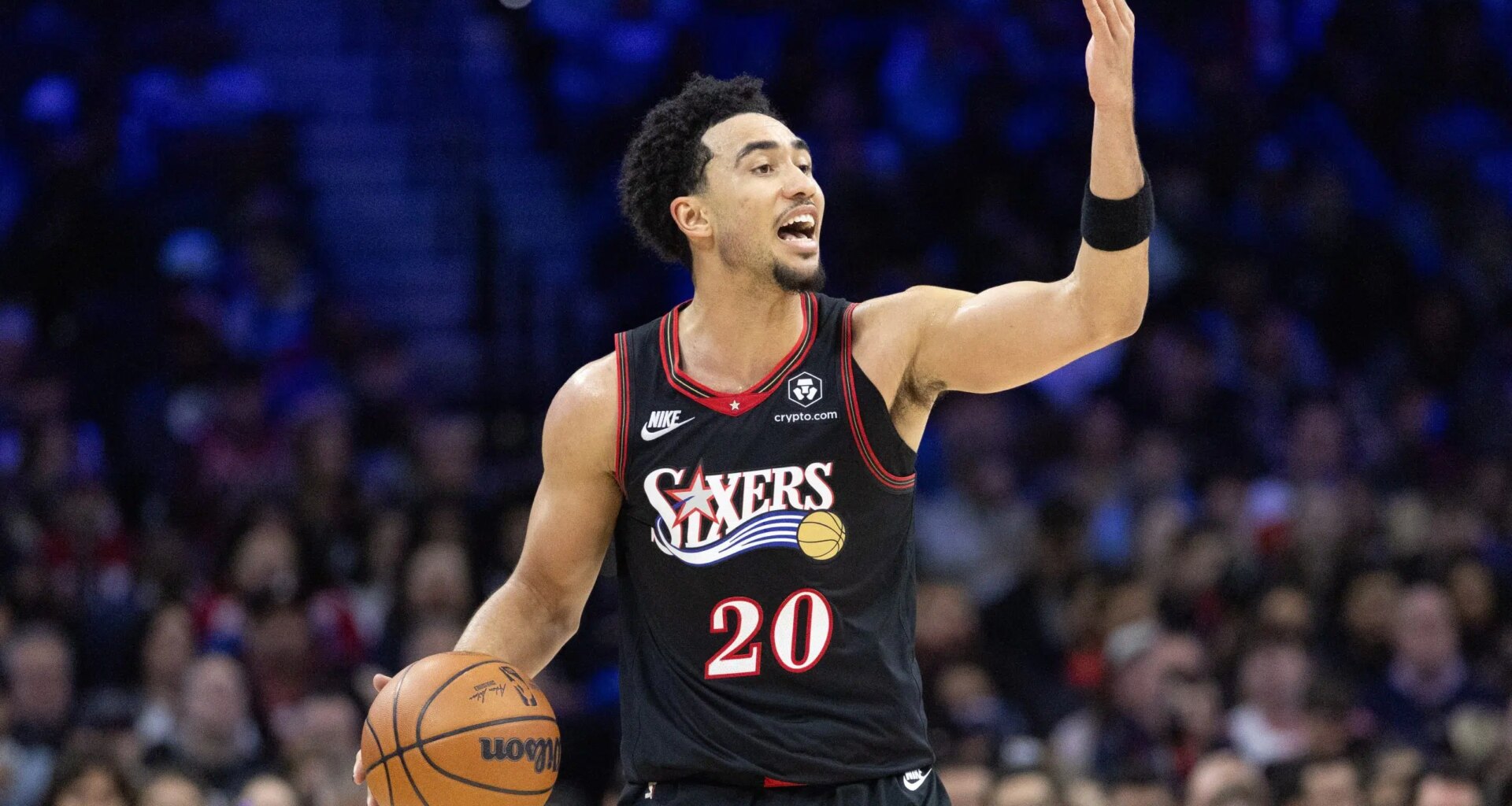
After a show-stopping first season, an injury, and a disappointing sophomore year, the Philadelphia 76ers traded Jared McCain ahead of the 2026 NBA trade deadline.
The move marks a sharp turn for a franchise that once saw McCain as a cornerstone. Instead, the Sixers opted for future draft capital — a 2026 first-round pick (via Houston) and three second-round selections — signaling a pivot toward long-term flexibility rather than short-term patience.
The deal is not simply about one player; it’s about roster balance, financial maneuvering, and future options.
A Once-Promising Rookie Standout
Selected No. 16 overall in the 2024 NBA Draft out of Duke, McCain arrived in Philadelphia with polish and confidence. During his lone collegiate season, he averaged 14.3 points per game and established himself as a poised scorer capable of stretching the floor.
That quickly translated to the NBA. Up through mid-December, McCain averaged 15.3 points and 2.6 assists per game while shooting an efficient 46.0% from the field. His production placed him firmly in Rookie of the Year conversations.
Then, tragedy struck. He suffered a torn MCL, ending his season prematurely, and halting one of the league’s most promising rookie campaigns.
McCain’s Rocky Recovery
McCain’s return from injury did not go as planned. A UCL tear delayed the start of his sophomore season. When he got back on the court, the rhythm that once defined his game appeared inconsistent.
In 37 games with Philadelphia during the 2025–26 season, McCain averaged 6.6 points and 1.7 assists per game while shooting 38.5% from the field — numbers that reflect both rust and reduced opportunity in a crowded backcourt. For a player once projected as a long-term solution, the sophomore slump hit hard.
Sixers Make the Move for Flexibility
From a basketball standpoint, the trade clears a jam at guard and creates financial breathing room. Philadelphia now holds additional draft assets and gains flexibility heading into free agency, particularly as it considers bringing back guard Quentin Grimes.
The move also opened the door for a frontcourt adjustment. With McCain’s departure, the Sixers converted two-way forward Dominick Barlow to a standard two-year contract. Barlow will earn $3.4 million during the 2025–26 season; however, his future beyond 2026 remains uncertain, as the team must decide by June 29 whether to exercise its option at a similar salary figure.
In other words, Philadelphia traded upside at guard for optionality across the roster — draft picks, cap space, and short-term contractual control. Whether that calculation proves wise will depend on how effectively those assets are used.
Social Media Reactions
The immediate reaction in Philadelphia was emotional.
Some fans expressed disappointment, noting that McCain had recently begun to show flashes of his old confidence. Others voiced confusion; after investing a first-round pick and enduring his rehab, why move on now? Most of the anger was placed on Daryl Morey, the 76ers President of Basketball Operations.
One viral post captured the frustration: “The Sixers really drafted Jared McCain just to flip him for ‘assets’ like they’re running a pawn shop, not a franchise.” The sentiment echoed a broader anxiety — that the organization may be prioritizing flexibility over faith in young talent.
The Sixers really drafted Jared McCain just to flip him for ‘assets’ like they’re running a pawn shop, not a franchise.
— Dabs (@Usmanrdabai) February 4, 2026
There was also historical context fueling the skepticism. Philadelphia previously dealt sharpshooter Isaiah Joe, who later flourished with the Oklahoma City Thunder. For some fans, the McCain trade felt uncomfortably familiar.
I absolutely hate moving on from Jared McCain from the Sixers perspective. Feel extremely confident he is going to be an All-Star talent once he settles in from the injuries
Not a bad return and Sixers get their goal of saving some money but think they will regret this one in… https://t.co/GSoHgx0WT4
— Sean Barnard (@Sean_Barnard1) February 4, 2026
Yet not all reactions were negative. A segment of the fan base sees the move as strategic. Accumulating draft picks and preserving cap flexibility could signal a larger play ahead. The Sixers need to package those assets in a future deal or land a significant free agent. If not, this trade may look less like retreat and more like repositioning.
A Calculated Gamble
Trades involving young players often age slowly. McCain is only two seasons removed from draft night. Injuries can distort development timelines; patience sometimes yields rewards that impatience forfeits.
At the same time, the NBA rewards decisiveness. Philadelphia evaluated its roster, its cap sheet, and its timeline — then chose flexibility over projection. The Thunder, meanwhile, continue to collect young talent and draft capital. They are betting that a change of scenery will reignite McCain’s trajectory.
If he rediscovers his rookie form in Oklahoma City, the trade will invite scrutiny. If he struggles to regain consistency, the Sixers’ gamble will appear measured.
For now, the message is clear. Philadelphia is reshaping its roster with intention, even if that means parting with a once-promising guard.