
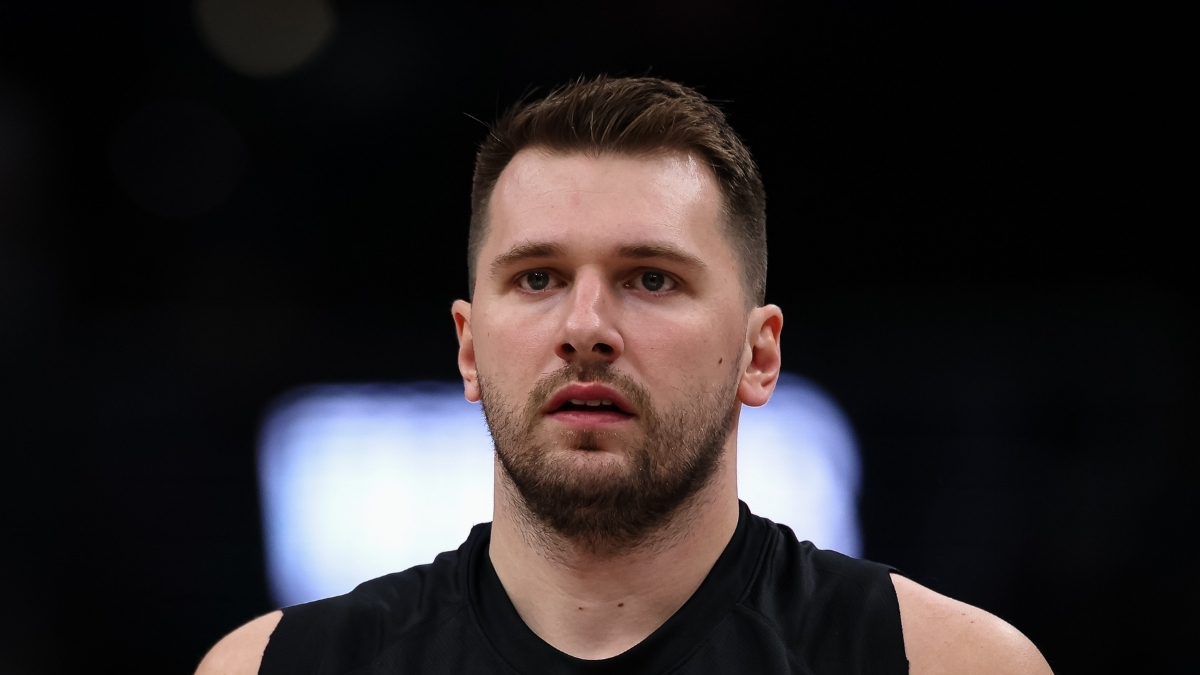
When Luka Dončić returned from a hamstring injury to play five minutes for Team World during the 2026 NBA All-Star Game at Intuit Dome, the appearance was brief.
The comments he made afterward carried far greater impact. In an interview with SportKlub, Dončić was asked to compare his current situation with the Los Angeles Lakers to his former team, the Dallas Mavericks.
“I think the organization here is better. The Lakers are a truly legendary club, and the organization is legendary too,” Dončić said.
The comparison inevitably invites a look at history. The Los Angeles Lakers have won 17 NBA championships, tied for the most in league history, while the Mavericks have captured one title, in 2011. However, there is further context to consider about both organizations.
Luka Dončić’s Words Reflect His Perspective on Organizational Structure
Dončić did not directly criticize the Dallas Mavericks. His response, however, offered a clear comparison and underscored his appreciation for the Los Angeles Lakers’ history and infrastructure.
On the court, Dončić has continued to perform at an elite level. In 42 games this season, he has averaged 32.8 points, 7.8 rebounds, and 8.6 assists while shooting 47.3% from the field and posting a 61.4% true shooting percentage.
Sources who know Dončić well have expressed hesitation to DallasHoopsJournal.com when assessing the likelihood of a future return to Dallas at this stage. Context surrounding the trade continues to linger.
Before the deal was finalized, governor Patrick Dumont trusted the internal evaluations and intelligence presented by then–general manager Nico Harrison before signing off on moving Dončić. Portions of that internal rationale later surfaced through media leaks and continued to circulate even after the trade was completed.
The nature of how the Mavericks organization handled the situation in the months that followed — including public comments and messaging — is not easily forgotten among those close to Dončić.
Although Harrison is no longer the Mavericks’ general manager, the sequence of events surrounding the trade and its aftermath remains part of the questions surrounding the broader situation. For example, while Dončić has shared positive exchanges with many former Mavericks teammates and staff members — including interim general manager Matt Riccardi — the superstar guard has yet to visibly embrace his former head coach, Jason Kidd, since the trade.
During the NBA All-Star Game at Intuit Dome, Dončić once again showed how close his bond remains his former star backcourt partner, Kyrie Irving. During a recent appearance on the “Cousins with Vince Carter & Tracy McGrady” podcast, Dončić described Irving as the star teammate he shared the best chemistry.
Dončić continues to receive strong support from Mavericks fans during his returns to the American Airlines Center, reflecting the bond formed during the first chapter of his career. At the same time, he has publicly expressed appreciation for his opportunity with the Los Angeles Lakers and has committed to the organization’s short-term direction.
Rob Pelinka’s Star-Driven Approach Has Welcomed Luka Dončić
Another factor that has shaped Dončić’s transition is the presence of Rob Pelinka. Pelinka’s background as a longtime NBA agent has influenced how he builds relationships with elite players and their inner circles.
Throughout his tenure, the Los Angeles Lakers have operated with an understanding of star dynamics, consistently seeking a franchise-defining figure in the lineage of Kobe Bryant. Around the league, Dončić is widely viewed as fitting that profile.
Pelinka set the tone early. During Dončić’s introductory press conference, Pelinka publicly acknowledged members of Dončić’s team by name, including his performance staff. Those familiar with the situation viewed the gesture as intentional — a signal that the organization would collaborate with the infrastructure already surrounding its new cornerstone.
That group includes business manager Lara Beth Seager and members of Dončić’s personal performance unit, often referred to as his “body team.” His core staff has consistently included Anže Maček, the Slovenian national team strength and conditioning coach who serves as his personal strength coach, and Javier Barrio Calvo, the physiotherapist who worked with him at Real Madrid and oversees soft-tissue management and recovery planning.
Sources have described the Lakers’ approach to DallasHoopsJournal.com as notably welcoming, with an emphasis on alignment rather than friction. In contrast, collaboration between the Dallas Mavericks’ medical staff and Dončić’s personal team became increasingly strained before the trade, with disagreements over injury management becoming more common.
There are also signs of cultural buy-in beyond the front office. Sources have indicated to DallasHoopsJournal.com that Lakers center Jaxson Hayes has been working toward securing a Slovenian passport with the goal of competing alongside Dončić in FIBA competitions. The maneuver mirrors an effort previously explored by the Slovenian national team when Dončić was with Dallas, when there were discussions about facilitating a similar pathway for Daniel Gafford.
In that context, Pelinka’s early outreach and structural alignment appear consistent with organizational strategy: not simply building around a superstar they didn’t expect to become available, but fully integrating the ecosystem around him.
Cooper Flagg’s Development Shapes the Dallas Mavericks’ Long-Term Outlook
It remains premature to draw firm conclusions about Dončić’s long-term trajectory. The league landscape is fluid. The Mavericks are on track to hold a lottery pick in the upcoming NBA Draft and continue to develop young talent, most notably Cooper Flagg.
In 49 games this season, Flagg has averaged 20.4 points, 6.6 rebounds, and 4.1 assists in 34.1 minutes per game. He is shooting 48.2% from the field and 80.4% from the free-throw line, totaling 999 points with a 56.0% true shooting percentage.
If Flagg continues to progress, the Mavericks could again present an attractive situation for elite players seeking a competitive roster built around emerging talent. For now, Dončić is firmly established within the Lakers’ structure, both statistically and organizationally.
His history with the Mavericks remains significant. In a league defined by change, definitive projections about what comes next require caution.
Latest Dallas Mavericks News & Trade Rumors