
Getty
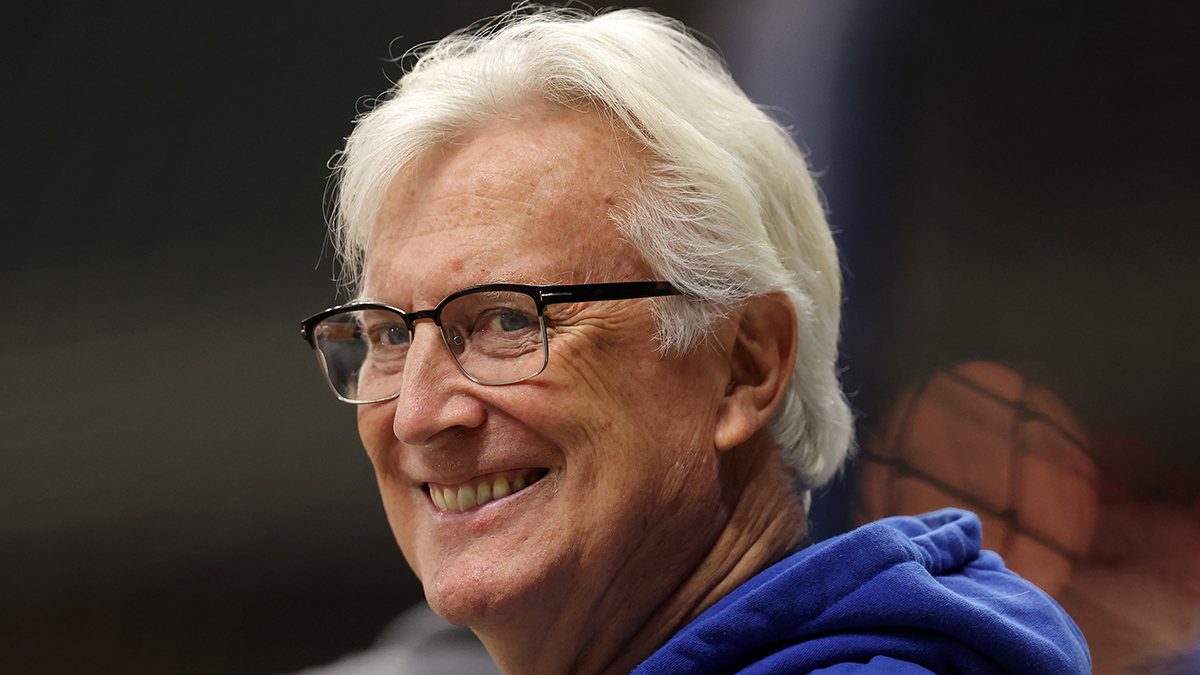
Los Angeles Lakers owner Mark Walter.
The Los Angeles Lakers’ transition under new controlling owner Mark Walter will soon include another significant departure.
According to The Athletic’s Dan Woike, Tim Harris, the Lakers’ president of business operations, informed staff Tuesday that this season will be his last with the organization. Harris has spent more than three decades with the Lakers and The Forum, making his exit one of the most consequential off-court changes of the franchise’s modern era.
“Harris, who was the driving force behind the massive local TV rights deal with Spectrum SportsNet, has been with the Lakers/The Forum for more than 35 years,” Woike reported.
The move comes as the Lakers undergo sweeping structural changes following the NBA’s approval of Walter’s purchase of a majority stake in the franchise at a reported $10 billion valuation.
Architect of Lakers’ Business Dominance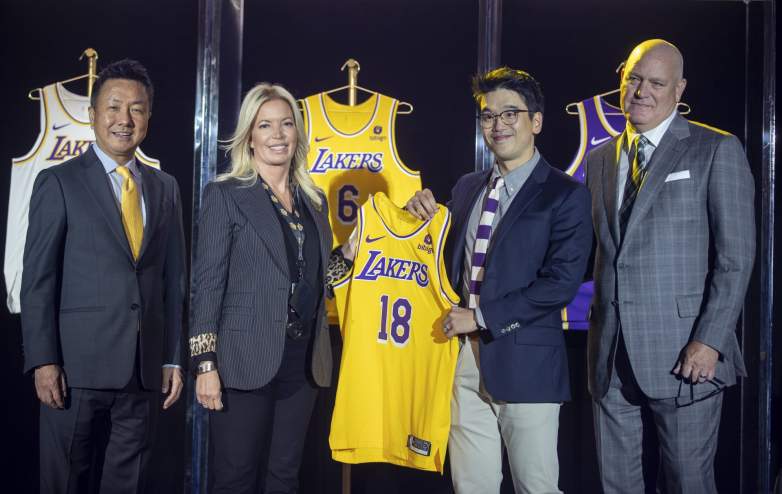
From left: Wookho Kyeong, CMO of CJ CheilJedang, Jeanie Buss, CEO / Governor / Co-owner of the Los Angeles Lakers, Sun-Ho Lee, Bibigo Head of Global Business Planning, Tim Harris, Lakers President of Business Operations, in a file photo in 2021.
Harris has long been credited with helping transform the Lakers into the NBA’s most commercially powerful brand.
A former professional soccer player, Harris joined the organization in the late 1980s and steadily rose through the business ranks. He became a central figure in the franchise’s off-court success, most notably spearheading the landmark local television deal with Spectrum SportsNet that reshaped the team’s revenue model.
Under Harris’ tenure, the Lakers remained the league’s most recognizable global brand, often leveraging star power and “Lakers mystique” rather than conventional marketing approaches.
“He used to always say that our marketing is that we’re the Lakers,” one former employee told author Yaron Weitzman in his book, “A Hollywood Ending.”
A Polarizing Figure Inside the Organization
While Harris played a major role in the Lakers’ business growth, his tenure was not without controversy.
Former Lakers president of basketball operations Magic Johnson publicly cited Harris as a key reason for his abrupt resignation in 2019. Appearing on ESPN’s First Take, Johnson said Harris’ involvement in basketball matters undermined his authority.
“The straw that broke the camel’s back was I wanted to fire Luke Walton,” Johnson said at the time. He described multiple meetings with Jeanie Buss, saying the decision shifted repeatedly before Harris entered the discussion.
“When she brought Tim Harris into the meeting, I said, ‘Wait a minute, I only really answer to Jeanie Buss. Now I got Tim involved,” Johnson said. “That’s when I said, ‘It’s time for me to go.’”
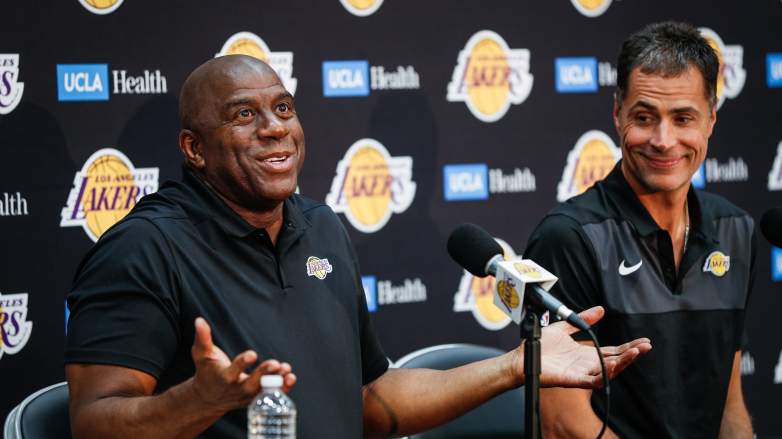
GettyEarvin “Magic” Johnson and Rob Pelinka during a Los Angeles Lakers press conference.
Johnson added that once he felt his decision-making power eroded, remaining with the organization was no longer enjoyable.
Johnson’s past criticism of Harris also carries added resonance given his present ties to the Lakers’ new ownership structure. Magic Johnson is a longtime business associate of Mark Walter and played a role in facilitating the sale of the Lakers, according to multiple reports. Johnson is also a minority owner of the Los Angeles Dodgers, where Walter serves as the controlling owner, linking two of Los Angeles’ most powerful sports brands through a shared leadership group.
Past Missteps Also Revisited
Following news of Harris’ impending departure, Weitzman revisited Harris’ role in another notable moment: the Lakers’ failed free-agent pitch to LaMarcus Aldridge in 2015.
In his book, Weitzman detailed how Harris led the portion of the presentation focused on branding and sponsorship opportunities — but lingered too long on the business pitch.
“He talked about all the sponsorship and branding opportunities,” one attendee recalled. “Only he kept going. And going. And going.”
The meeting became emblematic of how the Lakers’ emphasis on brand over basketball sometimes missed the mark.
Lakers Undergo Sweeping Organizational Reset
Harris’ exit is part of a broader restructuring under Walter’s ownership.
Since the sale, the Lakers have moved on from Jesse Buss and Joey Buss in their respective executive roles, while much of the scouting department under Joey Buss was also let go, ESPN previously reported.
Jeanie Buss remains the franchise’s governor under a stipulation in the sale agreement that keeps her in that role for five more years. She is now the only Buss sibling remaining in the organization that their father, Jerry Buss, turned into a dynasty and global powerhouse.
A Clear Line Between Old and New Lakers
Harris’ departure underscores a defining theme of the Mark Walter era: separation from long-standing power structures in favor of a streamlined, modernized organization.
For decades, Harris helped shape how the Lakers did business. His exit, combined with recent front-office changes, signals that the franchise is entering a new phase — one less reliant on mystique alone, and more aligned with Walter’s broader vision.
As the offseason approaches, the Lakers’ on-court future remains the focus for fans. But behind the scenes, the franchise is undergoing one of the most significant leadership transitions in its history.
Alder Almo is a sports journalist covering the NBA for Heavy.com. He has more than 20 years of experience in local and international media, including broadcast, print and digital. He previously covered the Knicks for Empire Sports Media and the NBA for Off the Glass. Alder is from the Philippines and is now based in Jersey City, New Jersey. More about Alder Almo