
By Roy “Reb” Brownell
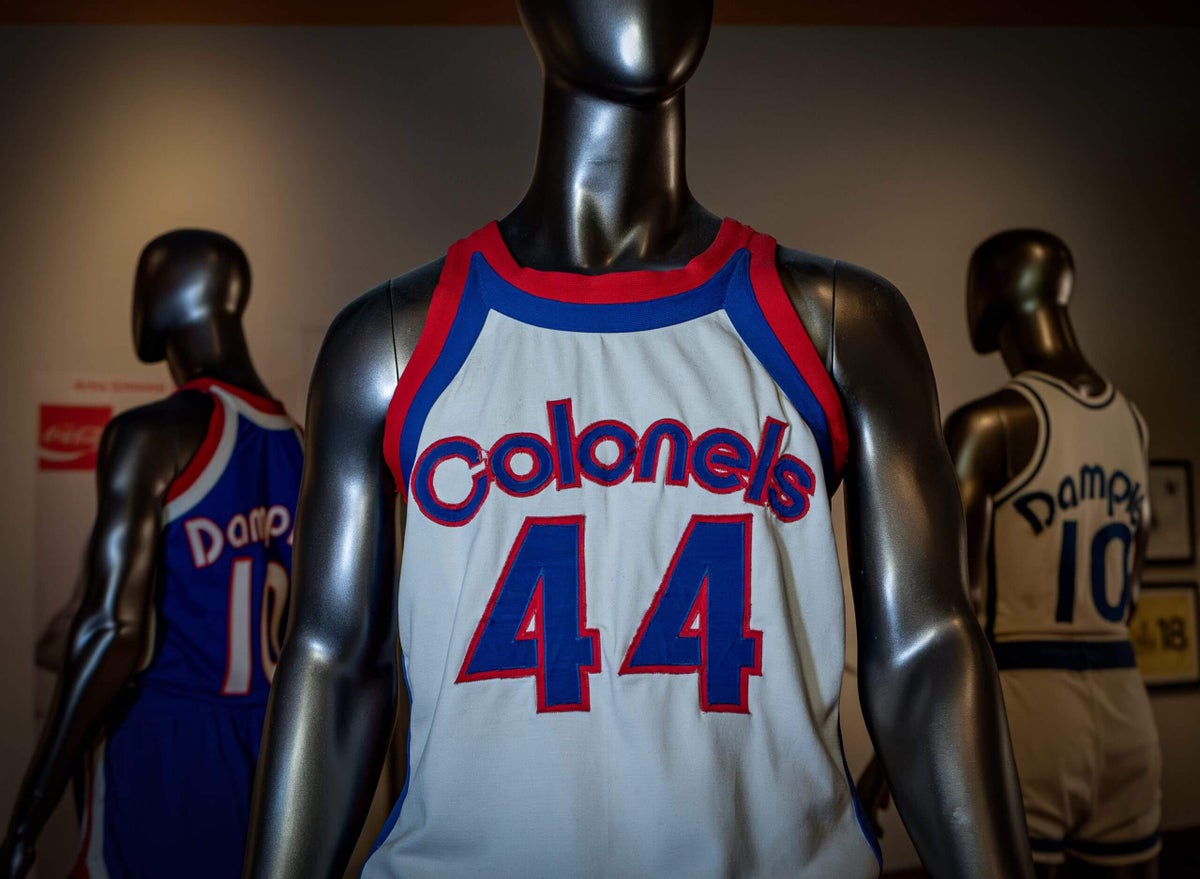
The recent success of Amazon Prime’s new docuseries “Soul Power” has refocused attention on the American Basketball Association, which, from 1967 to 1976, challenged the National Basketball Association and helped chart a new course for professional hoops.
As part of the 1976 interleague agreement, the ABA was dissolved, which permitted the NBA to absorb four of its teams: the New York (now Brooklyn) Nets, Indiana Pacers, Denver Nuggets and San Antonio Spurs. After half a century, basketball fans could be excused for assuming all matters relating to the settlement had long since been resolved, but that is not the case.
Under the settlement’s terms, the NBA refused to assume financial liabilities for the ABA, classifying the addition of its four teams as an “expansion,” not a merger. Given this mindset, the NBA did not see fit to officially accept the records of the defunct association, a posture it has maintained since.
By continuing to deny the ABA its legacy, the NBA has fallen behind its major-league brethren in formally recognizing its own sport’s history. In April 2025, the NFL decided to officially incorporate records from the old All-America Football Conference into its record book. The former rival organization to the NFL, which was in existence from 1946 until 1949, spawned scores of Hall-of-Famers and introduced the San Francisco 49ers, Cleveland Browns and an early version of the Baltimore Colts to pro football fans. All three franchises eventually entered the NFL.
This decision was a welcome step toward honoring the AAFC and the important legacy it bequeathed to pro football. At the same time, the NFL’s recent decision underscores the need for the NBA to take the same action regarding ABA statistics. Like the AAFC, a number of Hall of Famers got their start in the ABA, including Julius Erving, Dan Issel and Moses Malone. Just as the AAFC contributed to the development of pro football, the ABA greatly influenced pro basketball, helping popularize the dunk and 3-point shot, twin staples of the modern game.
In May 2024, Major League Baseball officially adopted statistics from seven Negro Leagues, fully acknowledging the achievements of greats such as Josh Gibson and Oscar Charleston. The NFL’s decision regarding the AAFC produced similar benefits, highlighting the latter’s role in helping reintegrate pro football with the signing of Marion Motley and Bill Willis in 1946. Following the civil rights revolution of the 1960s, the ABA was established and came to be seen in many ways as culturally a “Black” league. It provided opportunities for scores of athletes, including numerous men of color, to play big-league basketball, which would have been impossible had the NBA continued as the sole major league.
Perhaps the NBA’s clearest public rationale for excluding ABA statistics was given in 1982. A spokesperson explained that the NBA did not accept ABA records because:
“In past instances where part of a league was absorbed into an existing league, such as the All-America [Football] Conference into the NFL, the same procedure was followed. The only situation in which this was different was the American Football League, where the entire league came in as a unit. This was not the case with the ABA, where only four teams came into the NBA.”
This statement was not even correct when it was made. Years before, MLB had absorbed a small number of teams from defunct baseball associations only later to recognize the records from those leagues in their entirety. Now, with the NFL’s recent decision to accept AAFC statistics, the wobbly plank purporting to hold up the NBA’s justification has collapsed entirely.
The NBA’s stubborn refusal to acknowledge ABA records does not make sense. After all, the ABA boasted major-league talent. Indeed, the rival association won most of the 155 exhibition games played between the two entities.
Conceivably, the NBA could defend its intransigence by claiming it only includes statistics from NBA games. However, the NBA already recognizes statistics from the Basketball Association of America, a separate league that was founded after World War II. In 1949, the BAA merged with the older National Basketball League to establish a new organization called the NBA.
With the arrival of the golden anniversary of the 1976 NBA-ABA settlement, the time has come for the NBA finally to officially acknowledge the records of this rival association. It’s only fitting for the ABA players, coaches and teams that so enriched the game. For the NBA, such a decision should be a slam dunk.
Roy “Reb” Brownell is an adjunct professor at Georgetown University who is in the process of finishing a manuscript about the 1976-77 Philadelphia 76ers.