
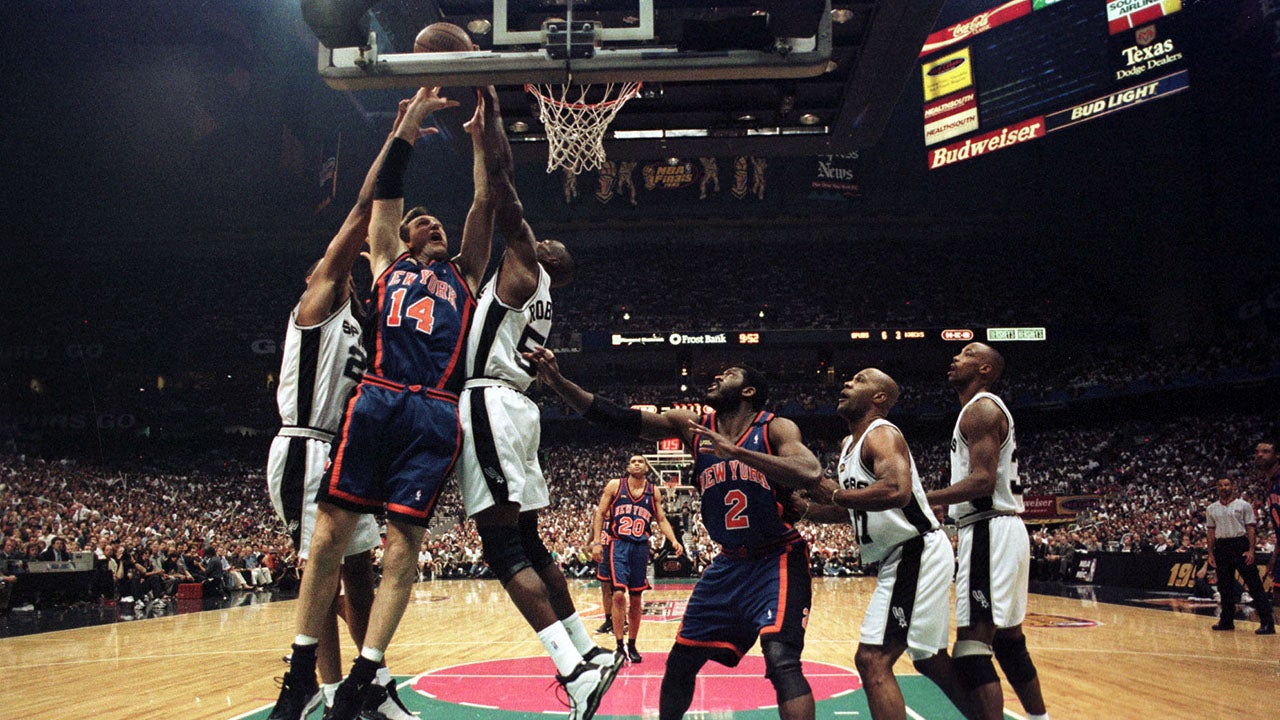
For many sports fans, their team’s season is not considered a success unless it ends with a championship banner. That all-or-nothing mindset has led to endless disappointment for fans everywhere, but the New York Knicks’ 1998-99 season offered a rare exception for New York fans, who are typically among the most rabid in the NBA.
Despite a 27-23 record in a lockout-shortened regular season, the Knicks managed to fight their way to the NBA Finals before falling to the San Antonio Spurs in five games. The loss extinguished the city’s hope just as quickly as it spread, creating a bittersweet feeling and lingering question: What went wrong for the Knicks team that’s been the closest to a championship in the last 53 years?
The Lineup
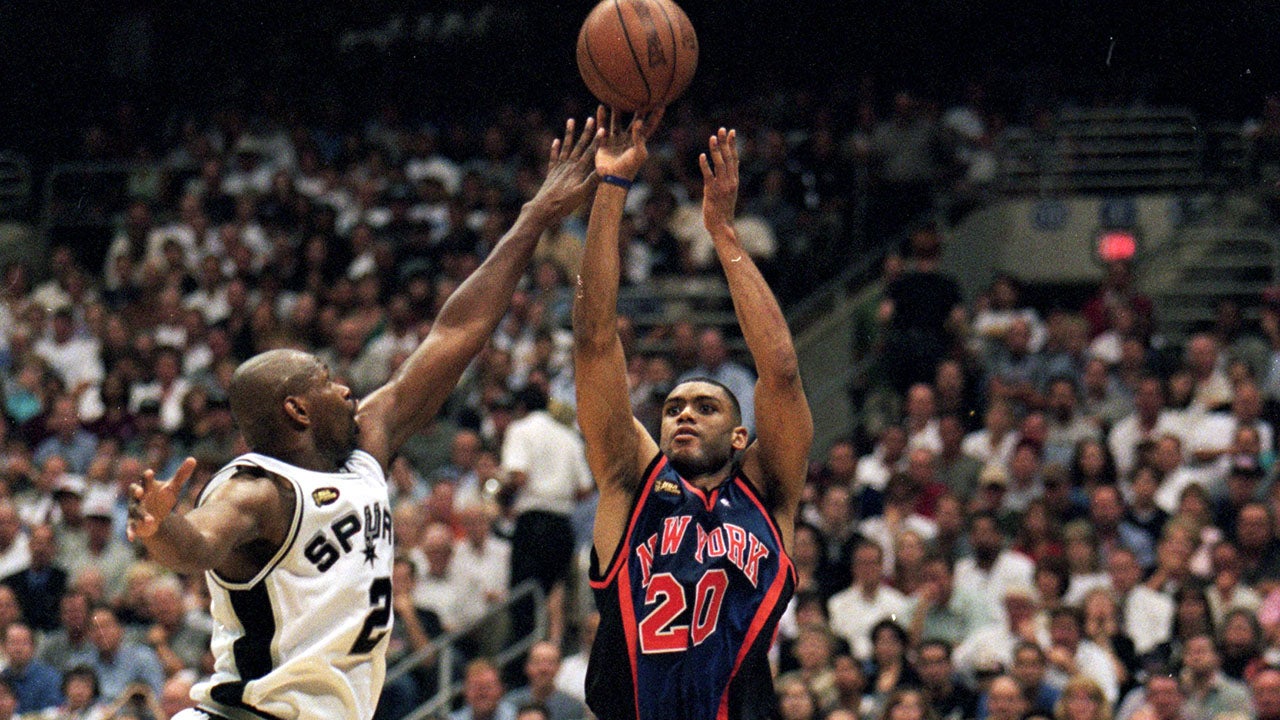
Looking at the lineup, it’s surprising that New York squeezed into the postseason as the final seed. Charlie Ward and Allan Houston held down the backcourt, while forwards Larry Johnson and Kurt Thomas surrounded Hall of Fame center Patrick Ewing to complete the starting lineup.
Forward Latrell Sprewell nearly led the team in points per game off the bench, averaging 16.4 per game, to give head coach Jeff Van Gundy a good punch among his reserves. Point guard Chris Childs and center Marcus Camby rounded out the rotation, giving the Knicks a solid, if unspectacular, eight-man group on any given night.
 Todd Warshaw/AllsportThe Season
As their seeding implies, New York did not look like a true NBA Finals contender in the regular season. At the midseason mark, the Knicks had established themselves as a likely playoff team with a 15-10 record, but still resided in a tier below the teams considered deeper and more likely to come out of the Eastern Conference.
The second half of the season even went worse than the first, as they posted a 12-13 record over their final 25 to finish at 27-23 and the eighth seed in the conference. Highlights included another fantastic year of production from Ewing, who led the team in scoring with 17.3 points, 9.9 rebounds, and 2.8 blocks per game. despite their presence at the bottom of the playoff ranks, the Knicks won three out of four games to close out the regular season and give themselves some needed momentum.
The Road To The Finals
The first round pitted the Knicks against a longtime foe, the Miami Heat. After trading off wins and losses, a massive 22 points and 12 rebounds from Ewing led New York to a one-point victory in the deciding Game 5, making them one of only six 8-seeds in history to beat the No. 1 seed in the first round of the playoffs. The upset pushed the Knicks through to the conference semifinals, where they encountered the fourth-seeded Atlanta Hawks.
Compared to the matchup with the Heat, things went off without a hitch. Houston and Sprewell averaged 18.0 and 22.5 points per game, respectively, to lead New York to a clean 4-0 series sweep. However, Ewing went down with a torn Achilles tendon in the middle of the series, leaving the Knicks without their cornerstone big man for the rest of the playoffs. The stage was set for a showdown with a Spurs team that went 37-13 in the regular season, as power forward Tim Duncan had instantly become a formidable two-way superstar over his first two years in the NBA.
The Matchup
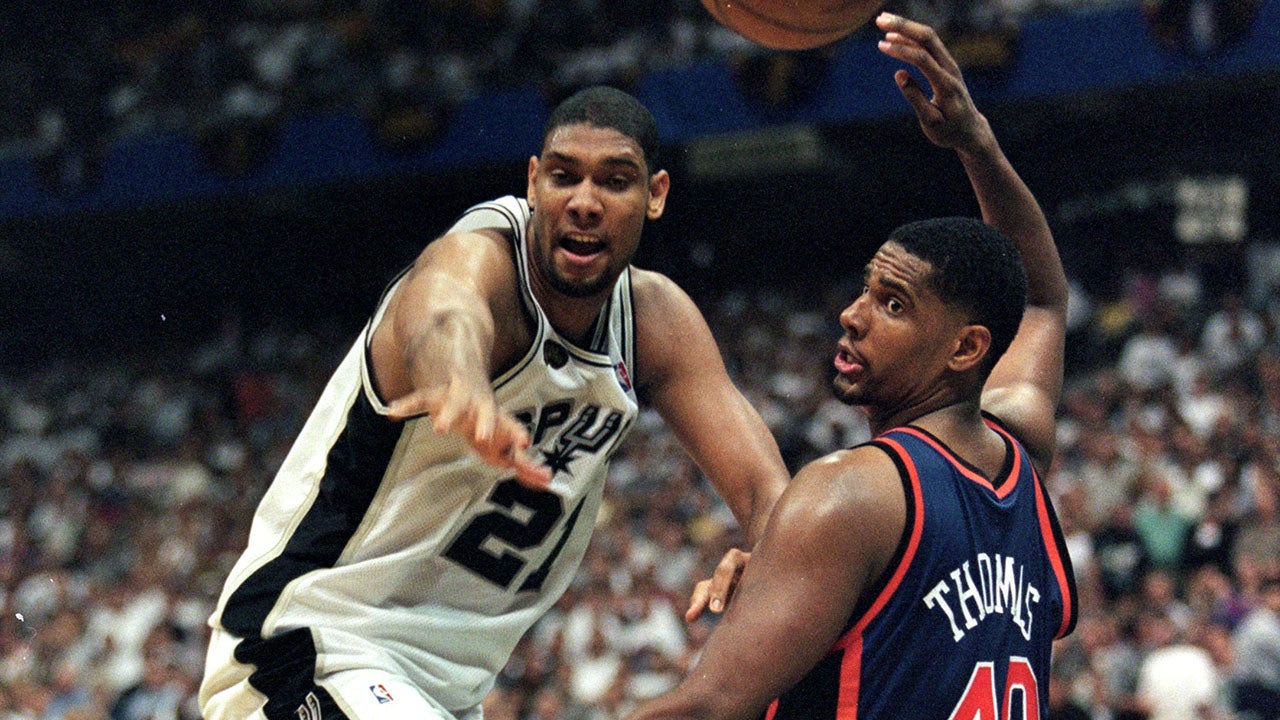
Facing San Antonio was a near-certainty for whatever team emerged from the Eastern Conference. Led by Duncan, veteran center David Robinson, and head coach Gregg Popovich, the Spurs were a tough matchup thanks to their excellent size, defense, and team-first mentality. San Antonio was a tough date for any team in the NBA, one that became even more difficult with Ewing sidelined.
 Todd Warshaw/Getty ImagesFinals Heartbreak
Things got off to a terrible start for New York. The Spurs rattled off back-to-back double-digit victories, winning Game 1, 89-77, and Game 2 by an 80-67 final. San Antonio’s defense was stifling, holding the Knicks to 35.6% shooting from the field to kick off the series. New York was on the ropes already.
A brief glimmer of hope emerged when the Knicks returned home for Game 3. New York played its best defensive game of the series, forcing 20 turnovers to help the struggling offense by adding extra possessions. The effort counted for something, with New York outlasting the Spurs to win 89-81.
Any hope would not last past that game. Despite shooting a series-best 41.3% from the field in Game 4, the Knicks could not replicate their defensive performance from Game 3, allowing 28 points to Duncan en route to a semi-high final score of 96-89 in favor of the Spurs.
Game 5 would prove to be the biggest heartbreaker of all. With their players’ backs to the wall, the Knicks fought valiantly, using 35 points from Sprewell to keep things within a score as the clock wound down. Spurs guard Avery Johnson threw the knockout punch with 47 seconds left in the game, when he drilled a wide-open corner 3-pointer to put San Antonio up by a point. The Knicks would fail to score, ending their season with a 78-77 defeat.
So Close, Yet So Far
Somehow, New York’s loss in 1999 was the last time the Knicks saw the NBA Finals. One of the biggest, most passionate fan bases has been waiting for just over a quarter-century to see their team in the Finals. The Knicks have been painstakingly close several times, but have often fallen short, despite major coaching and personnel moves over the years.
At this point, even a trip to the Finals would carry immeasurable meaning to the city of New York, while actually hoisting the Larry O’Brien Championship Trophy would undoubtedly bring one of the greatest celebrations in NBA and sports history throughout the Big Apple.