
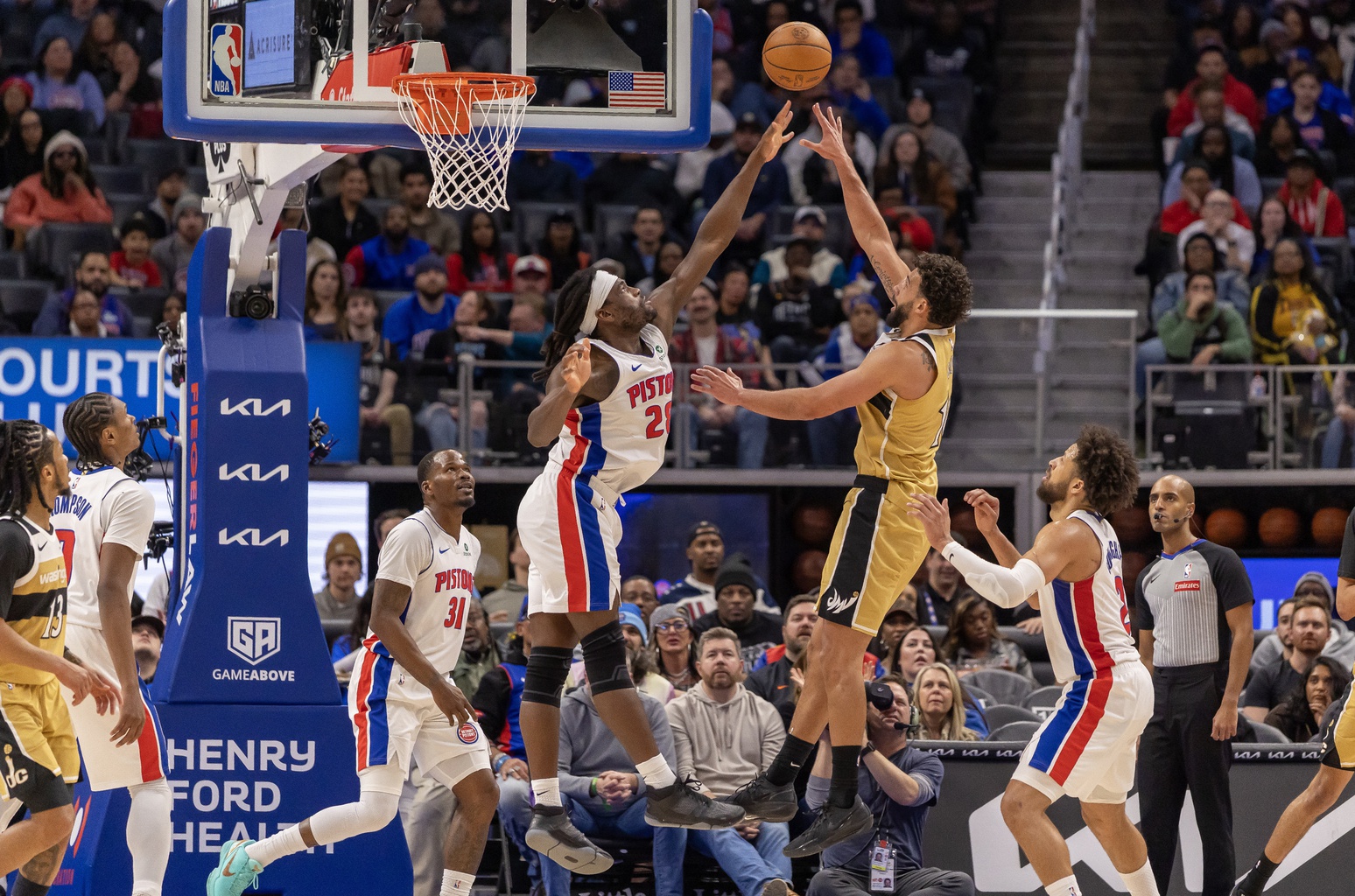
When the NBA handed Isaiah Stewart a seven-game suspension, it became an immediate stress test for the Detroit Pistons. Stewart’s physicality and interior presence are central to Detroit’s identity, and his absence forced real questions about the team’s frontcourt depth and defensive reliability. For a group working to establish itself as a legitimate playoff threat, losing a foundational piece wasn’t just an inconvenience — it was a measuring stick.
Now, Stewart returns Tuesday against the Cleveland Cavaliers, restoring the rotation as the stretch run begins. But the more revealing story isn’t simply that he’s back — it’s what Detroit discovered without him.
Others had to absorb the physical load. Paul Reed stepped into heavier minutes, and the defensive scheme adjusted without its emotional anchor. Some of those developments reflected growth and resilience. Others exposed vulnerabilities that won’t disappear just because Stewart is back in uniform.
So what did those seven games actually teach us about the Pistons — and how much of it will matter when the postseason arrives?
Isaiah Stewart’s Return Brings Balance As Pistons Eye Postseason
Stewart’s Return Strengthens Detroit’s Defense
The Pistons have built their identity around physicality. The numbers reinforce it: they rank among the league’s top five defensive teams across major metrics and lead the NBA in fouls per game — a reflection of how hard opponents have to work for every point.
What stood out during Stewart’s absence was not a defensive collapse, but sustained resistance. In the seven games Stewart missed during his suspension, Detroit went 6-1 while holding opponents to just 108.1 points per game. The defensive edge didn’t dull. If anything, it sharpened in stretches.
Zooming out further, in the 11 total games Stewart has missed this season, opponents are averaging 110.5 points. That represents only a marginal increase compared to their full-season numbers with him available — a sign that Detroit’s defensive foundation extends beyond one player.
Thin Margin on the Offensive End
 Feb 1, 2026; Detroit, Michigan, USA; Detroit Pistons forward Isaiah Stewart (28) dunks in the second half against the Brooklyn Nets at Little Caesars Arena. Mandatory Credit: Rick Osentoski-Imagn Images
While the defense has remained steady, the Detroit Pistons’ offense — specifically their shooting — has wavered. Over the last four games, Detroit has shot just 26-of-120 from three-point range (21.6%). The record (3-1) suggests they’ve survived it, but that margin isn’t sustainable — especially against postseason-caliber opponents.
This is where Stewart’s return quietly matters. He isn’t Duncan Robinson, and he’s not meant to be. He’s shooting 32% from three this season — respectable, not transformative. But his willingness to space the floor forces defenses to account for him, and that subtle gravity can unclog driving lanes and restore balance to the offense.
During his absence, some of that spacing shrank. His return won’t solve Detroit’s shooting slump outright, but it could stabilize an offense that has recently operated without much room for error.
Offensive Ceiling Still Undefined
For a team that has established a clear identity — and exposed its pressure points just as clearly — these final weeks matter. The Pistons have shown they can defend, control tempo, and impose physicality. But the three-point shooting must level out to properly balance their work in the paint. When the outside shots aren’t falling, the offense tightens, possessions become heavier, and the margin for error shrinks.
Cade Cunningham has cemented himself as the primary engine, and Jalen Duren continues to grow into a dependable secondary option. The lingering question is who consistently steps forward as the third scorer — particularly one who can stretch the floor and punish defenses for collapsing. Until that answer becomes clear, Detroit’s formula may continue to rely on narrow advantages rather than the kind of offensive separation that travels comfortably into the postseason.
The Last Word
The suspension didn’t fracture the Detroit Pistons. If anything, it clarified who they are. The defense is real. The physicality sustains. The identity doesn’t vanish when Isaiah Stewart steps off the floor. That much was proven.
But the stress test revealed something else, too. Detroit can win in the margins — grind out possessions, defend without fouling late, survive cold shooting nights. The question is whether that formula scales against postseason opponents who punish every empty trip and shrink every driving lane.
Stewart’s return restores balance and edge, yet the larger lesson remains: the Pistons aren’t fragile. They’re formidable. But to become dangerous in May, the margin can’t stay this thin.
David Reginek-Imagn Images