
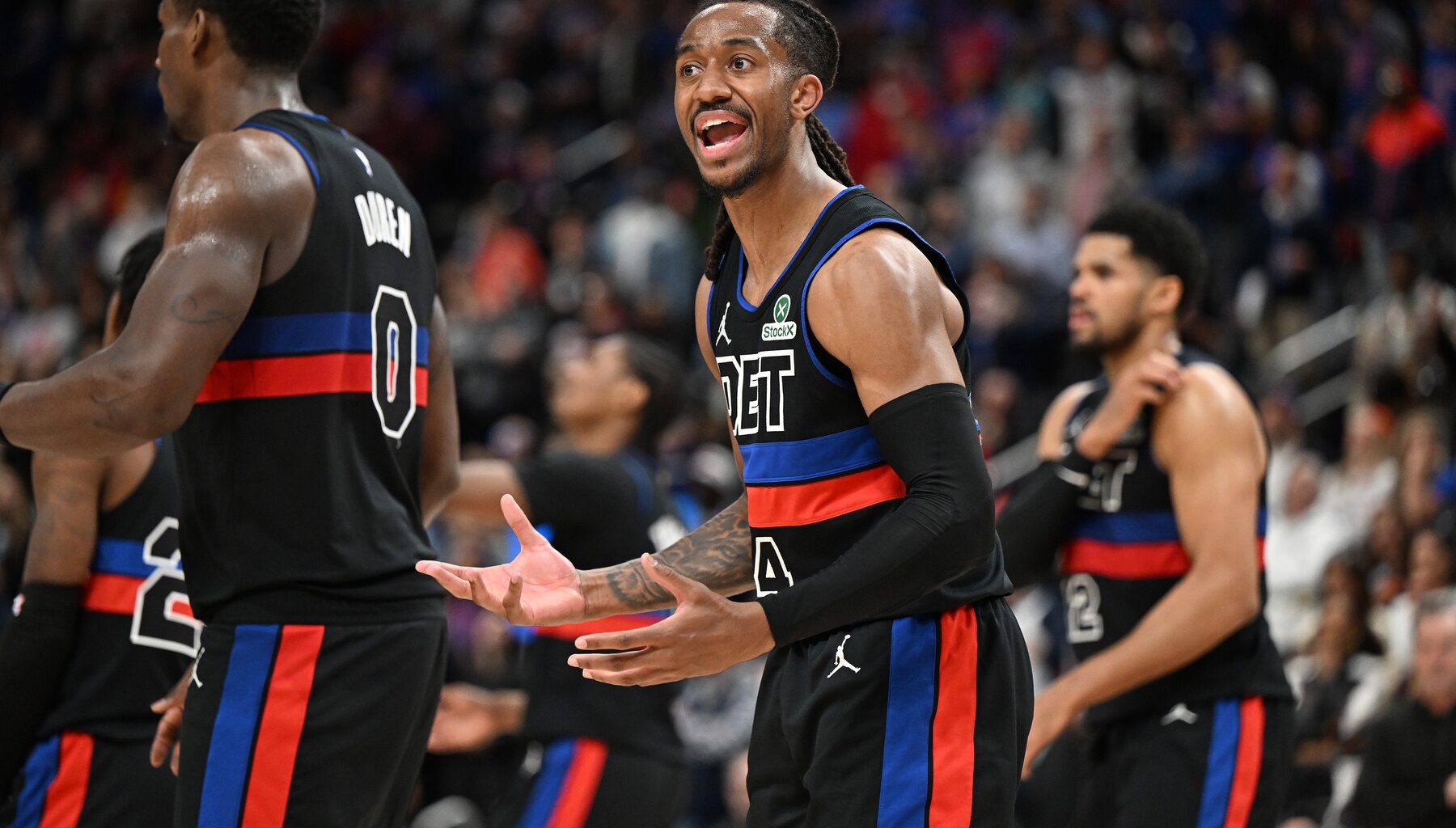
Detroit Pistons guard Daniss Jenkins has emerged as one of the best feel-good stories of the 2025–26 season. Initially signed to a two-way contract, Jenkins’ steady impact earned him a conversion to a standard deal. With the new contract came expanded responsibility — and lately, the adjustment has been more turbulent than seamless.
Over the last eight games, Jenkins has hit a noticeable rough patch. He’s averaging just 5.5 points while shooting 29.8% from the field and 14.3% from three. In that same stretch, he’s posting more turnovers (1.1) than assists (0.9), a concerning trend for a backup point guard tasked with stabilizing second-unit minutes.
As the Detroit Pistons push toward the postseason and rotations tighten, every role comes under sharper scrutiny. Are Jenkins’ recent struggles simply part of a learning curve, or a signal that his minutes should be redistributed? With playoff basketball demanding reliability over potential, Detroit must determine whether this dip is temporary — or telling.
Are The Pistons Too Patient With The Struggling Daniss Jenkins?
Jenkins’ Struggles: Growing Pains Or Warning Signs?
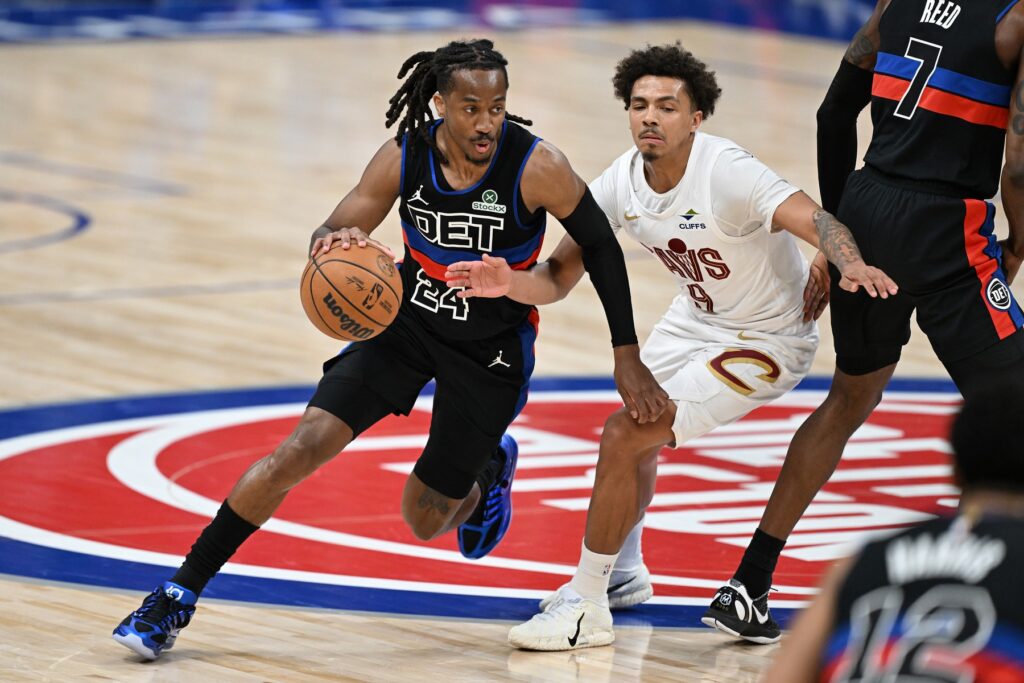 Feb 27, 2026; Detroit, Michigan, USA; Detroit Pistons guard Daniss Jenkins (24) tries to dribble past Cleveland Cavaliers guard Craig Porter Jr. (9) in the first half at Little Caesars Arena. Mandatory Credit: Lon Horwedel-Imagn Images
When Jenkins first stepped into rotation minutes, his production caught opponents off guard. There’s a difference between scouting a player on paper and seeing him live — and early on, Jenkins benefited from that gap. That advantage has disappeared.
He’s no longer an afterthought in Detroit’s rotation. As the secondary ball-handler alongside Cade Cunningham, Jenkins is responsible for organizing the offense and stabilizing second-unit possessions. With that role comes sharper defensive attention and less room for mistakes.
There’s also the grind of a longer NBA workload. For a young guard still adjusting to consistent minutes, late-season fatigue and scouting adjustments can hit quickly. Is this stretch a temporary learning curve — or a clearer sign of his current ceiling?
A Case For Marcus Sasser
Jenkins’ recent struggles have sparked calls for Marcus Sasser to absorb some of those minutes. Sasser’s playing time has fluctuated this season, but when given the opportunity, he’s flashed the scoring punch that keeps him in the rotation conversation.
In terms of readiness, Sasser brings a steadier baseline. As a three-year veteran, he has a more settled preparation and understanding of pace, traits that a young guard like Jenkins is still developing. Coaches often trust experience when margins tighten.
On paper, the two aren’t drastically different archetypes. Jenkins leans more toward playmaking and table-setting, while Sasser is wired to score. So the decision becomes philosophical as much as tactical: Do you prioritize ball security and orchestration — or instant offense off the bench?
What do the Pistons value heading into the postseason? Stability or spark? Development or dependability?
The Last Word
The Detroit Pistons don’t hide from hard decisions anymore. As the playoffs draw closer, the margins shrink, and sentiment fades. The Pistons have built their resurgence on accountability and defensive edge — and every rotation spot must reflect that standard. The backup point guard role isn’t developmental in April. It’s functional.
Jenkins has been one of this season’s best surprises, a player who forced his way into the conversation. However, surprises eventually turn into scouting reports. If this stretch is a temporary wall, Detroit can live with it. If it’s a crack opponents can consistently exploit, the leash shortens.
Marcus Sasser represents a different answer — one rooted in scoring punch and steadier experience. Jenkins represents growth and long-term investment. The question isn’t about loyalty. It’s about leverage.
In Detroit, progress is no longer the goal. Winning is.
Lon Horwedel-Imagn Images