
Last year, prediction markets like Kalshi and Polymarket handled more than $40 billion in bets, or what they call “events contracts.” That’s where users take a financial position on all manner of topics from sports to how many times President Trump will talk about golf this week.
It sounds a lot like gambling, and there are more than a dozen ongoing lawsuits alleging it is. But currently prediction markets fall under regulations for commodities futures, like crops or oil, which means the platforms can operate in states that don’t allow gambling and without the oversight requirements of states that do.
On Thursday, the federal Commodities Futures Trading Commission announced it’s looking at new rules for what should and shouldn’t be allowed on prediction markets, and issued guidance aimed at preventing manipulation, particularly in sports.
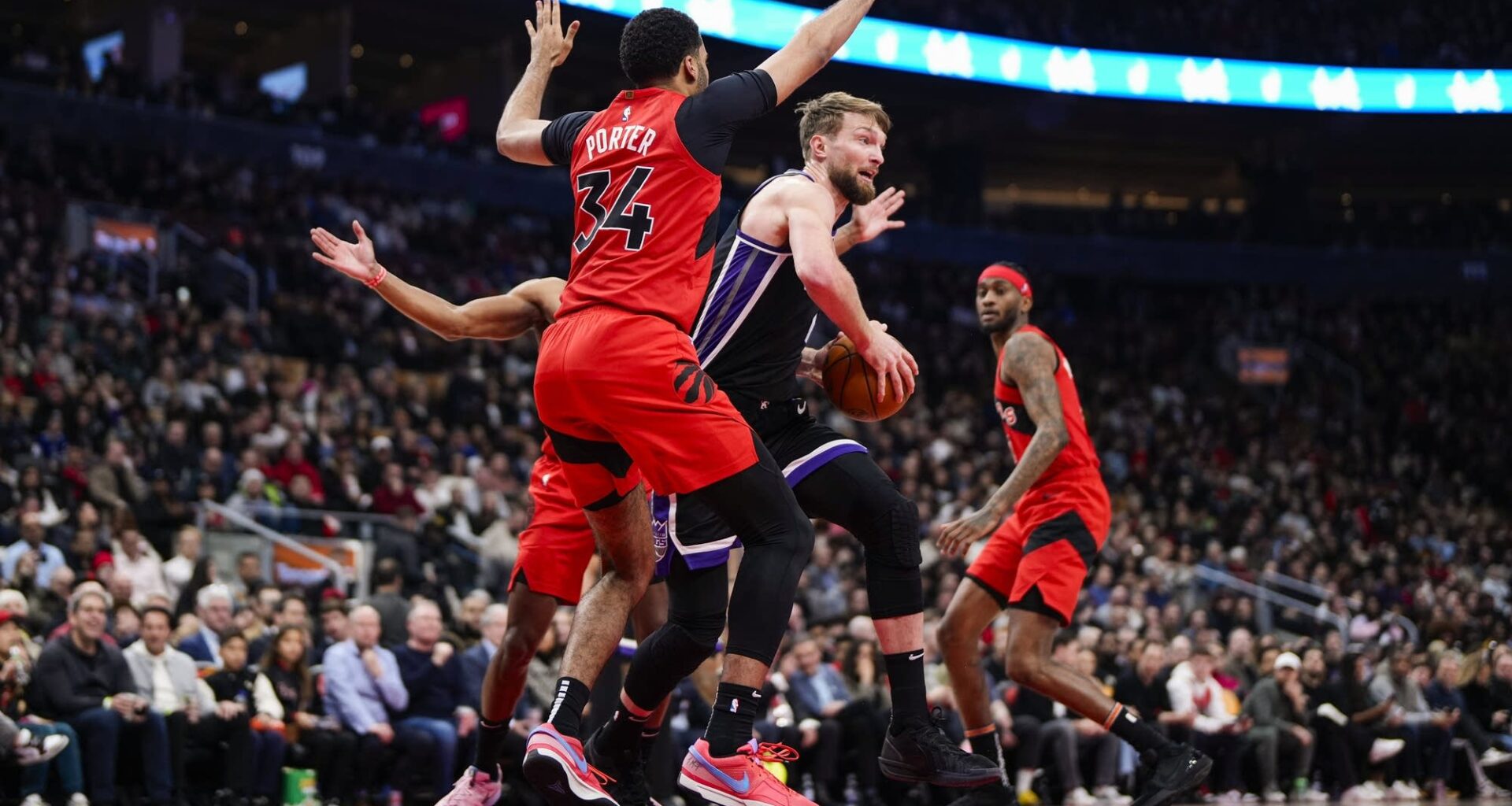
Several recent scandals in legal sports betting, like the Jontay Porter case, have illustrated how popular new bet types, also common on prediction markets, have increased the risks of cheating.
Jontay Porter was a big man for the Toronto Raptors NBA team in the 2023-2024 season, who averaged only 4.4 points a game and spent a lot of time on the bench.
He’d barely begun playing in a Jan. 22, 2024, matchup with the Memphis Grizzlies when he went out with what appeared to be an eye injury after three minutes.
Days later, he left a game against the Los Angeles Clippers after four and a half minutes, again complaining of eye pain. On March 20, 2024, playing the Sacramento Kings, he made it a mere 2:43 before bowing out due to food poisoning.
Porter admitted to coordinating with a group of gamblers to underperform in those two games. After the first game, the bettors cashed in, becoming the biggest money winners for NBA bets on DraftKings that day.
That was very suspicious, said Matthew Holt, former head of U.S. Integrity, a company that scours betting data for signs of fraud. He now leads a new company, Gambling Compliance International.
“What people don’t realize is every wager you place in a licensed, regulated sports book is geo-located, it’s tracked,” he said. “We know where you are, who made the bet.”
Sportsbooks flagged the weird bets, and Holt’s company investigated and sent out a system-wide alarm.
All states that allow sports betting require operators like DraftKings to share real time data with these independent integrity monitors, which also screen out players and other insiders who aren’t allowed to bet. Suspicious activity must be reported to sports leagues and regulators. And now, the NBA restricts bets on the performance of lower paid players like Jontay Porter.
“There are people out there saying sports betting regulators weren’t doing enough,” said Holt. “But they were doing 1,000 times more than the prediction markets are.”
Prediction markets have been operating without the multiple layers of oversight that helped bring Jontay Porter’s cheating to light. And the CFTC doesn’t have experience policing that kind of activity, said Ben Schiffrin, director of securities policy at the non-profit Better Markets, which advocates for more regulation of financial markets.
“You can kind of tell by the name, it’s supposed to be regulating the commodities and the derivatives markets,” he said, “like making sure that there are fair prices on things like corn, soybeans, wheat.”
Now the agency is charged with ensuring integrity not only in sports, but domains with much higher stakes.
“I think the opportunity for corruption in prediction markets exists across the board,” said Schiffrin. “I just think it’s way more pronounced when you’re talking about war and military action.”
Controversy has erupted in recent months over prediction market bets involving conflict in Iran, Ukraine and Venezuela. The platforms refunded some wagers, but paid others out. Last month Israeli authorities arrested two people accused of using classified military information to profit on Polymarket.
Now, the CFTC is asking the public to weigh in on whether that kind of thing should be banned, whether government officials should be allowed to trade or what constitutes non-public information.
John Holden, a professor of business law and ethics at Indiana University, said the industry has a business incentive to avoid scandal.
“No one wants to put their money into an entity where you know one person already knows the result of what’s going to happen, and you don’t,” he said.
In its guidance yesterday, the CFTC encouraged prediction markets to coordinate more closely with sports leagues and integrity monitors, and to avoid listing contracts that could be easily manipulated by the actions of a single person.
But for now, those are basically suggestions.
“You know, how much will the CFTC adapt to regulating products like this, more like how sports books are regulated?” he asked. “Because there’s going to be mounting pressure on them to do so.”
But there’s also mounting pressure to avoid the appearance of similarities with legal sports betting, which could help make the case in court that they are one and the same, as a federal judge in Ohio ruled this week.
Related Topics