
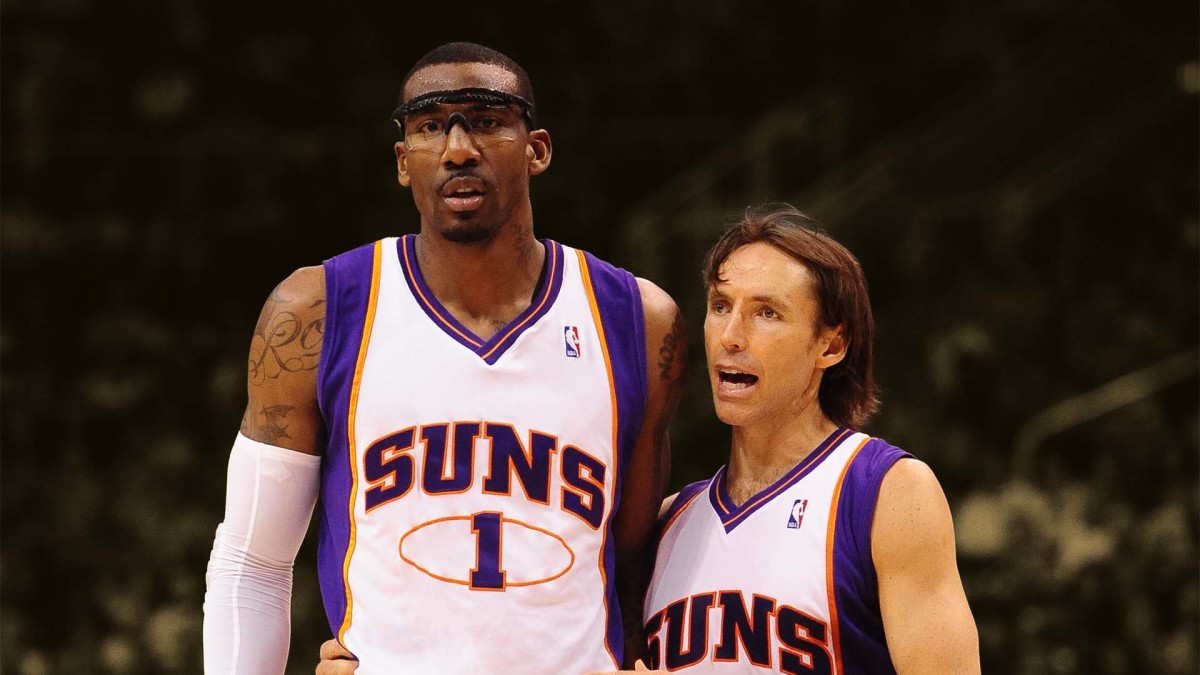
The Phoenix Suns completely took the entire NBA by surprise by coming up with a basketball philosophy called the “Seven Seconds or Less.” Behind Steve Nash’s pace and pick-and-roll wizardry, the system produced deep playoff runs from 2005 to 2007.
They fell short those three times, but for Amar’e Stoudemire, the 2006-07 squad has the potential to be better than their postseason finish indicated. The Suns got bounced out in the second round by the eventual champions, the San Antonio Spurs, in controversial fashion.
Advertisement
2006-07 Suns were loaded
The “Seven Seconds or Less” system was in the experimental phase in 2005, but surprisingly delivered better results than expected. Phoenix won 62 games the first season it was implemented, 54 the next (Stoudemire played only three games the whole season) and a 61-win year in 06-07.
The difference between 2007 and the previous two years was that the front office found the right balance for the team. Amar’e was back from an injury, and Phoenix acquired the needed size to compete with the West’s plethora of big men.
Advertisement
They were still outrunning and outgunning everybody, but they were also better equipped to make a deeper playoff run with the personnel they have.
“Honestly, we had so much of a good time,” Stoudemire said on “Legends of Sport” with Andrew Bernstein. “We didn’t know how much success we’re gonna have. We all trained with the mindset of trying to win a championship that offseason, going into the 06-07 season. We were training that summer to compete for a championship and so, when we showed up in training camp, everyone was already in top shape.”
“We were always dedicated and focused, and then once the season started, we got off to a great start and we just did not stop,” added the 2002 NBA Rookie of the Year.
Advertisement
Actually, Phoenix lost five of its first six games of the season, including one to a Kobe Bryant-less Los Angeles Lakers in the opener. After that, they only dropped four games from the middle of November 2006 to early February 2007.
“We were playing lights-out basketball and the tempo, no one can keep up with us. We were playing out of position… Nobody can guard us… Guys were knocking down open 3s. We had a complete team that year, for sure,” Stoudemire stated.
The Spurs conundrum
All was well for the Suns going into the playoffs, dealing the Lakers a gentleman’s sweep. But then, the third-seeded Spurs came along and brought an end to their championship hopes. Robert Horry infamously hip-checked Nash into the scorer’s table at the tail end of Game 4, which ended in a Phoenix win. And that was essentially the beginning of the end for the Suns.
Advertisement
Horry’s physical play triggered a bit of a commotion, which was understandable because Nash was unquestionably the team’s MVP. The only problem was that Stoudemire and Boris Diaw wandered a little too far from their bench in an instinctive reaction to protect their captain.
The NBA suspended both Stoudemire and Diaw for Game 5, which was basically a death sentence to the Suns’ title dreams.
“A precedent wasn’t necessary here,” Stu Jackson, the NBA’s executive VP of basketball operations, said. “The rule with respect to leaving the bench area during an altercation is very clear. Historically, if you break it, you will get suspended, regardless of what the circumstances are.”
Advertisement
And just like that, it was all over for Phoenix. San Antonio was too good a team to let a closeout game slide and they finished the job with a 114-106 win in Game 6. The Nash-Amare Suns never got close to the championship until 2010, when they lost to the Purple and Gold in six games at the Western Conference finals.
Related: “Just kind of soothes the body” – Amar’e Stoudemire on using wine baths for recovery
This story was originally published by Basketball Network on Mar 14, 2026, where it first appeared in the Old School section. Add Basketball Network as a Preferred Source by clicking here.