
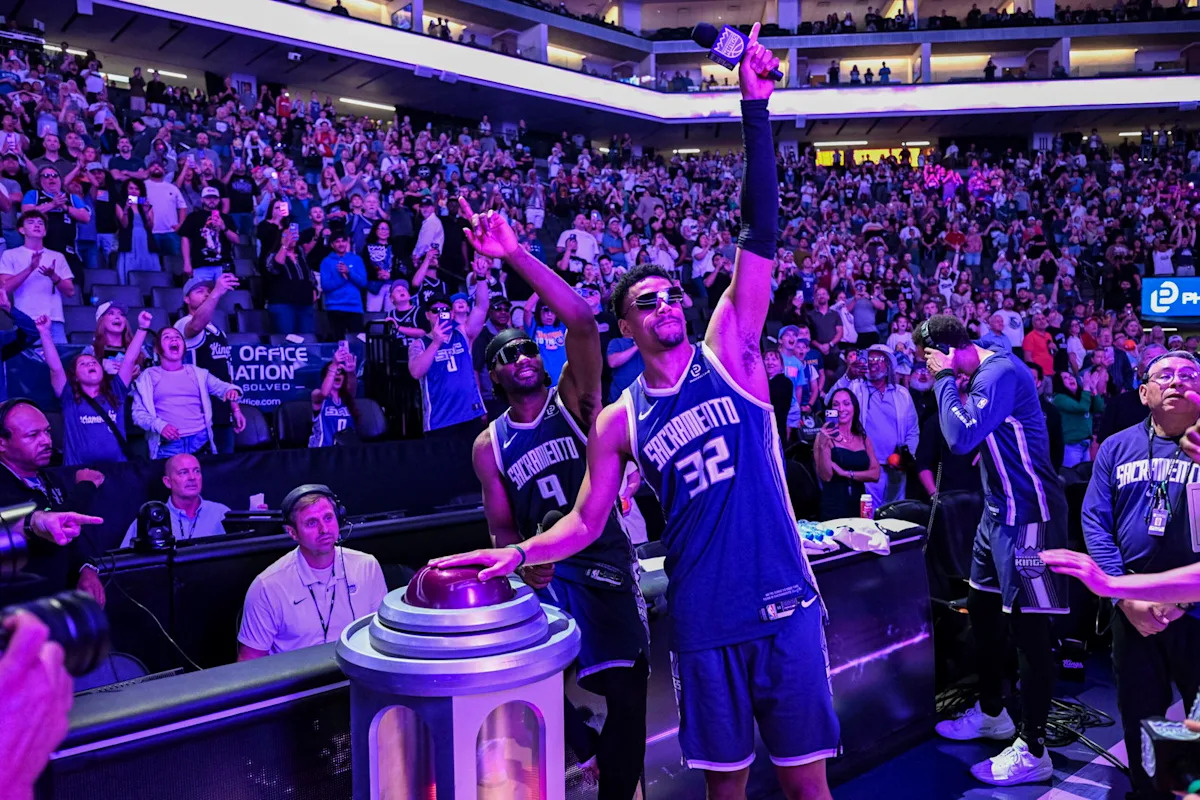
A 16-game losing streak should have pushed the Sacramento Kings fully into tank mode. Instead, late-game decisions are telling a completely different story.
With the roster depleted and the standings already working against them, Sacramento had every reason to prioritize lottery positioning. Season-ending injuries to key players like Domantas Sabonis, De’Andre Hunter, and Zach LaVine only reinforced that path.
Advertisement
But the Kings haven’t followed it.
A Clear Pattern Late
In matchups against other lottery teams competing for a better draft pick, Sacramento has remained competitive into the fourth quarter. When those games tighten, the rotation shifts not toward development but toward experience.
DeMar DeRozan has been at the center of that approach, as he finds himself playing 35+ minutes per game multiple times during this stretch.
Heavy veteran minutes in those situations aren’t accidental. Rotations in close games reflect priorities, and Sacramento’s priority has been execution over experimentation.
Competing Instead of Positioning
Teams in similar positions often lean into youth, giving extended minutes to developing players and accepting losses as part of a longer timeline. Sacramento has resisted that approach.
Advertisement
Rather than treating late-game possessions as developmental reps, the Kings have leaned on structured offense and experienced decision-making. That choice has kept games competitive and, in some cases, turned potential losses into wins.
That approach carries a cost. Every win lowers lottery odds in a draft that could reshape the franchise’s future with what looks to be a loaded 2026 draft class. For a team that already endured a 16-game losing streak, maximizing draft position would be the conventional move.
Sacramento has chosen otherwise.
What It Says About the Franchise
Prioritizing veterans in high-leverage moments signals something bigger than individual games. It points to an organizational emphasis on maintaining a competitive environment, even in a losing season.
Advertisement
That mindset can have long-term value. Late-game reps in structured systems build habits that translate beyond just this season. At the same time, it raises questions about long-term direction, especially for a roster that ranks the fourth-oldest in the league.
Sacramento’s record reflects a losing season. Their rotations do not.
The Kings may be near the lottery, but they are not acting like a team trying to stay there.
The post The Sacramento Kings are Still Trying to Win, Not Tank appeared first on The Lead.