
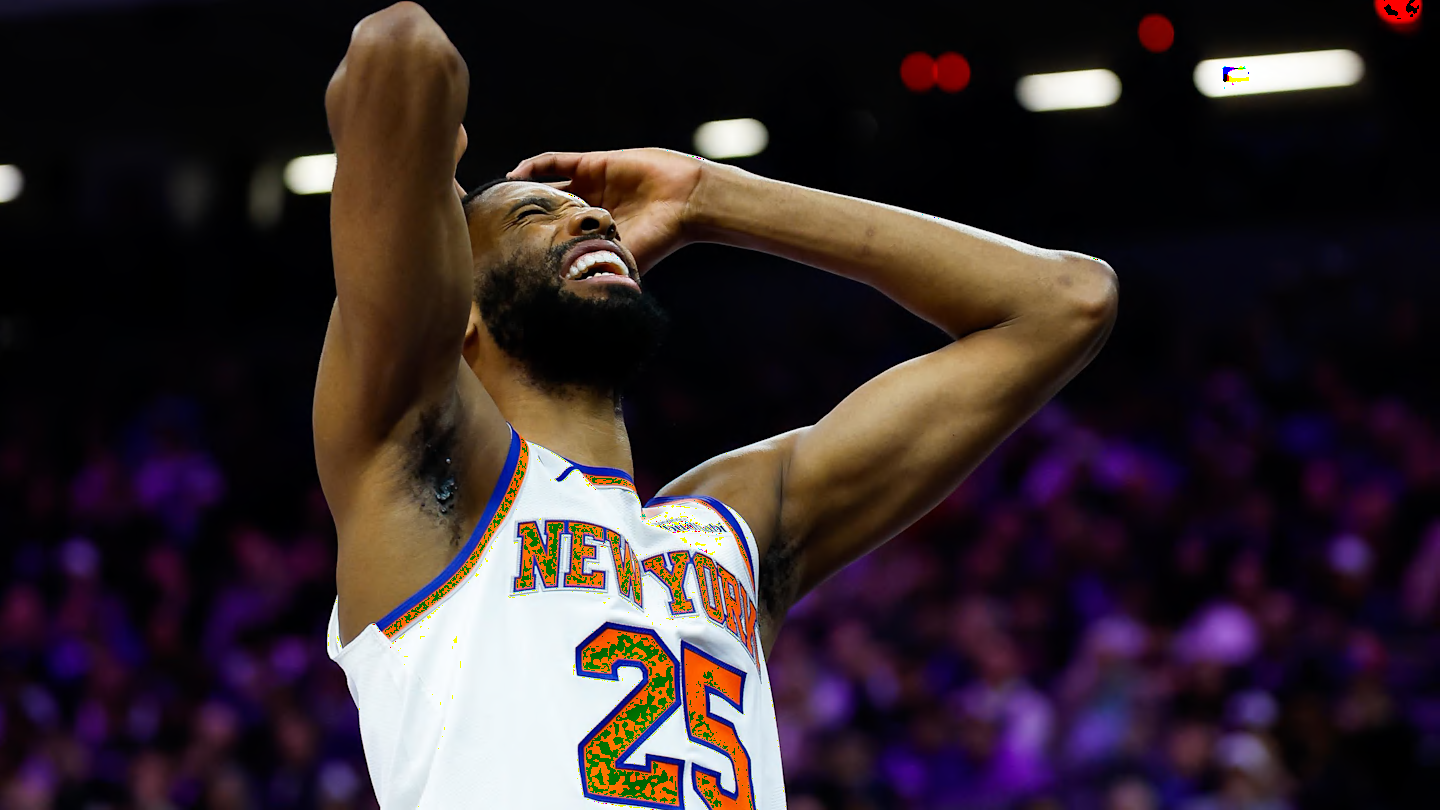
When the New York Knicks gave up control over six first-round picks to land Mikal Bridges, they did so knowing the value of selections in the out years could skyrocket. Well, with the NBA staring down the barrel of draft-lottery reform, the opportunity cost of that mega trade may soar even higher.
According to ESPN’s Shams Charania, the league recently presented three “anti-tanking” scenarios to its board of governors. Though none of these possibilities are etched in stone, they would all expand the lottery to incorporate between 18 and 22 teams rather than the current 14.
Each of these changes could inflate the value of the first-rounders New York owes Brooklyn in 2027, 2028 (swap), 2029, and 2031. Yet, among the trio of possibilities, there’s one that could more clearly come back to bite the Knicks.
Even if they Knicks aren’t terrible, they could still send the Nets a juicy pick
The first lottery proposal would expand the process to include 18 teams. Here ESPN’s report explaining the full details:
“In the first proposal, sources told Charania, 18 teams — the bottom 10 that miss the play-in tournament, and the eight that qualify for it — all will be part of the draft lottery. The bottom 10 teams will all have an equal 8% chance of moving up in the lottery, with the remaining 20% of the odds being split among the eight play-in teams in descending order from 11th through 18th. All 18 spots would be drawn as part of the lottery in that format.”
If you are slightly confused, rest assured that you’re not alone. The gist: If the Knicks finish as the No. 7 seed or lower in any given season that they owe Brooklyn a draft pick, there is a non-zero chance they wind up sending out a high lottery pick.
It could be the No. 1 selection. Or a top-five choice. Or a top-eight pick. And again, we aren’t operating under the assumption that they need to be bad.
One so-so year could result in a catastrophic outlay. Granted, we do not know how the balance of that 20 percent would be split up among the eight play-in teams. But let’s say it’s evenly distributed at 2.5 percent per squad. While this doesn’t seem like much, remember that Proposal No. 1 calls for all 18 picks to be decided via the lottery. That means the Knicks, as a play-in squad, would have almost a 12 percent chance of giving up a top-five pick; a 16-plus percent chance of surrendering a top-seven pick; a 22-plus percent chane of forking over at top-10 pick; and so on.
Lottery reform could be a problem for the Knicks sooner than we think
Fortunately for New York, the entire core is in the heart of its prime, and mostly under contract for multiple years. Unfortunately, the folks upstairs are measuring them against a title-or-bust standard.
Major changes could be coming if the Knicks fail to win it all, or if they whiff on coming out of the Eastern Conference. That lends itself to higher-variance outcomes as early as next summer.
Even if the Knicks show restraint, competitive life cycles change on a whim. Maybe they’ll be firmly entrenched in the East’s top-four through 2028. That still puts those 2029 and 2031 selections at risk of conveying in cornerstone-prospect territory.
There is no way this was part of their calculus. They probably knew they were overpaying for Bridges. They even likely understood that forking over so many picks for him undermined their Giannis Antetokounmpo hopes and dreams. Heck, they may have figured things could get dicey by the time those final two firsts get shipped out.
Under the current system, however, the Knicks would need to be downright terrible in one of those years to actualize their worst nightmare of surrendering a top-five pick. If the first lottery change gets ratified, though, they could have the ninth-worst record, and then a 34.1 percent chance of missing out on a top-five pick.
For as much as this seems like a footnote, depending on how the league addresses tanking, there’s a real possibility the Mikal Bridges trade ends up looking worse than it does now—and more than anyone, including the Knicks themselves, could have imagined.