
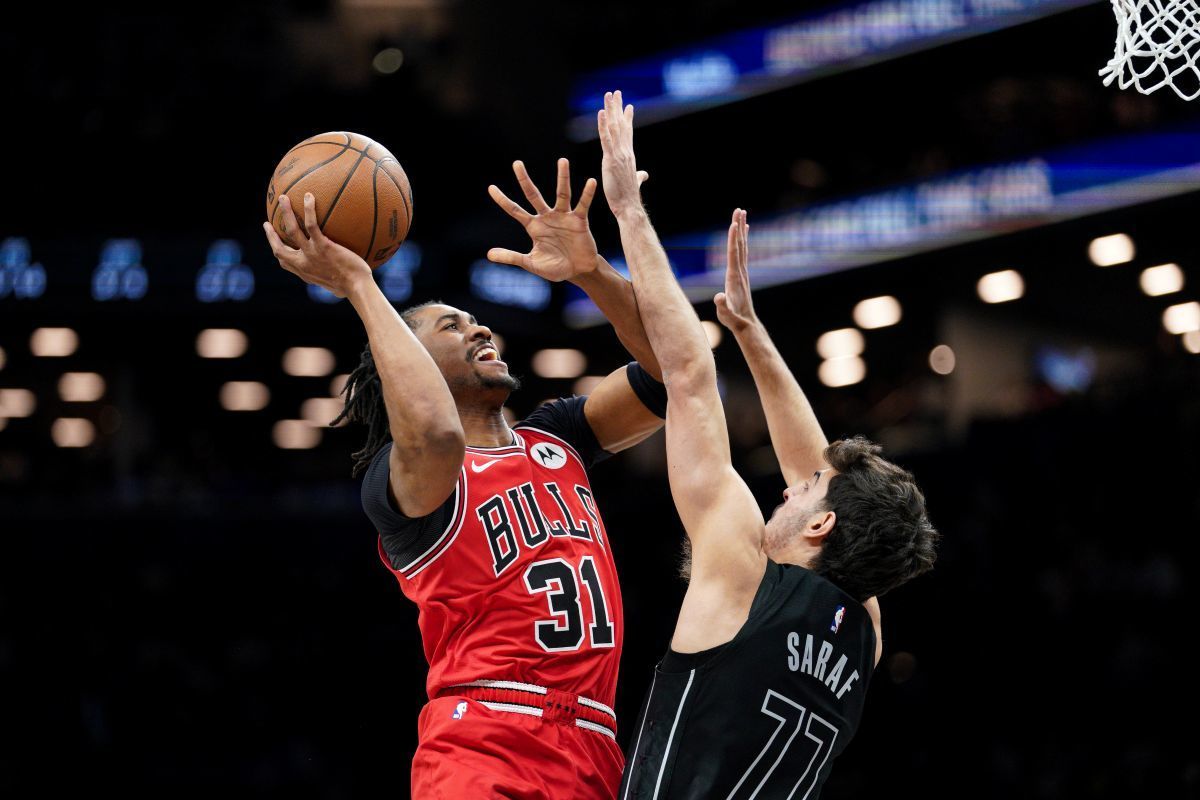
By Isaac Beck, Op-ed contributor Wednesday, April 01, 2026 Jaden Ivey #31 of the Chicago Bulls goes to the basket as Ben Saraf #77 of the Brooklyn Nets defends in the first half at Barclays Center on February 09, 2026 in New York City. | Getty Images/Evan Bernstein
The Chicago Bulls have a message to their Christian fanbase: your faith is welcome only if you keep it quiet and compliant.
On March 30, 2026, the Bulls waived guard Jaden Ivey, citing “conduct detrimental to the team.” They did so, not because of the season-ending injury he incurred. Not for poor performance before that. Not even because he refused to play or disrupted team activities. Ivey had already been shut down for the season with a knee injury just four days prior. Instead, Ivey did the unthinkable in 2026. He dared to speak openly about his Christian faith on his own personal social media accounts.
Ivey is no marginal talent scraping by in the G-League. He is a former four-star high school prospect who attended Catholic Marian High School in Indiana before transferring to powerhouse La Lumiere. A high school phenom, he chose Purdue over offers from Notre Dame and small school powerhouse Butler University. He was selected fifth overall in the 2022 NBA Draft by the Detroit Pistons. He’s even a gold medalist, having won the medal with Team USA in the 2021 FIBA Under-19 World Cup. In the NBA, he has consistently averaged nearly 15 points per game while ranking among the league leaders in scoring efficiency, playmaking, and ball-handling for his position. This is a young man who can compete with the best of them and do so at the highest level.
More importantly, he knows where he stands with his faith. Ivey has been transparent about his journey, including overcoming struggles with addiction before placing his trust fully in Jesus Christ. On his personal Instagram pages, JEDI (Jaden Edward Dhananjay Ivey) went live reading Scripture, preaching salvation through Christ alone, and addressing the culture around him. He stated plainly what the Bible teaches: that God designed marriage and sexuality for one man and one woman, and that celebrating what Scripture calls unrighteousness is incompatible with following Jesus. He did not make these statements on the court, in the locker room, or during any team-mandated event. He spoke as a private citizen on his own time and platform.
In turn, the Bulls responded within hours by waiving/firing the basketball star. They claim it’s for “conduct detrimental to the team.” Make no mistake, this is a direct affront to Christians who hold to traditional biblical theology. In today’s NBA, vague post-game thanks to “God” or a cross tattoo might be tolerated. Have the courage to articulate what the Bible actually says about human sexuality, sin, and repentance? That crosses the line into “conduct detrimental.”
This should alarm every believer, basketball fan or not. For years now, the NBA has aggressively pushed a series of woke agendas, turning its courts, jerseys, and platforms into vehicles for far-Left progressive orthodoxy. During the 2020 season restart, the league painted “Black Lives Matter” on both sides of every court, allowed players to replace their names on jerseys with social justice slogans, and encouraged kneeling during the national anthem. All of which was coordinated in league-wide solidarity. Teams wore “Black Lives Matter” T-shirts, and the entire enterprise was celebrated as courageous activism.
Year after year, the NBA has gone even further with Pride Month. The league marches in New York City Pride parades, adorns arenas with rainbow logos, hosts Pride Nights, and promotes institutional affirmation of LGBT lifestyles. These initiatives are not private opinions. They are top-to-bottom corporate campaigns designed to weave ever so blatantly into the very fabric of the game.
Yet when a young player like Jaden Ivey uses his own personal social platform to confess biblical truth and dissent from league orthodoxy, the response was immediate termination. The double standard could not be clearer. The NBA welcomes, amplifies, and institutionalizes certain ideological messages while treating traditional Christian convictions as toxic and potentially career-ending. One can give God a blanket thanksgiving at a post-game press conference, but if you reference personal transformation or a reality check on sin, pack your bags.
Even more telling was head coach Billy Donovan’s response. Rather than addressing Ivey’s actual statements, Donovan expressed concern that the young man might be struggling mentally. He stated, “Mental health is a real issue … I’m not passing judgment on what Jaden is or is not going through, but I do know that I always worry about that, not only for Jaden but for all of our players.”
In other words, publicly confessing biblical truth on social media is now being framed as a potential sign of mental instability. When a Christian athlete shares from his faith, the league’s response is not honest disagreement but an insinuation that something must be wrong with his mind.
The Chicago Bulls, and potentially the NBA, have made their priorities plain. They will bend over backward to accommodate and promote leftist social agendas, but biblical Christianity must be silenced. Christians who take Scripture seriously on matters of sexuality, marriage, and repentance are increasingly told their faith belongs in the closet.
Jaden Ivey chose faithfulness over compliance. Believers should pray for him as he enters free agency and recognize this situation for what it is: a flagrant foul on the court of American culture. When professional sports organizations punish athletes for off-court fidelity to Christ, the message to millions of Christian fans should be unmistakable: you aren’t welcome.
Isaac Beck is a writer and the project director of advocacy and government affairs for the Changed Movement. Rooted in small-town Michigan and shaped by a spirit of adventure, he now resides in Northern California. Go Blue!