
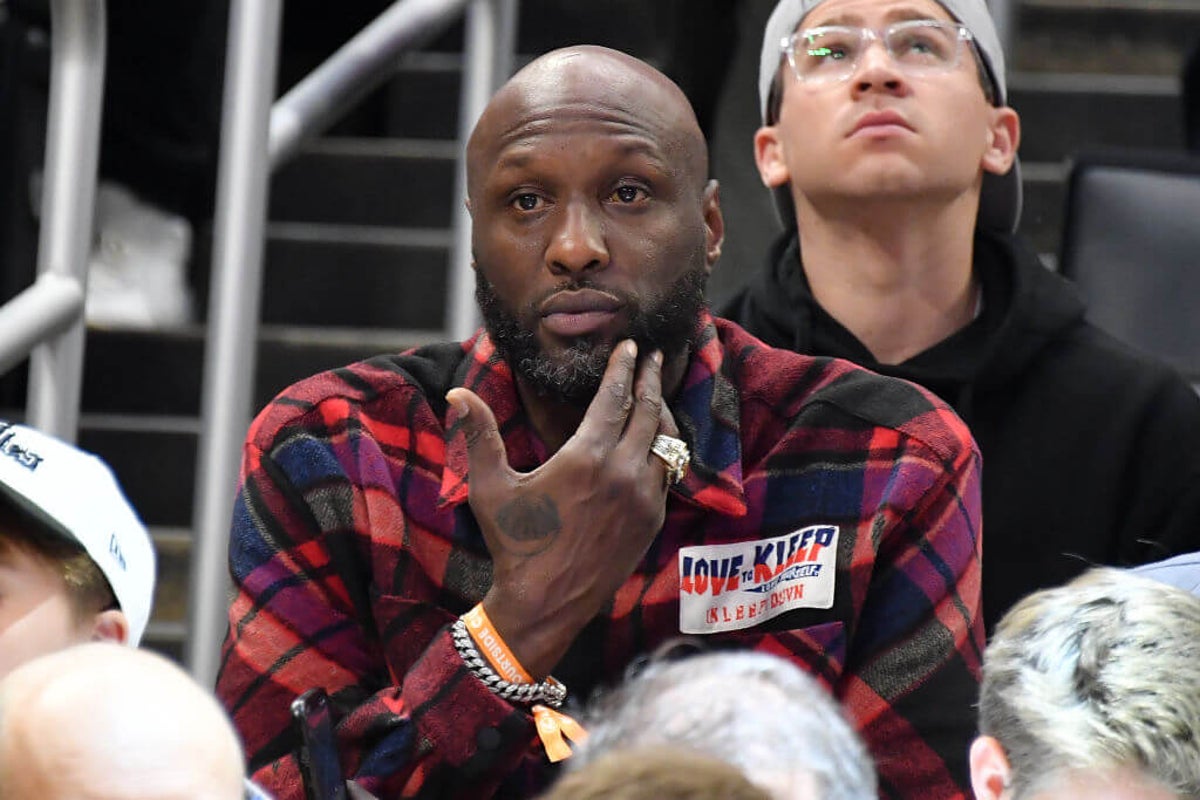
Lamar Odom, a two-time NBA champion and the 2011 NBA Sixth Man of the Year, is now 60-plus days sober.
Ahead of a July 7 bench trial after being arrested in January on suspicion of driving under the influence in Las Vegas, Odom is now on the heels of a 30-day rehabilitation stint that started in February. He has battled with drugs and alcohol for more than two decades — including a scary night I remember well.
Odom’s testimony surrounding addiction and a near-death experience is the spotlight for Netflix’s new documentary, “Untold: The Death & Life of Lamar Odom,” which premiered Tuesday. The doc, roughly 90 minutes long, recaps a dark moment of Odom’s life — including a time where he survived a coma, endured a dozen strokes, had six heart attacks and suffered partial kidney failure — but also focuses on a current chapter of sobriety and coping with inner demons.
“It’s something I’m very proud of,” Odom told The Athletic in an exclusive interview. “As I get another day, I feel like I’m just earning stripes to be able to tell my testimony to as many people as I can. I think that’s where the healing begins.”
The film delves into the Oct. 13, 2015, incident when Odom was found unresponsive at Love Ranch, a brothel in Nevada roughly 70 miles outside of Las Vegas. He reportedly had been there for three days.
I was a Sacramento Kings beat writer for The Sacramento Bee at the time, and the team was in Las Vegas for a preseason game against Odom and the Los Angeles Lakers. Rumors began to circulate following the game that Odom might die. I still remember the distraught look on the face of then-Kings forward Caron Butler, a former teammate of Odom’s. Some reporters even scrambled to get a word from Kobe Bryant to no avail.
From media representatives to players to team employees, no one knew what was going on, other than it appeared to be a dire situation. There’s usually an energy in the press room as reporters scramble to finish their work, but the mood was solemn.
Odom survived a coma, as well as life-threatening surgery, and gives graphic detail in the documentary of what happened 11 years ago. He admitted that there are some parts he doesn’t recall.
Odom’s family was in Las Vegas. Bryant was among those who made it to the hospital to visit him. Odom’s ex-wife, Khloé Kardashian, said Bryant was one of the people she talked to about the surgery.
There’s a lot to unpack in “Untold: The Death & Life of Lamar Odom” after years of speculation about what happened at the brothel.
“I just wanted to tell the truth about that night, because that night probably forever changed my life. Not probably — it did,” Odom said. “Gave me a different insight for life.
“My family was told two or three times they might want to say a final goodbye. … It was a miracle for me to be alive.”
The film also features interviews with those impacted by his struggles, including his children, Destiny and Lamar Jr.; their mother, Liza Morales; and Kardashian. The film offers less of a justification than an explanation, telling the story of how someone so talented could struggle with addiction.
“I think if you understand the death of his mom when he’s 10, the death of his 6-month-old son early in his NBA career …,” said Ryan Duffy, the film’s director. “If you understand his father, his relationship to substances, I do think you can kind of look at that Nevada thing, hopefully, with a little more empathy.”
Odom entered the NBA as a 6-foot-10 forward with the handle of a guard. He was the fourth pick in the 1999 NBA Draft out of Rhode Island, selected by the Los Angeles Clippers. He had 30 points and 12 rebounds in his debut, becoming one of only four players with a 30-point double-double in their first NBA game, joining Hall of Famers Wilt Chamberlain and Maurice Stokes, as well as two-time All-Star John Drew. Odom finished third in the 1999-2000 Rookie of the Year voting behind Elton Brand and Steve Francis, the last players to share the honor.
Odom signed with the Miami Heat in 2003 and was dealt to the Lakers in 2004 as a key part of the trade that sent Shaquille O’Neal to Miami. Odom was NBA Sixth Man of the Year with the Lakers in 2011 after helping the team to consecutive titles in 2009 and 2010.
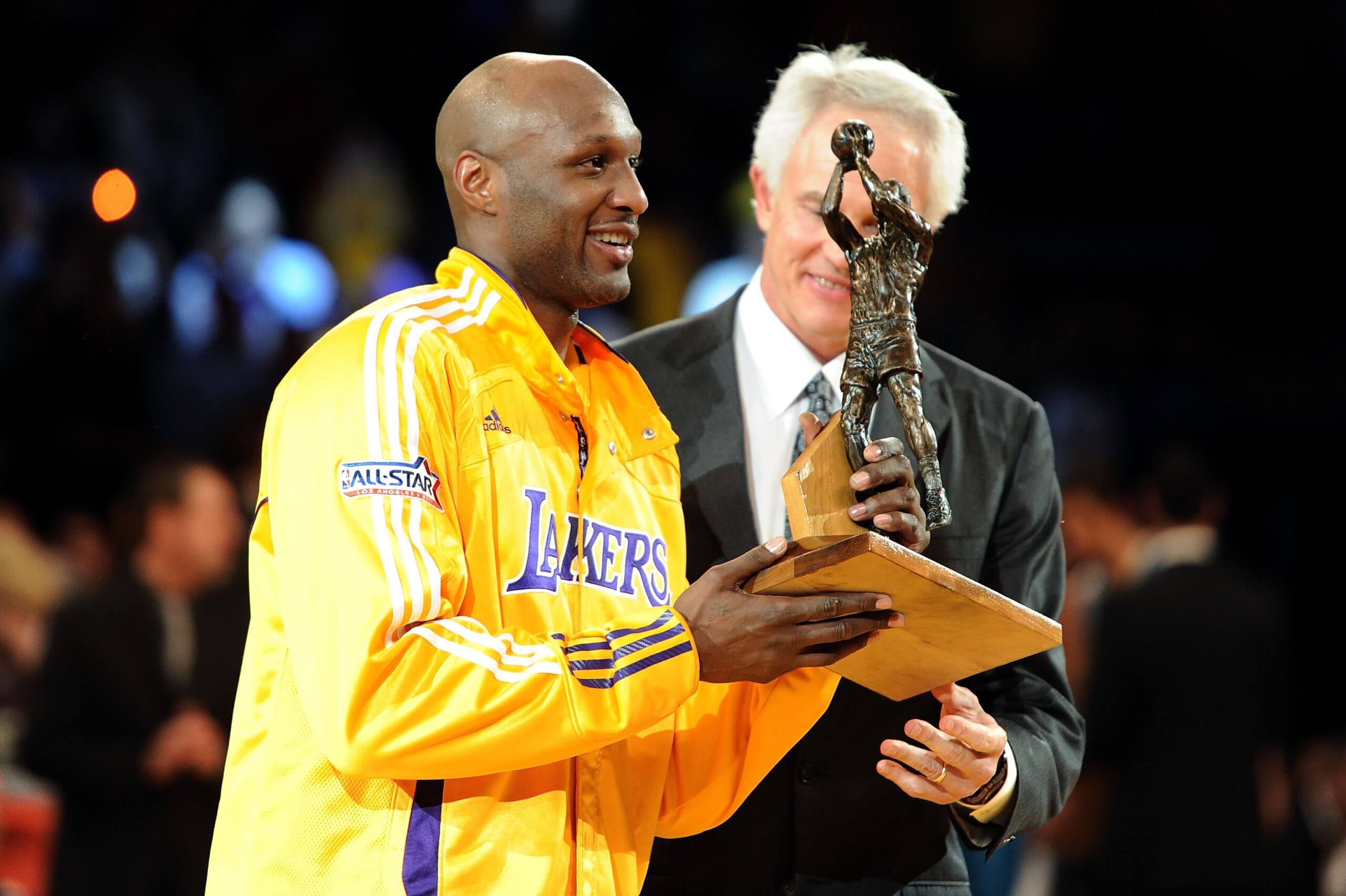
Lamar Odom was named the NBA Sixth Man of the Year in 2011. (Harry How / Getty Images)
Despite the on-court success, Odom was suspended twice by the NBA for marijuana use while with the Clippers.
“At one point in my life, I lived as a drug addict,” Odom said. “I loved doing, loved sniffing cocaine and smoking marijuana. I’ve never been a heavy drinker, but you know, when you’re doing one drug, of course, you open up for the next one.”
Odom acknowledges a lot of “shame” comes with addiction, but he believes his public struggles with sobriety can help others. Odom said he tries to be an “open book” to help people who are struggling, and sharing has the “ability to heal” those dealing with addiction.
Duffy said it took about a year to finish the project. Asking Odom to recount some of his darkest days wasn’t easy, but he added that Odom was never problematic to work with during production.
So much of Odom’s story has been in the news and in tabloids. Duffy said he wanted to get to what Odom and others felt didn’t make headlines. He said he didn’t want to press too hard, but he still needed to get enough to make the film work.
Duffy directed the Johnny Manziel “Untold” documentary released in 2023, so he leaned on that experience in sharing the story of an athlete dealing with addiction.
“I think the best version of Lamar was early on in the process,” Duffy said. “There were a few days as we kind of got to the end where it was clear to me that he wasn’t feeling his best, you know. He might have been struggling a little bit more — the answers weren’t always super forthcoming on the bad days — but he never was angry.”
I was curious as to whether Odom had grace for himself. He said his family still needs him to be strong and be an example, and that his story isn’t just for him. It’s to help everyone.
Odom believes, even in his struggles with addiction after the brothel incident, he is still alive because his testimony can help others.
“This last stint in rehab that I just went through, I learned a lot about my thought process and how it works when you have a diseased brain,” Odom said. “Hopefully, it’ll serve for addicts, you know, for their families to understand (and be) a little bit more empathetic. I don’t think no one asks for this disease, just like no one asks to have cancer or any other disease that they might have been born with.”
Correcting the information about himself from October 2015 is important, too. Odom said he wasn’t just a “party animal” who overdosed. His visit to Love Ranch was intended to celebrate his impending divorce, and he recalled having a drink and waking up three days later. He reiterated cocaine was not a part of his plans and added that he didn’t use the drug before being hospitalized.
“I was actually living in Vegas for about maybe less than a month, and I signed these divorce papers to my ex-wife. I thought I was going to be able to make a single man’s dreams come true,” Odom said. “I didn’t even have any cocaine to take to the brothel that night.”
Odom said his support system is strong. He has a new girlfriend and is happy to be alive and have his children in his life.
“I appreciate it, especially with my kids,” he said of the emotional support from his family. “I love them forever for that, because as addicts, sometimes, we don’t really realize or understand the hurt that we put on our loved ones from suffering with the disease and feeding this disease.
“How would you expect an addict’s mind to work? The first thing they do when they wake up in the morning is take a hit or take a sniff or smoke some marijuana or drink liquor. The consequences for most addicts are dying or being in jail.”
He’s also working to open up sober living homes to help other addicts. Being able to make a difference while telling his story in full — in word and in film — adds to a book with multiple chapters.