
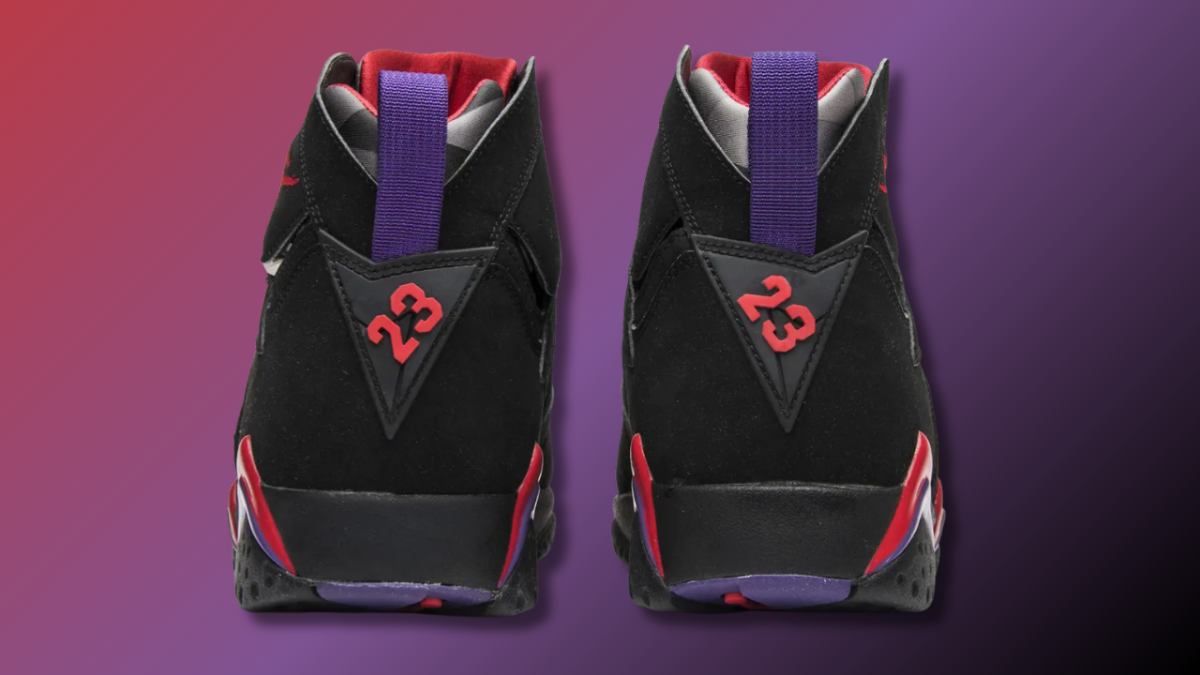
The Air Jordan 7 “Raptors” are returning after a 15-year hiatus. They earned their nickname from a colorway that mirrors the Toronto Raptors—despite the franchise not even existing when the OGs dropped in 1992. Black suede uppers, charcoal hits, and true red and purple grooves along the midsole made them standouts then, and those same details still hit ahead of their 2027 return. AJ7s don’t drop as often as other silhouettes, and looking at these, it’s hard to understand why.
Key Facts at a Glance
Field
Details
Model
Air Jordan 7 ‘Raptors’
Original Release
1992
Retros
2002, 2012
Style Code (2012)
304775-018
Retail (2012)
$160
Colorway
Black / True Red / Dark Charcoal
The Air Jordan 7 ‘Raptors’ Return Is Bigger Than It Looks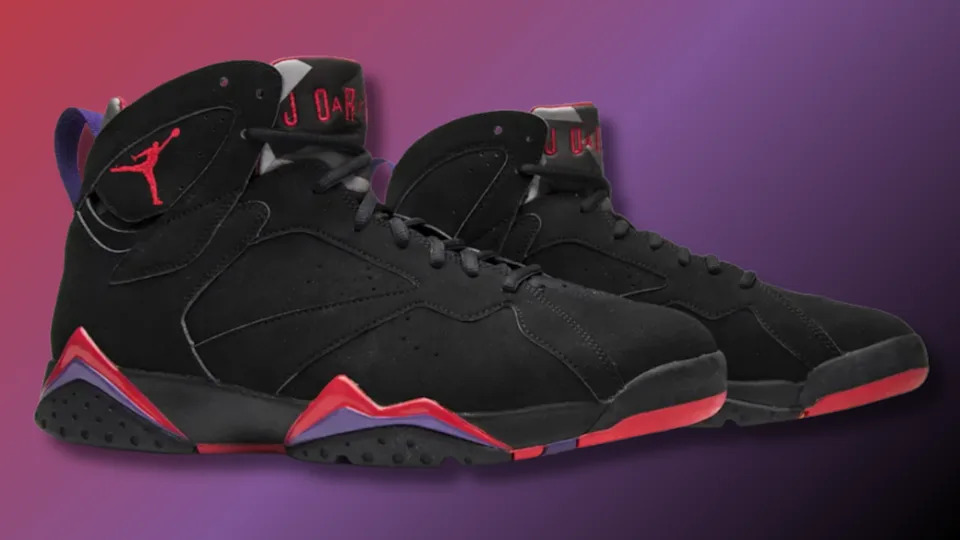
Nike Air Jordan 7 Retro ‘Raptor’Goat h/t Rabakali
(Goat h/t Rabakali)
The Air Jordan 7 “Raptors” has only been retroed twice since its 1992 debut, which makes this upcoming release feel especially significant. Prices for the 2012 pair are still hovering around $800 depending on size on platforms like StockX—clear proof that demand hasn’t faded.
Advertisement
For a silhouette that’s only retroed twice in 30+ years, the demand makes sense.
Previous reissues of the ‘Raptors’ AJ7 have featured noticeable changes in shape and details, putting them at a disadvantage compared to the OG. According to House of Heat, the 2027 version is expected to more closely resemble the original 1992 release—something that could drive even more demand for a silhouette that drops less often than most and still doesn’t get the love it deserves.
Why Air Jordan 7s Deserve More Respect
Michael Jordan won his second NBA championship wearing the Air Jordan 7, a model that often gets overlooked in the broader lineup. Designed by Tinker Hatfield, The performance-driven silhouette was the first of Michael Jordan’s signature sneakers to drop Nike Air branding entirely, marking a shift toward the Jumpman as the brand’s primary identity.
Advertisement
Another thing that makes the AJ7 unique is its subtle shift in build. Tinker introduced a neoprene inner sleeve—similar to the Nike Air Huarache and Gary Payton’s “Glove”—which created a snug, locked-in fit built for stability and balance. It also marked a departure from earlier models with the absence of a visible Air unit, giving the shoe a cleaner, more stripped-down performance feel.
The Culture Isn’t Waiting—It’s Overdue
The Air Jordan 7 “Raptors” was built for basketball, featuring a fitted inner sleeve, encapsulated Air cushioning, and a breathable, lightweight build—but it carries an undeniable swagger that translates just as easily off the court. With a 2027 Nike SNKRS release looming but not yet locked in, the culture isn’t just waiting—it’s overdue for the return of a championship silhouette dressed like a Toronto Raptors jersey.
Advertisement
This story was originally published by Athlon Sports on Apr 4, 2026, where it first appeared in the Style section. Add Athlon Sports as a Preferred Source by clicking here.