
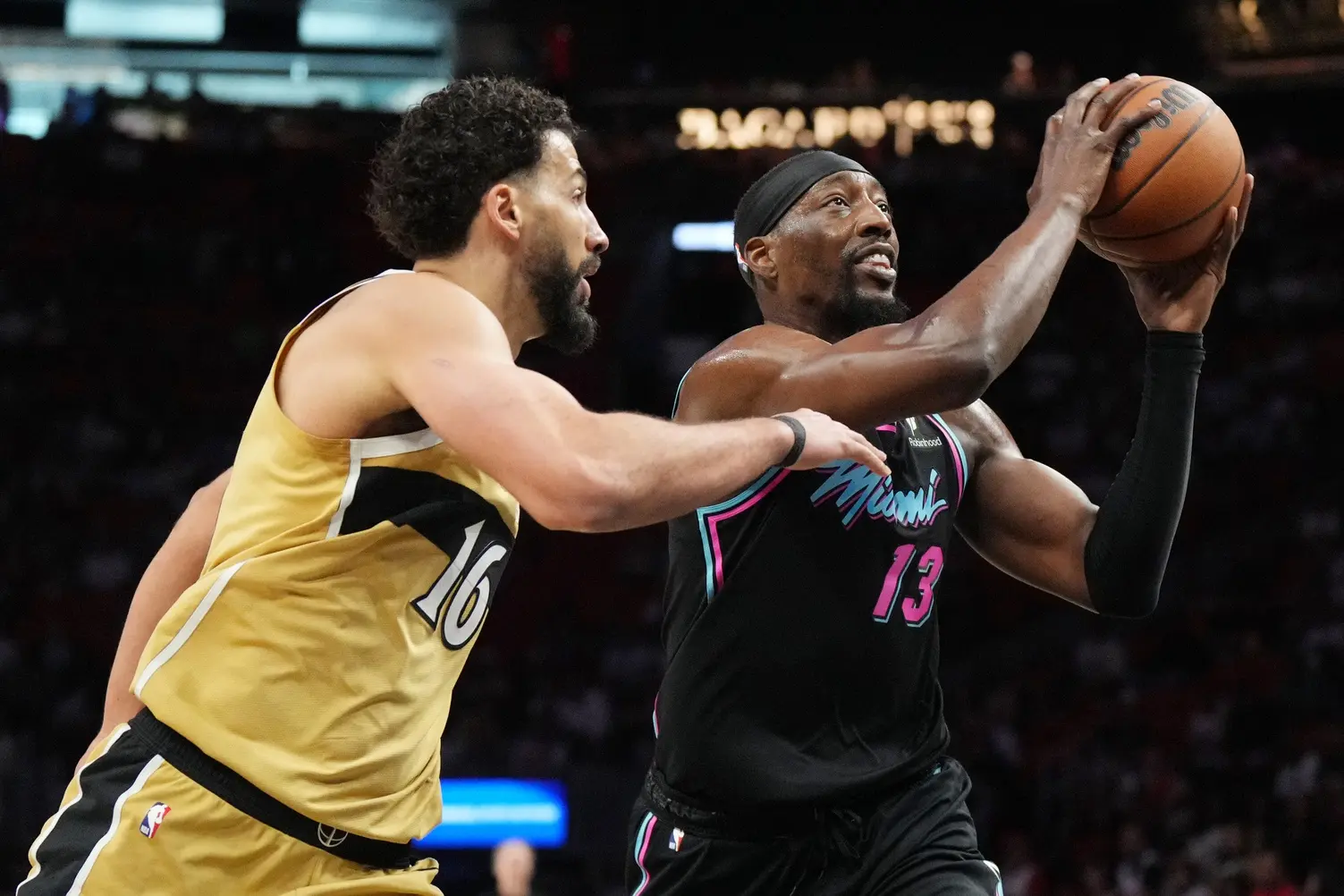
Despite ranking second in the NBA in scoring at 120.8 points per game, the Miami Heat find themselves fighting for a spot in the Play-In Tournament. After a strong start to the 2025–26 season, the team sits 10th in the Eastern Conference with a 41-37 record. Miami can score in bursts but has struggled to convert its high-octane offense into consistent wins late in the season. For the Heat, consistency has proven to be a weapon, but also a double-edged sword, highlighting their struggles.
Miami thrives in transition, using speed and quick possessions to overwhelm opponents. But the offense struggles to execute and create high-value scoring chances in half-court sets. To climb the standings, the Heat must pair their fast-paced scoring with disciplined plays that generate high-quality shot opportunities.
Why the Miami Heat Offense Is Struggling Despite High Scoring
Why the Miami Heat Offense Isn’t Clicking
On the surface, Miami’s offense looks elite. The Heat’s high scoring mark is a dramatic improvement from previous seasons. Much of this output is tied to tempo, as Miami plays at the league’s fastest pace, generating more possessions and inflating scoring totals.
Efficiency tells a different story. The Heat’s offensive rating sits at 115.4 (12th in the NBA), up from 113.5 last season when they ranked in the league’s bottom half. Much of the improvement comes from pace and scoring volume rather than true efficiency. Early-season injuries and roster changes disrupted rhythm, forcing younger players into expanded roles.
Several factors explain why Miami’s offense hasn’t consistently translated that production into wins:
High Pace, Mixed Results: Miami’s fast tempo generates points but often produces lower-quality shots in the half-court.
Strained Spacing: Limited three-point consistency allows defenses to collapse and contest interior scoring opportunities.
Half-Court Inefficiency: The team sometimes relies on contested mid-range shots instead of creating consistent rim pressure or drawing fouls.
Disrupted Possessions: Turnovers and uneven ball movement interrupt offensive flow, reducing the number of effective scoring chances.
Lineup Shifts: Injuries and rotations have required less experienced players to take on bigger roles, impacting efficiency.
Inconsistent Stretches: Early-season success was followed by periods of lower offensive output, highlighting streakiness in execution.
Other key stats reinforce the picture:
Points per game: 120.8 (2nd in NBA)
Offensive rating: 115.4 (12th in NBA)
3-point percentage: 36.0% (13th in NBA)
Assists per game: 28.7 (6th in NBA)
Turnovers per game: 13.6 (Top 10 highest)
In short, the Miami Heat offense generates points through pace and volume, but not always through efficient execution.
Miami’s Offensive Imbalance: High Points, Low Efficiency
Head coach Erik Spoelstra has pushed a faster, positionless offensive system this season. While it has boosted scoring, execution remains inconsistent, leaving the Heat struggling to translate high point totals into efficient production. At a crucial point in the season, this imbalance has become apparent, as high-paced efforts often fail to produce sustainable offensive results.
Spoelstra’s system emphasizes speed, versatility, and switching, aiming to create mismatches and open opportunities for all five players on the floor. All-Star center Bam Adebayo and guard Tyler Herro play key roles, using their versatility to run multiple actions and exploit mismatches. Their presence and leadership give the team flexibility, helping facilitate ball movement while creating scoring opportunities within the Heat’s up-tempo system.
Perimeter Shooting and Spacing Issues
Perimeter shooting has continued to be a major issue for Miami this season, despite a 36% mark from deep. They sit in 22nd in catch-and-shoot three-point percentage, highlighting spacing and timing challenges that expose structural weaknesses. After a strong 14-7 start, offensive efficiency dropped into the league’s bottom third at multiple points. This shows how inconsistent shooting has hindered overall effectiveness.
Miami’s offense frequently settles for contested, low-percentage shots. Poor outside shooting allows defenses to collapse into the paint, clogging driving lanes and slowing possessions. Relying on individual creation instead of fluid ball movement keeps scoring inconsistent and inefficient.
Roster Adjustments and Player Contributions
Miami has leaned on several players to step up during this transitional period. Adebayo continues to carry a heavy offensive load, while Herro has battled injuries but contributed effectively since returning. Forward Nikola Jović has struggled with consistency, and younger players like forward Pelle Larsson, forward Jaime Jaquez Jr., guard Davion Mitchell, and forward Andrew Wiggins are adjusting to expanded roles.
Guard Norman Powell’s absence has hurt Miami’s scoring depth and spacing. The offense has become more reliant on individual shot creation instead of fluid ball movement. Early-season injuries and roster changes have compounded these issues, forcing younger players to adapt quickly and making it challenging for Miami to sustain consistent offensive production while maintaining defensive stability.
Utilizing Adebayo Effectively
Adebayo is a defensive anchor, celebrated for his rim protection, switching ability, and overall versatility. He has also emerged as one of Miami’s most dynamic offensive players, though the team has not always leveraged his scoring and playmaking strengths. The team could lean more on pick-and-roll actions and two-man games, where Adebayo’s screening, passing, and finishing abilities can provide the Heat with a more reliable foundation for high-efficiency scoring opportunities, while creating space for perimeter players to thrive.
At the same time, Miami still needs to acquire a consistent top scorer and primary offensive initiator to balance the attack and fully capitalize on Bam’s two-way impact, providing Miami with a more sustainable, high-powered offense.
Turnovers and Ball Movement
The Heat rank sixth in assists per game but commit nearly 14 turnovers per contest, which disrupts offensive flow. Turnovers force rushed shots and make it easier for defenses to anticipate plays. They collapse on drives and close out on shooters, reducing the effectiveness of even Miami’s top scorers. Improving ball handling and on-court chemistry is essential for the Heat. These steps will help them fully capitalize on their offense and maintain consistent scoring opportunities.
From Points to Playoff Success: The Heat’s Road Ahead
Miami’s fast-paced style has contributed to defensive lapses, with opponents averaging 118.4 points per game. Combined with roster changes and injuries, these challenges have kept the Heat in the middle of the Eastern Conference, heading toward the Play-In Tournament for the fourth consecutive year.
Miami’s high scoring hasn’t consistently translated into wins due to poor perimeter shooting, inconsistent contributions, and uneven ball movement. This highlights the need for disciplined execution, precise passing, and balanced scoring leadership.
By refining their offensive structure, improving perimeter shooting, maximizing Adebayo’s playmaking, sharing scoring responsibilities, and limiting turnovers, the Heat can push for a stronger playoff position while turning their scoring firepower into sustained, winning performances—both for the rest of this season and beyond.
© Jim Rassol-Imagn Images