
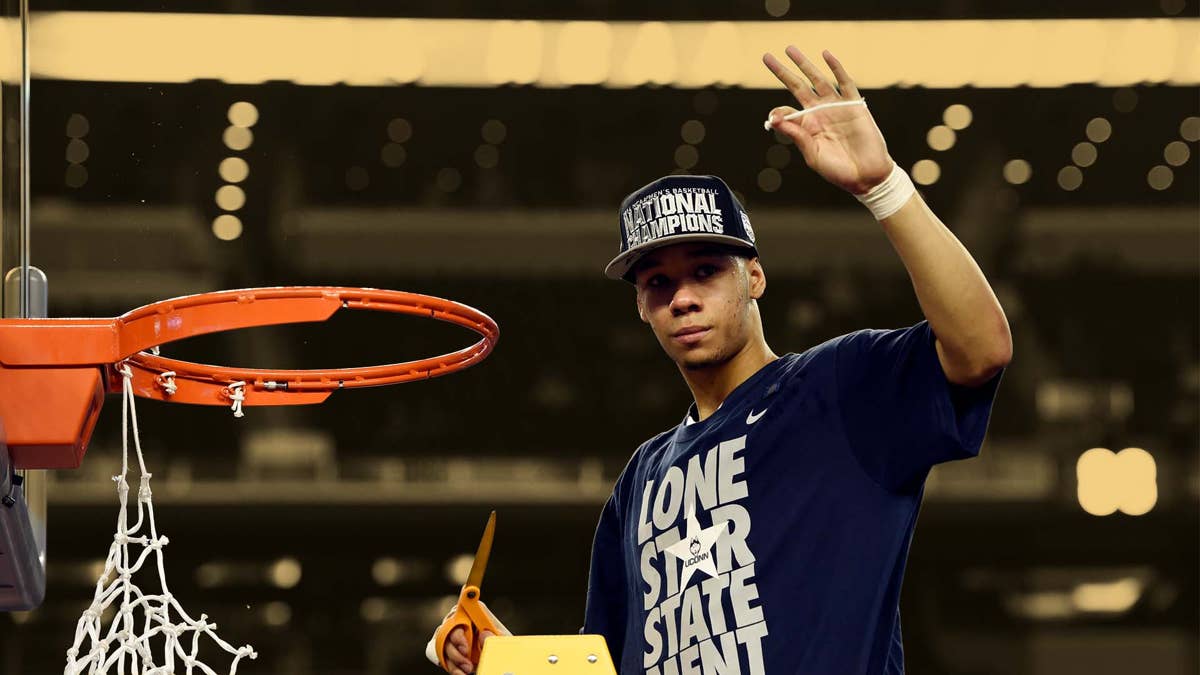
Shabazz Napier was one of the biggest college stars in the early 2010s, winning two NCAA titles with UConn in a span of four years, where he also earned the title of NCAA Most Outstanding Player.
His performances were electrifying and while he played more of a supporting role during the first title run, in the second, he truly left his mark and made it clear that he was one of the best guards in his class.
Advertisement
It was a time when college players generally did not receive any money or compensation for their success, before the NIL era, and the 6-foot guard of Puerto Rican descent once reflected on the challenges that period of his life brought.
“You know, we do have hungry nights that we don’t have enough money to get food and sometimes, you know, money is needed,” Shabazz said. “But I don’t think, you know, you should stretch it out to hundreds of thousands of dollars for players, because guys don’t know how to handle themselves with money.”
“So, but I think, you know, Northwestern has a good idea and we’ll see where it goes,” Napier added. “You know, I just feel like a student-athlete, there’s hungry nights where I don’t, I’m not able to eat, but I still got to play up to my, you know, capabilities.”
Advertisement
Napier was fighting for an NBA contract
Most African American players, especially those from immigrant families like Napier’s, don’t have the background or support system to provide a better life and many of them grow up in difficult environments where basketball becomes their only way out and a ticket to a better future.
In those moments, players of Napier’s background poured everything into the game, carrying not just their own dreams but the hope of lifting their families out of poverty and the mental weight of that kind of pressure was anything but easy to bear.
Advertisement
“I don’t see myself as so much of an employee, but, you know, when you see a jersey getting sold, it may not have your last name on it, but when you see a jersey getting sold, things like that, to some credit, you feel like you want something in return,” Shabazz stressed.
“And sometimes it feels that way, but as I said, I don’t think student-athletes should get hundreds of thousands of dollars. You know, like I said, there are, there are hungry nights that I go to bed and I’m starving,” Shabazz added. “So, something, you know, something can change, something should change, but if it doesn’t, at the end of the day, we’ve been doing this for so long.”
NIL changed the landscape of college basketball
Today, with the rise of NIL deals, the NCAA landscape has shifted dramatically. College players can now earn significant income while still in school, something that was unimaginable just a few years ago.
Advertisement
In some cases, the financial opportunities are so strong that even players with brief professional experience have considered returning to college, where the combination of exposure and NIL earnings can outweigh what they might make elsewhere.
Also, some stay longer in college if they are among the biggest stars in college basketball, as they can earn more than rookie contracts — something that was unthinkable just a few years ago.
While much of the world criticizes the size of these deals, the opportunity for these young players to secure their financial future and still earn a degree that can help them transition after their playing careers is something that can’t really be ignored.
Advertisement
A lot has changed in college basketball since the days when Napier went to bed hungry and the contrast couldn’t be sharper. What once was a world of struggle and uncertainty has now turned into one where young players can step into life-changing money almost overnight. Hundreds of thousands of dollars that Napier mentioned often turn into millions of dollars of NIL money, especially for the NCAA’s biggest stars.
Still, it remains unclear what the bigger picture will look like for athletes who suddenly find themselves with that kind of wealth so early in their lives.
Once, hunger drove players like Napier to push through every hardship just to make it to the NBA level, but today, financial security can realistically be built entirely through a college career alone and that shift changes everything about what drives these young athletes.
Advertisement
Related: “It’s like the Wild West” – Carmelo Anthony calls for an end to “free-for-all” NIL era
This story was originally published by Basketball Network on Apr 11, 2026, where it first appeared in the College section. Add Basketball Network as a Preferred Source by clicking here.