
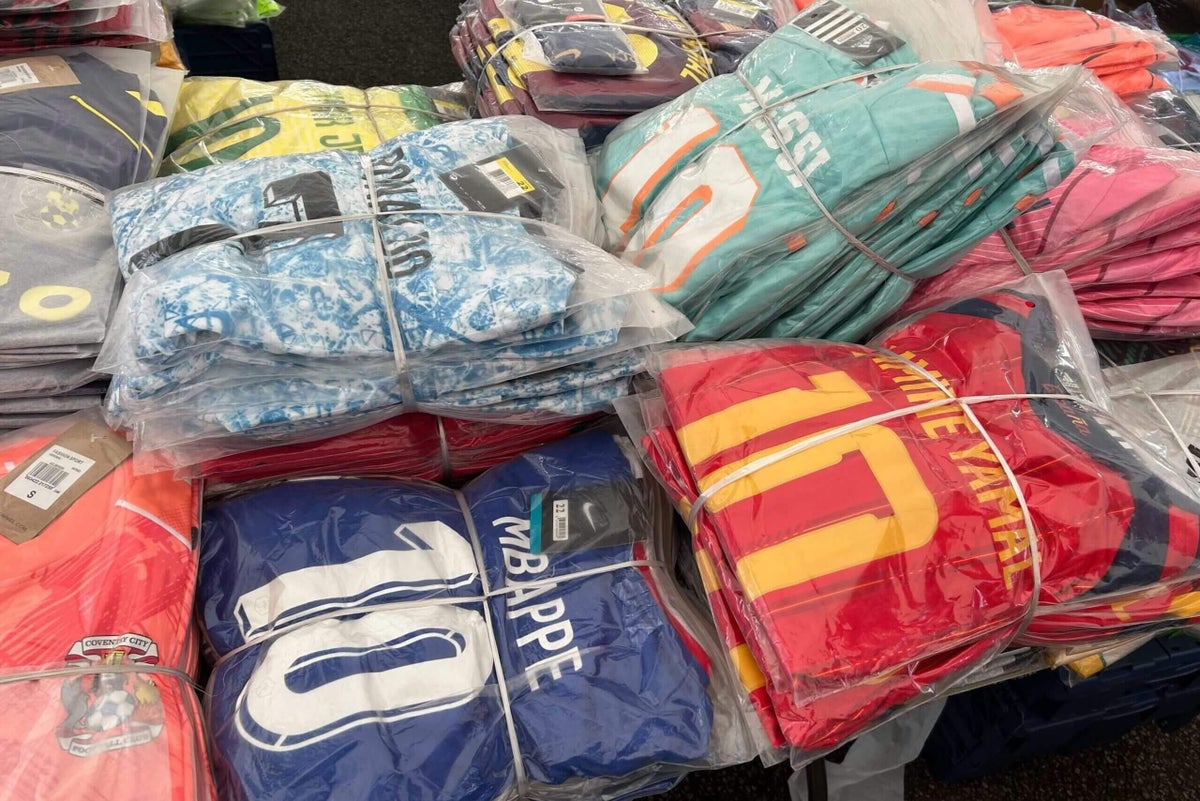
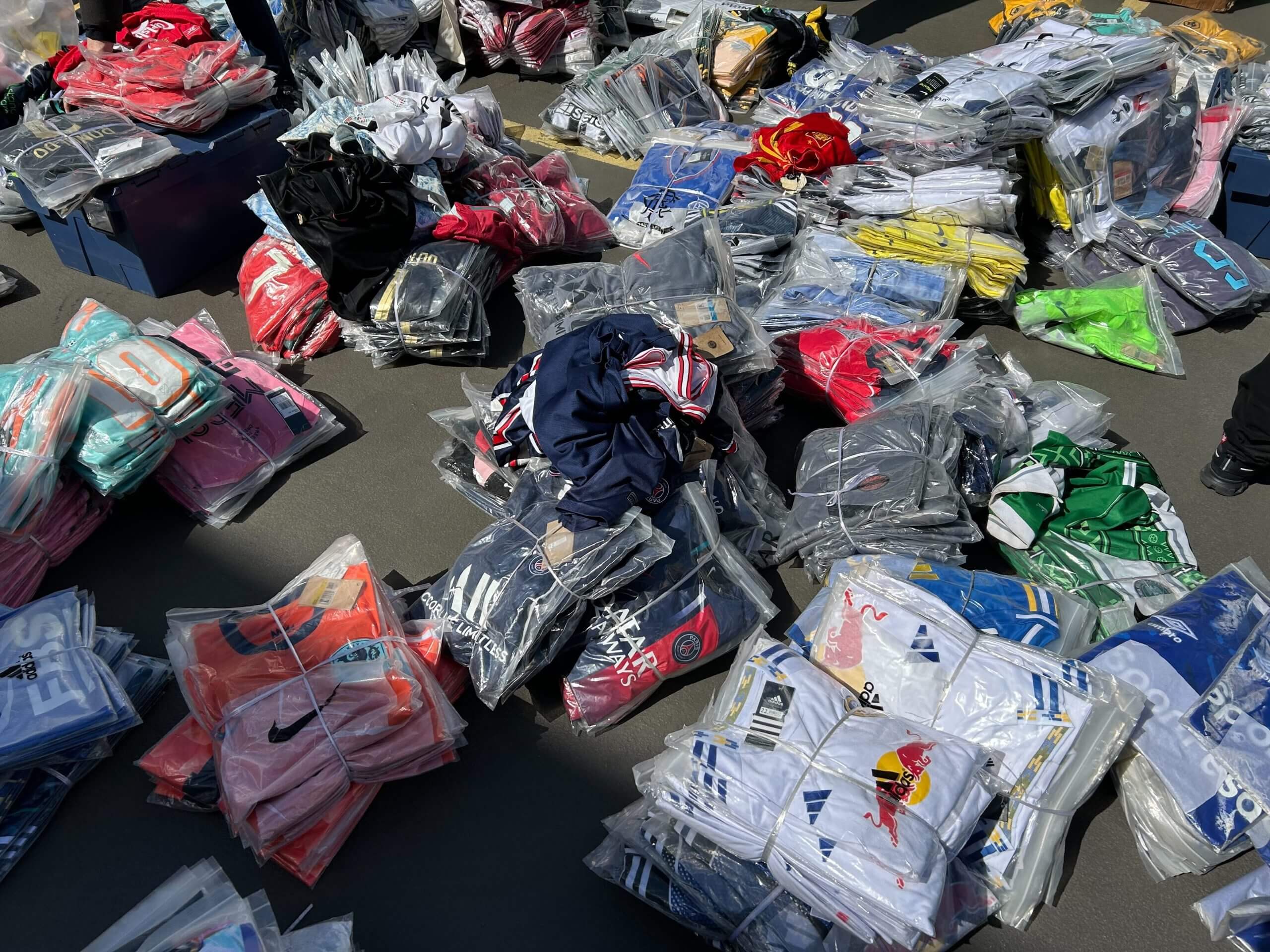
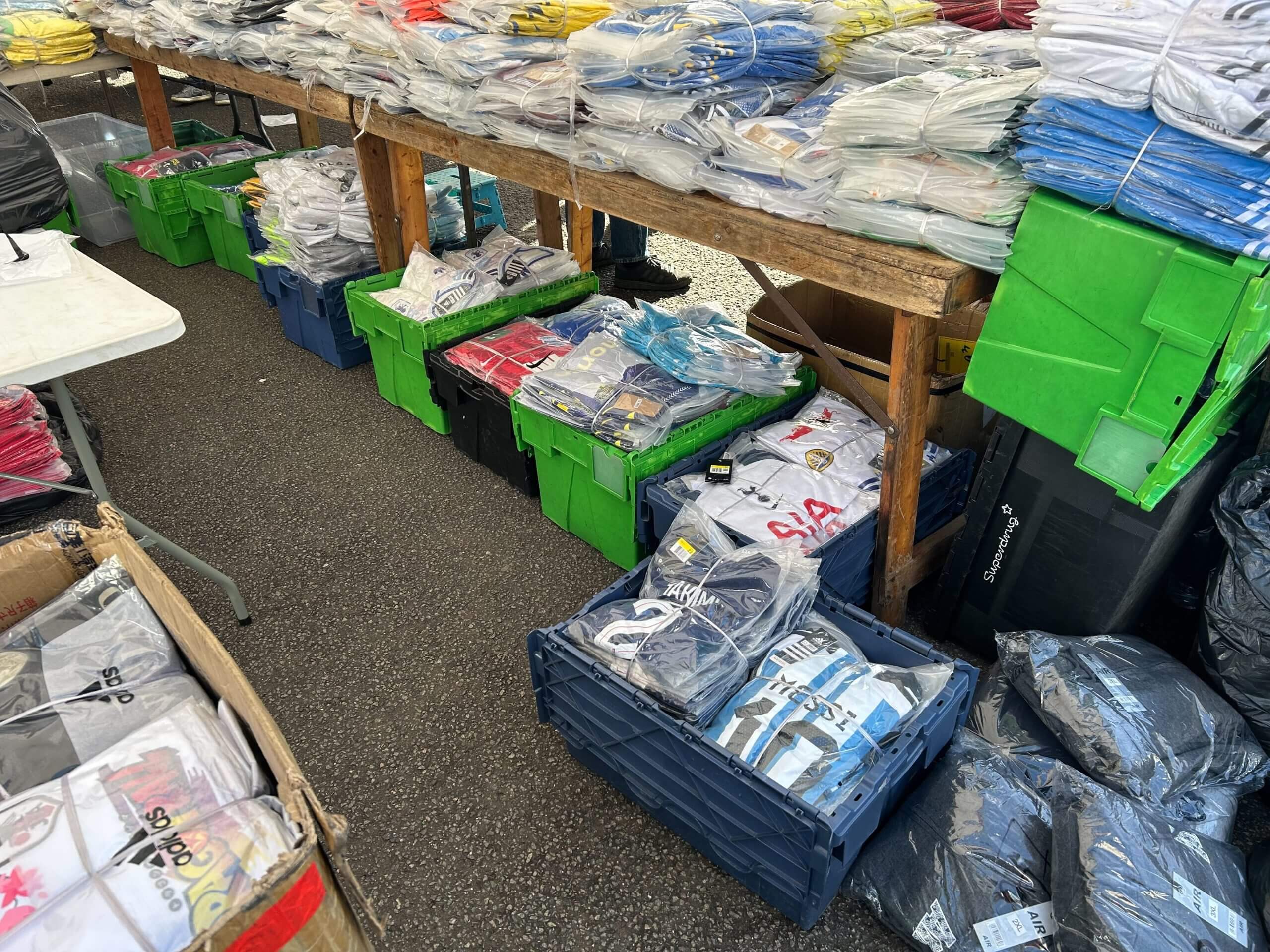
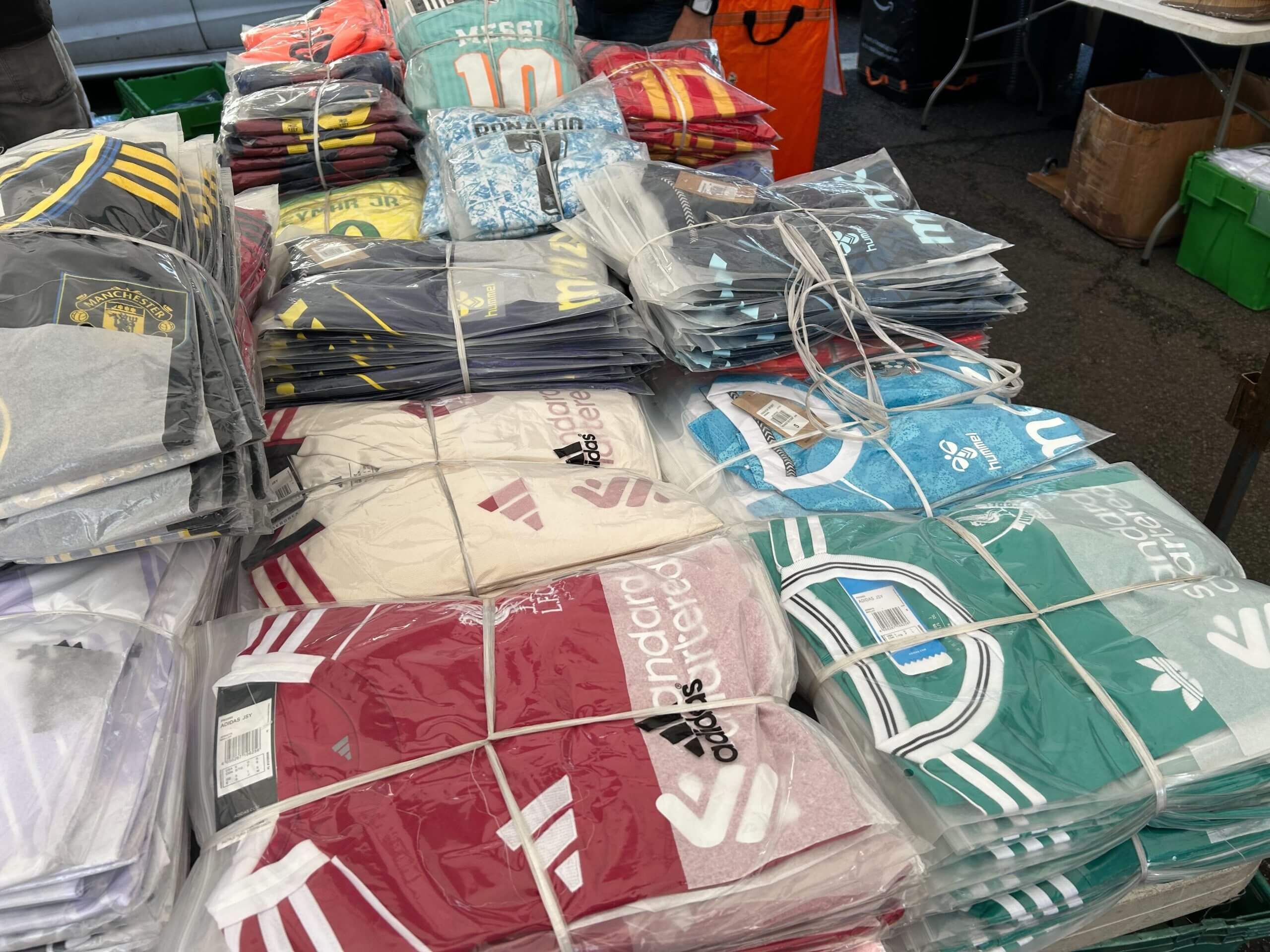
More than 4,400 fake football shirts have been seized by UK police in the biggest raid of a new pre-World Cup crackdown.
The early morning operation took place in the Midlands on Saturday at one of the largest outdoor markets in the country.
The cut-priced counterfeits — including shirts of major tournament teams such as Argentina, France, Portugal and England — were located at one stall that has been under long-term surveillance.
One man was arrested on suspicion of distributing counterfeit goods and taken into custody. He was later released on bail pending further investigation. Police confirmed that they intend to speak to further individuals believed to be involved in the case.
The police operation — code named Bloxwich, which includes collaboration with external partners and other law enforcement agencies — targets the sale and distribution of counterfeits, including illicit football shirts online and in physical locations leading into the 2026 World Cup this summer.
Seven officers from the Police Intellectual Property Crime Unit (PIPCU) at City of London Police arrived at the site just before 9am (BST) and carried out the raid of the stall, which was suspected of selling fakes for £20 ($27) compared to £80 ($108) for the real thing.
In total 4,433 items were removed from the stall and taken to a secure location to be analysed by experts and verified as counterfeits. All the items — including Premier League and major European club sides — were catalogued and retained for evidence. The haul represents a loss to the legitimate kit market of approximately £400,000 ($540,776).
“Many people see this as quite a minor crime, I understand that they want to get a shirt for their kids or themselves for the World Cup coming up, but this type of crime leads into far bigger criminality,” Detective Sergeant Jamie Kirk from PIPCU told The Athletic.
“It may appear to be a bargain, but the reality is that purchasing counterfeit goods can help fund serious organised crime, including money laundering, human trafficking, forced labour and drug supply.” Kirk also highlighted that “poor quality” items that “fail to meet required standards, can be flammable or contain harmful chemicals.”
(Adam Leventhal, The Athletic)
The Athletic highlighted the sale and criminal background of the counterfeit industry in ‘The Underground World of Fake Football Shirts’ — a special investigation episode of The Athletic FC podcast — in March 2025.
Last year, the Premier League intercepted 230,000 products and removed 130,000 online listings globally which, it says, prevented the sale of £20million worth of counterfeit goods. The rise in fakes is, in part, caused by the high price of the genuine articles.
England, France and United States men’s national team kit suppliers Nike charges £134.99 for a “football authentic jersey” for the World Cup with the same features as those worn by players in the tournament, while replicas are £89.99 (adult) or £69.99 (child). Made from recycled plastic bottles, the manufacturer says the products deliver “peak performance with lower impact on the environment” and “diverts an average of one billion plastic bottles annually from landfill and waterways.”
Adidas’s World Cup range — including reigning champions Argentina, co-hosts Mexico and four-time winners Germany — is priced at £60 (child), £85 (adult) and £120 (player edition). Puma, who supply kits for 11 of the 48 World Cup sides, have the same three product tiers priced at £135, £80 and £60. All of the prices listed don’t include personalisation, which ranges between an additional £15 to £20.
The Athletic found that 78 per cent of subscribers surveyed last year had bought a fake shirt, 66 per cent intended to continue doing so and 89 per cent cited cost as the main motivating factor. Despite established links between counterfeiting and organised crime, 42 per cent of respondents said that nothing would dissuade them from buying another fake shirt.
Following its tenth ‘Football Against Fakes’ event in November, the Premier League said by working with “clubs, partners and law enforcement authorities” it remains “steadfast in its commitment to reducing the sale and distribution of counterfeit products and continues to take action in this regard around the world.”
In the U.S. at the start of April, Immigration, Customs and Enforcement (ICE) warned fans “to remain vigilant against criminals seeking to profit from the global event through the sale of counterfeit merchandise” and highlighted a public awareness campaign called “True Fans Keep It Real”.
ICE Deputy Director Charles Wall said sellers are “preying on fan enthusiasm.” Last year, the National Intellectual Property Rights Coordination Center — working with Homeland Security Investigations directorate, U.S. Customs and Border Protection, and state and local law enforcement — say they seized 276,000 counterfeits valued at approximately $33m with a statement saying “With the World Cup drawing a global audience, ICE expects similar criminal activity and is taking proactive steps to protect consumers and legitimate businesses.”