
Two days before the NFL Draft, Chicago Bears assistant general manager Jeff King said they were looking for competitors. GM Ryan Poles added after Day 2 that they had been more aggressive in how they built their board, only including players who truly fit what they wanted, on and off the field.
Football character, play style and speed were the traits that carried across all seven players in the Bears’ 2026 draft class, but it’s what they didn’t address — the defensive line — that got a lot of attention after Rounds 2-3.
Best value pick
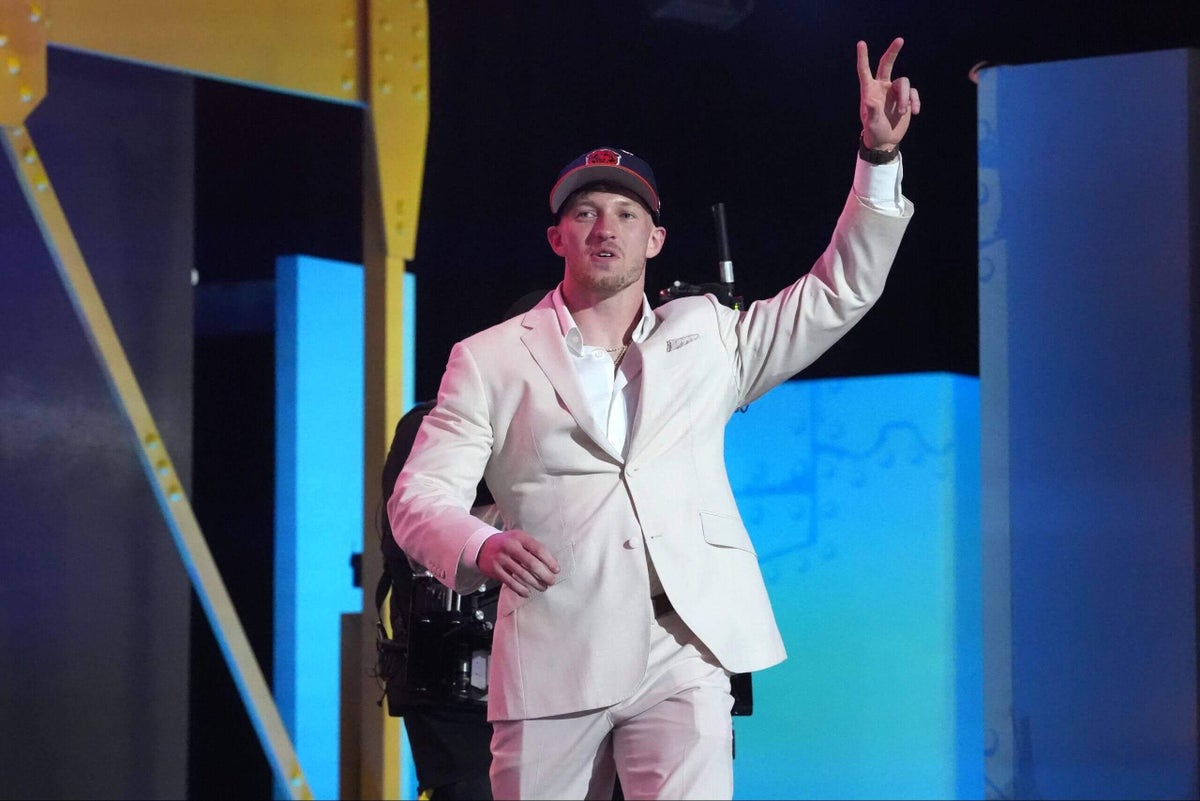
Based on the draft board of The Athletic’s Dane Brugler, safety Dillon Thieneman was ranked 18th overall. He was 17th on our consensus big board. Colleague Bruce Feldman had two defensive backs coaches tell him they had Thieneman rated ahead of Ohio State safety Caleb Downs. No one had any quibbles with the best safety available going to the team that had an opening at starting safety. It’s good value, a perfect fit and an immediate boost to the depth chart. For Thieneman to be a good value, too, in Round 1 is a plus for the Bears … especially when things got a little interesting on Day 2.
The consensus big board had cornerback Malik Muhammad ranked 86th overall, and the Bears traded up in Round 4 to take him 124th. This is a long, fast, competitive corner who put together some good tape against a very good Ohio State receiving corps. He can compete with Terell Smith and Cam Lewis to be the No. 4 corner and put himself in position to start in 2027, which would be impressive for a fourth-rounder.
Most surprising pick
In a vacuum, taking tight end Sam Roush makes sense. Here’s a big, physical tight end going to a team that ranks highly in multiple-tight-end sets and a head coach who wants to incorporate the tight ends. Then again, no one really thought pick No. 69, at the start of Round 3, would be where the Bears would find a No. 3 tight end. But they know Roush can be on offense for more than a quarter of snaps, and he can be a weapon on special teams — he relishes the third phase and was second in the country in special teams snaps as a freshman at Stanford. The Los Angeles Rams led the league in “13 personnel” and had a pretty good 2025 season. It’s a blueprint for how the Bears can use Roush more than they did with Durham Smythe. However, that pick — for a room that already includes a first- and a second-round pick — instead of defense surprised everyone not in the Bears’ draft room.
The selection of Zavion Thomas in the third round had fans and media members scrolling through draft guides to the back, as Thomas’ consensus ranking was 213th. The Bears are prioritizing the kickoff-return skills of Thomas and how the return rate skyrocketed last season with the new rules. They also believe he has the skill set to be effective with the ball in his hands, and that’s someone Johnson wants in his offense. But he’s not expected to step into a No. 3 receiver role, making it surprising to take someone that high with returns top of mind.
Biggest question mark
Who’s going to rush the passer?
Last season, the Bears finished 30th in the league in pressures (per Pro Football Focus), 25th in QB hits and 21st in sacks per pass attempt. The draft resulted in zero defensive ends and one defensive tackle, who was taken in Round 6.
The easy answer for the Bears is the guys who rushed the passer last year, which includes two whose seasons ended on injured reserve. Montez Sweat has been to a Pro Bowl and is coming off a 10-sack season. Austin Booker was second on the team in QB hits in only 10 games. Dayo Odeyingbo and Shemar Turner were showing promise right before their injuries. That’s the optimistic end of what the Bears bring back off the edge. With more speed at safety and linebacker, the coverage should improve, but there will be doubt about running it back with the same group of defensive ends.
Remaining needs
The defensive line was one of the biggest needs entering free agency and the draft, and all the Bears did was sign Neville Gallimore, Kentavius Street and James Lynch, and then draft Jordan van den Berg in Round 6. The Bears will exude confidence in what they bring back, which is their top four defensive ends and starting defensive tackles. But that group was one of the worst in the league in pressuring the passer and stopping the run.
They could still make a trade down the line, but they’re putting a lot of faith in what Odeyingbo and Turner could provide after season-ending injuries. They could be banking on Gervon Dexter taking a big step in a contract year, Grady Jarrett staying healthy and the newcomers helping the depth on the interior. In Round 1, it’s hard to take umbrage with the Thieneman pick. Auburn’s Keldric Faulk went six picks later and could’ve been the edge-rushing answer. The issue on Day 2 was that so many edge rushers went off the board early, and the Bears were in unfamiliar territory: at the back of the round, unwilling to part with all their Day 2 picks to take someone like T.J. Parker or Zion Young. This also wasn’t a good defensive tackle class.
Coming out of the draft with only one defensive lineman just puts pressure on the coaching staff and the returning players to ascend.
Post-draft outlook
Day 2 of this draft will be what gets scrutinized most. The three picks are not in line to be immediate contributors. Center Logan Jones could be a backup all year. Roush might be the No. 3 all season. And Thomas could be a kickoff returner who plays sparingly as a gadget on offense. Good teams that pick in the back of drafts can feel comfortable relying on their process and taking the best player available because they return so many good players. Though the depth is fortified on offense and the Bears can feel good heading into 2027 at several positions, the defense hampered them most last season. Now, Thieneman was their top pick, and they appeared to get good value with their Day 3 defensive players, but the focus this spring and summer will be on whether the defensive front can rebound.
This is also the first draft the Bears have had in recent memory in which there is built-in confidence with the head coach and quarterback. That should give them flexibility, and if fans trust Ben Johnson and Caleb Williams, the draft results won’t change that. They’re still the most important people in the building and the biggest reasons for hope to return to the postseason.