
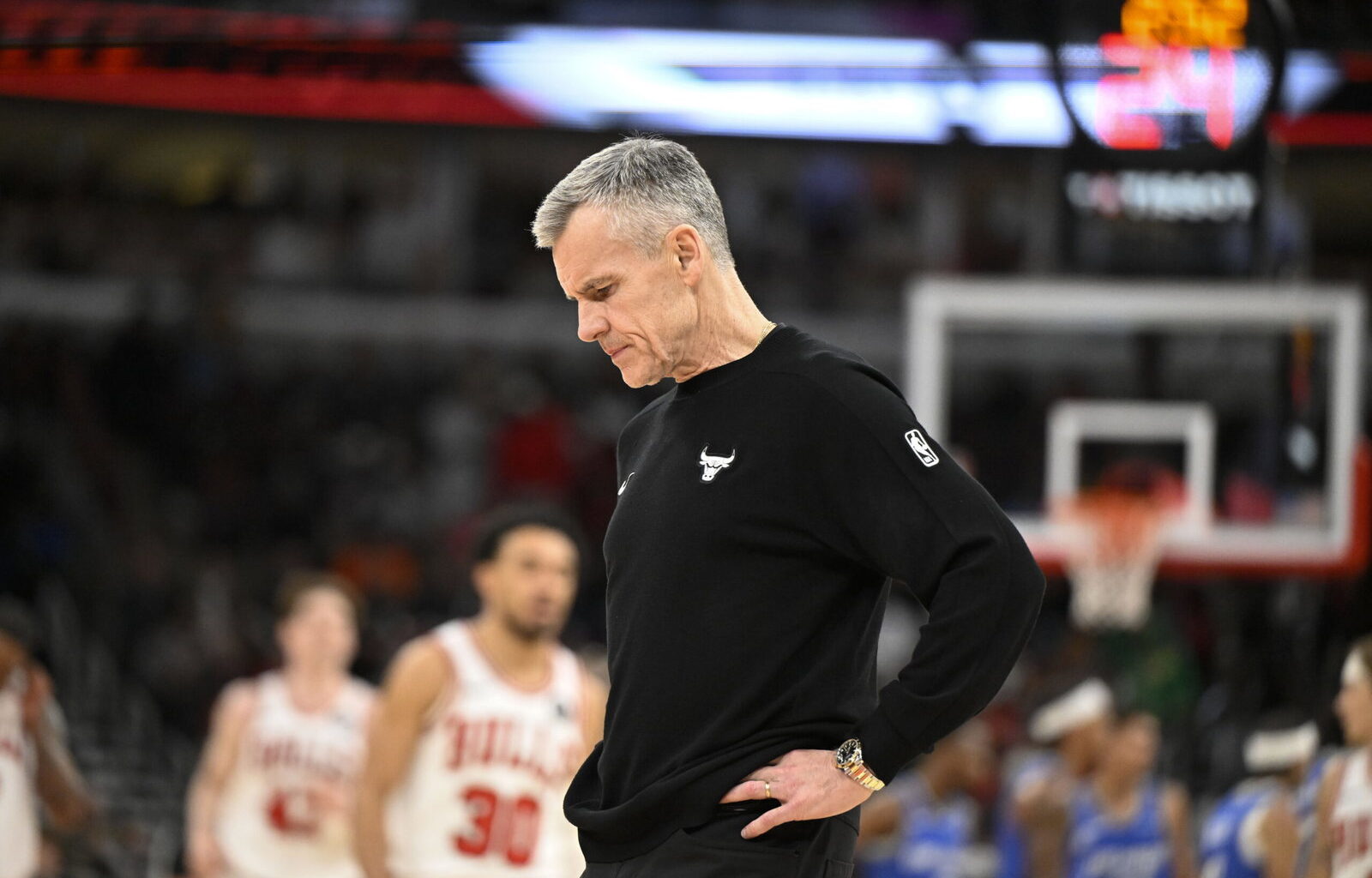
The end of Billy Donovan’s tenure with the Chicago Bulls doesn’t mark a single defining moment. Instead, it arrives as the culmination of drift.
Not quite failure, not quite success, but something far more frustrating: stagnation. Donovan was the Bulls’ head coach for six seasons, finishing with a 226-256 record (.469 win percentage). His departure from the team came after yet another year in which Chicago remained out of contention.
Now, with Donovan out, the Bulls are left staring at a question they’ve long avoided: What exactly are they trying to build?
Stability Without Stakes
Donovan’s time in Chicago will be remembered as steady, but ultimately unspectacular. He brought a strong sense of credibility when he arrived, fresh off a strong run with the Oklahoma City Thunder and a college national championship pedigree. Early on, there was optimism that he could stabilize a team in transition. To an extent, he did. The Bulls became more organized, more professional, and at times, more competitive.
But, the harsh reality? They never became something more.
That’s the crux of it. In a league defined by stars and identity, Chicago has consistently lacked both. The roster, built around players like Zach LaVine and DeMar DeRozan, hovered in the middle. The Bulls were just good enough to flirt with playoff contention, but never quite good enough to make the playoffs. Donovan, for all his strengths, couldn’t push them beyond that ceiling.
A Roster Without a Direction, and the Fork in the Road
The Chicago Bulls’ lackluster performance isn’t entirely on him. Coaching only goes so far when roster construction lacks direction. The Bulls’ front office has spent years trying to thread a needle between competing and rebuilding, yet has done neither effectively. Donovan became the face of that balancing act, whether he deserved it or not.
Still, coaching changes are rarely symbolic. They signal intent. And this one should force Chicago to be clear.
So, the question basketball fans all over are asking is: what happens next?
The most obvious path is a full reset. That means embracing a rebuild, moving on from veteran pieces, and prioritizing youth and draft capital. It’s not glamorous, and it’s certainly not immediate, but it’s the most honest approach. The Eastern Conference isn’t forgiving, and the Bulls, as currently constructed, aren’t keeping pace with the top tier.
Now all 14 lottery teams are set, we simulated the 2026 NBA Draft & these where the results, via @tankathon
1. Jazz, AJ Dybantsa
2. Bulls, Darryn Peterson
3. OKC (via Clippers), Cameron Boozer
4. Pacers, Caleb Wilson
5. Wizards, Kingston Flemings
6. Nets, Keaton Wagler
7.… pic.twitter.com/xwKjPYK98d
— NBA Retweet (@RTNBA) April 22, 2026
Tear It Down or Double Down?
But there’s another possibility, and it’s riskier: doubling down.
Chicago could look for a coach who maximizes the current core, someone with a sharper offensive identity or a stronger player-development track record who can extract more from Bulls stars Josh Giddey and Matas Buzelis, as well as the supporting cast. It’s a bet that the pieces are better than they’ve shown—that the right voice unlocks what Donovan couldn’t. That’s a harder sell, especially given the sample size, but it’s not unprecedented.
The choice between those paths will define the franchise far more than Donovan’s departure.
The Bulls desperately need a sense of direction. A change of leadership should allow the franchise to start fresh with a young core built around Josh Giddey and Matas Buzelis.
A new era begins in Chicago. https://t.co/XXmcAsJ2xS
— Jake Weinbach (@JWeinbachNBA) April 6, 2026
Then there’s the question of who steps in. Do the Bulls go for experience, hiring a proven head coach who commands immediate respect? Or do they take a swing on a younger, more innovative voice who aligns with a long-term rebuild? Across the league, we’ve seen both approaches work, but only when they align with the organization’s vision.
Right now, Chicago’s vision feels unclear. The hire will either sharpen it or expose it further.
Coaching in the Shadow of Greatness
There’s also a cultural layer to consider. The Bulls are one of the NBA’s legacy franchises, still living in Michael Jordan’s shadow. Every decision carries that weight. Every stretch of mediocrity feels amplified.
Donovan’s calm, measured approach helped ease the pressure, but it didn’t transform it or bring the fire to Chicago they needed. The next coach will inherit not just a roster but expectations that rarely match reality.
In the end, Donovan’s exit is less about what went wrong and more about what never fully came together. He wasn’t the problem, but he also wasn’t the solution.
Billy Donovan leaving the Bulls isn’t a move to retirement.
Donovan is expected to have interest from multiple NBA teams this summer.
The Magic, who originally hired Donovan in 2007 before he backed out, loom large here as a ready-made contender compared to Chicago’s rebuild. pic.twitter.com/fgLnrpc3AO
— Evan Sidery (@esidery) April 21, 2026
And that’s where things get interesting.
For the first time in a while, the Bulls don’t have the luxury of ambiguity. They can’t sit in the middle and hope internal growth will solve structural issues. This moment demands direction: clear, decisive, and probably uncomfortable.
Billy Donovan is departing. Now the Bulls have to decide who they want to be and what that means not only for Chicago but also for the future of such a legendary franchise.