
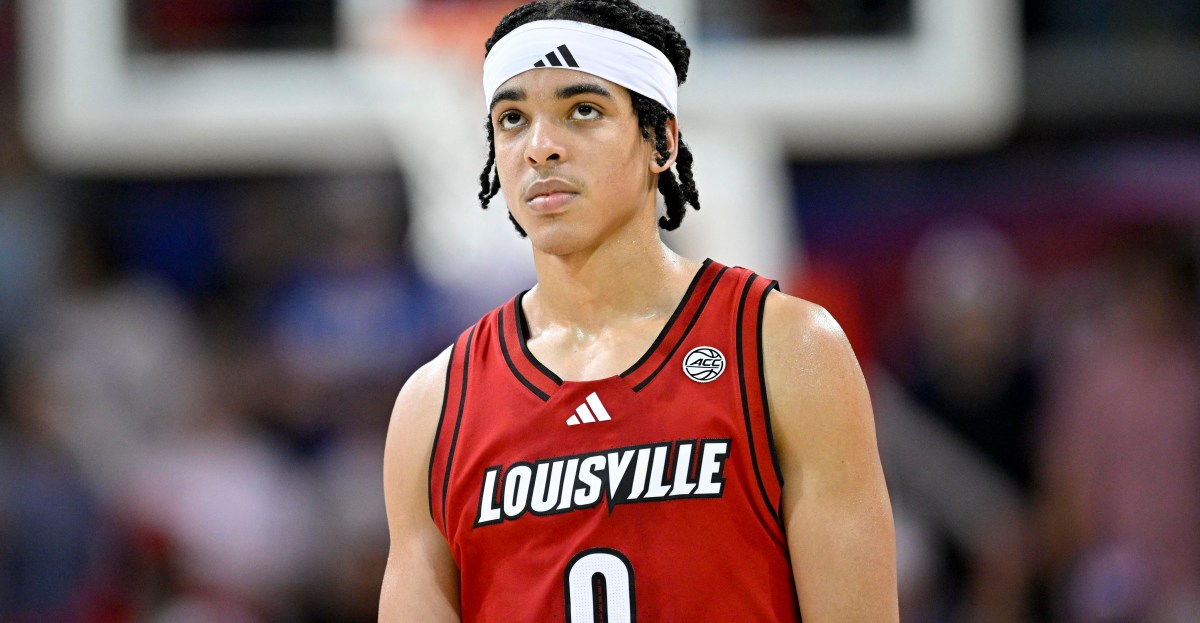
Brown’s best flashes were those of a top-five pick. He dropped 45 points with 10 made 3s in a game against NC State, then followed it up with 29 points, six assists and three rebounds against Baylor and 29 points, five rebounds and four assists against SMU. When Brown had it rolling, there was no more dynamic ball-screen playmaker in college basketball. He has range out to 30 feet, and his vision as a playmaker for others exceeds everyone in the class when playing in a screen. If anyone in this deep draft class could average nine or 10 assists per game in the NBA, it’s Brown.
So why does he slip to No. 8? Some negative aspects of his game resemble the issues LaMelo Ball has, while he’s not quite as dynamic as Ball is in his best moments. First and foremost, Brown is extremely wild. The turnovers are an issue. He hasn’t figured out how to moderate his decision-making. Second, his defense is a work in progress. He’s a serious negative in switch situations against stronger players, and his off-ball instincts are hit or miss. Brown’s back injury recurred later in the season, too, causing him to miss the postseason. He got very little time off from the end of his high school season to the start of his college season, going from the all-star circuit directly into the under-19 World Cup and then into Louisville’s preseason. Scouts want to know if Brown’s back is merely a short-term issue from overuse or if it could be a long-term problem.
For a team that moved Trae Young at the deadline and has some pressing questions at the lead guard spot, Brown makes a ton of sense. He’d fit next to players like Dyson Daniels and Nickeil Alexander-Walker, and his shooting ability would help accentuate Jalen Johnson’s driving skills.