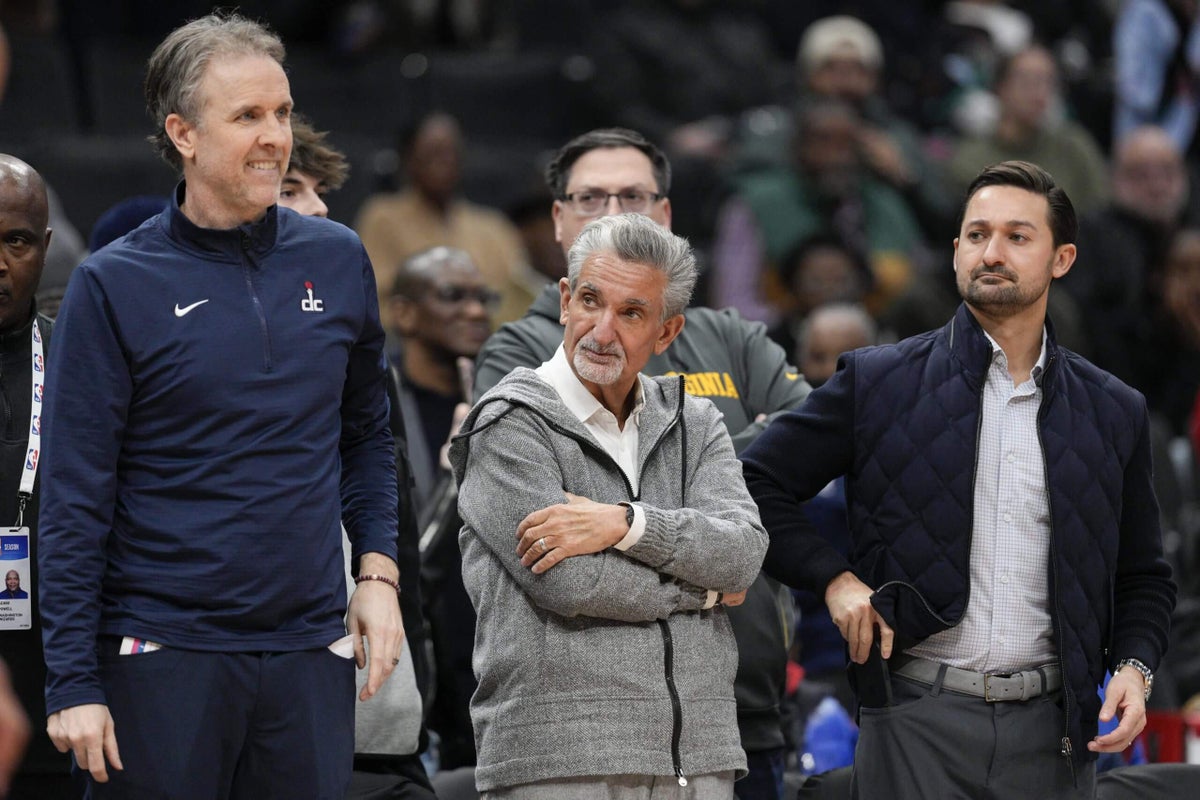
There were nights — many nights — when Ted Leonsis would sit courtside at Capital One Arena and not particularly like what he saw on the court, which was expected. Worse, though, might have been what he heard.
“There were some moments where people are yelling at you,” Leonsis said. “Some of the social media posts were enlightening, I’d say.”
When you care about what people think — and Leonsis cares about what people think — going through a “deconstruction” (his word) of your NBA team can be emotional and painful. Since Leonsis took full control of the Washington Wizards in the summer of 2010, only the Detroit Pistons have lost more regular-season games. In the three seasons since Leonsis hired Michael Winger as the top basketball executive to oversee the “deconstruction” (which we’ll define later), the Wizards have lost 196 games. That’s 20 more than any other team.
The plan worked perfectly. But everyone — from the most ardent fan all the way up to the owner who signs the checks — had to endure it.
“It’s never easy, that’s for sure, because you can’t fake it,” Leonsis said in a Zoom call Wednesday from his Florida vacation home. “You’ve got to go to the games. You’ve got to go to meetings. You’ve got to talk to the sponsors. You have to talk to the players and the coaches to assure everyone that you have a strategy, you have a plan and you can speak with some authority that there could be gold at the end of the rainbow — and the only way that you’ll know is when you get there.”
The Wizards are finally, mercifully there. “There’s luck involved,” Leonsis said, and the un-Wizards-like luck came in the form of landing the No. 1 pick in Sunday’s NBA draft lottery.
This is transformational. It means the tanking — sorry, the deconstruction — worked. Whatever those fans yelled at Leonsis, however mean-spirited the social media posts were, the moment has shifted. The Wizards, of all teams, hold all the power in June’s draft. That could mean BYU’s AJ Dybantsa. It could mean Kansas’ Darryn Peterson. It could mean — almost anything.
“If we were going to win the lottery, this was a good year to do it — not so much because of the concentration of talent, but it does give these very strategic thinkers lots of options,” Leonsis said. “I couldn’t tell you today what they will ultimately do. I can tell you how they’re thinking about it: They would be open for discussion. … We paid our dues and now we have the options, and we have a month to figure out what to do with that perspective.”
Sounds like trading back is on the table? Or at least isn’t off the table? Stay tuned.
It says here that tanking — and I can call it what it is, even if it’s probably not prudent for a team owner to use the t-word — was absolutely the right approach. When Leonsis finally moved on from the Ernie Grunfeld/Tommy Sheppard regime following the 2022-23 season, he did so because the Wizards were on a stationary bike. They might make the playoffs. They might miss the playoffs. They were never really a threat in the playoffs.
He turned to Winger, then an executive with the Los Angeles Clippers who had never run his own shop. Winger recruited Will Dawkins, a young and sharp talent evaluator with whom Winger had worked in Oklahoma City, to be his general manager. The assignment: Tell Leonsis the reality even if it might not be what he wanted to hear.
“He said to me three or four times, ‘You know, this could take four or five years,’” Leonsis said of Winger. “And I said, ‘I totally understand. I’ve been through the deconstructing stage with the Caps, (the NHL team Leonsis also owns). I lived through it the first time with the Wizards. I’m prepared. … I don’t see any other path to get out of where we are than deconstruct.’ And they executed it very, very well.”
This amounts to a master class in asset management. In three seasons, there are almost too many swaps of players for picks to account for. The roster transformation is so complete that the Wizards of 2022-23 — the year before the arrival of Winger and Dawkins — used 23 different players. Only one — veteran forward Anthony Gill — appeared for the Wizards in the most recent season. A season in which the Wiz went 17-65 and lost an incredible 26 of their final 27 games.
Which they did … intentionally. Not on the bench or in the locker room. But organizationally. Now, the NBA is poised to discourage such behavior by overhauling the lottery and making it less likely for the worst team to gain the top pick.
Ted?
“These are the rules you gave us, and we have lived up to those rules,” Leonsis said. “If we’ve done anything outside the rules, I understand we deserve to be fined. But you’d better show me where we’re outside the lines. Don’t fine us because there’s a lot of teams that now, perhaps, are trying to replicate this.”
The Wizards, Leonsis said, weren’t fined.
So here we are: With a month in which the most important sports topic in the nation’s capital might not be the release of the Washington Commanders’ schedule or whether the Washington Nationals can claw their way to .500 or whether Alex Ovechkin retires. The Wizards own the top pick in the draft. The Wizards will drive the conversation.
“If we’re successful, people will want to point to this one moment in time,” Leonsis said. “That’s just the easy way to look at it. But you know, I don’t look at it as though the rebuild has ended. The rebuild is just starting.
“I think it’s an important point on this long, long journey that we’ll be on.”
He paused a beat.
“The deconstruction, though, is over,” he said.