The 1970s and early 1980s were rough for American sports and entertainment as they experienced a huge drug use problem that was prevalent during that era. The NBA had to go through it as well, hurting its image and leading to low television ratings and a drop in popularity.
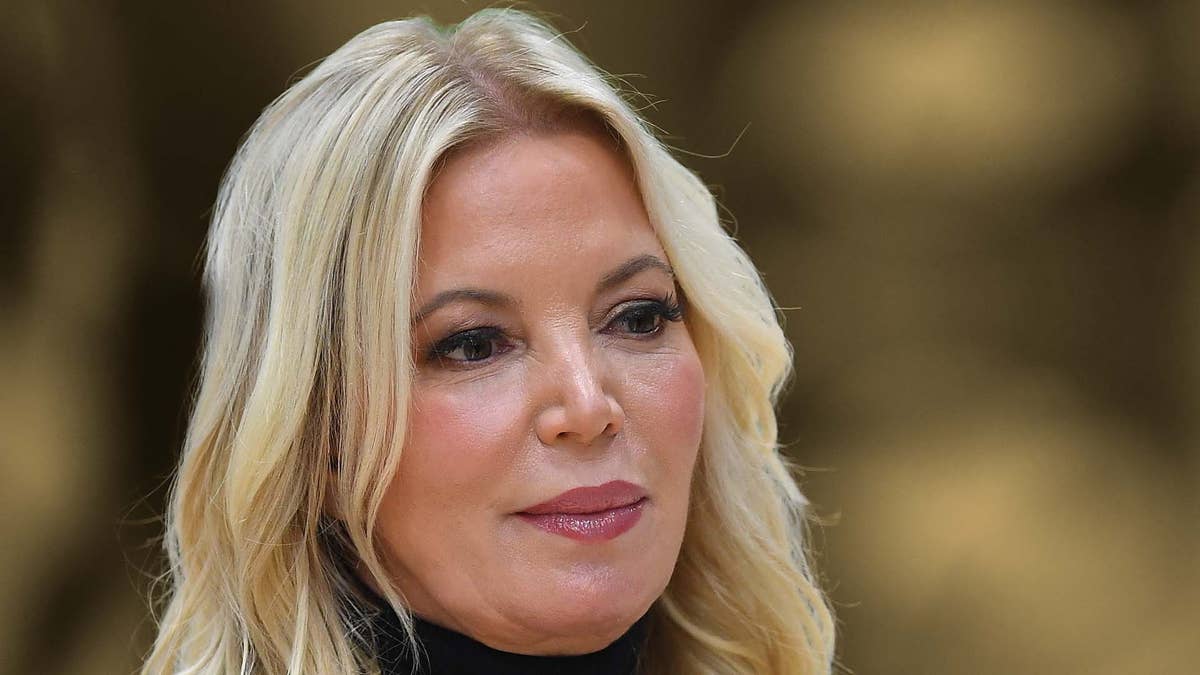
And almost every team had to deal with it, including established ones like the Los Angeles Lakers, with current team governor and minority owner Jeanie Buss attesting to it.
Advertisement
The eldest daughter of the late Lakers owner, Dr. Jerry Buss, spoke about it in the book “Showtime: Magic, Kareem, Riley, and the Los Angeles Lakers Dynasty of the 1980s” (2014) by author Jeff Pearlman.
Jeanie recalled being just 19 years old when she witnessed firsthand how widespread drug use was in the City of Angels at the time, including among certain members of the Lakers organization.
“Cocaine was the perfect Los Angeles drug,”shared Buss in the book.
Advertisement
“People could party all night and they honestly didn’t think it did them any harm. There was a belief that you could do coke and it wasn’t addictive. I never tried cocaine, but one night I was at a club and this guy was hitting on me. I was nineteen, he was probably thirty. And he goes, ‘Do you like snow?’ I said, ‘I hate skiing. It’s just too cold’ Then I realized…” she added.
Spencer Haywood’s situation
One of the prominent Lakers players who was well known to be involved in drug use was Spencer Haywood, who was part of the 1980 NBA champion team that started the “Showtime Era” in Los Angeles.
Advertisement
Haywood, who made history early in his career by challenging the NBA’s eligibility rules, was able to handle his drug use and performed well for his team off the bench, averaging 9.7 points, 4.6 rebounds, and 1.2 assists in 20.3 minutes, and helping the Lakers to a Western Conference-best record of 60-22.
In the playoffs, however, particularly in the NBA Finals against the Philadelphia 76ers, he unraveled. After a night of smoking cocaine, as Pearlman wrote in his book, Haywood went to practice and tried to act normally, but fell asleep while they were stretching on the basketball floor.
Michael Cooper tried waking him up, but to no avail. When he finally woke up, coach Paul Westhead ordered him to go home. It marked the end of his tenure with the Lakers, as he was dismissed from the team prior to the start of the Finals series against the Sixers and was not part of any team photo or parade for the champion team.
Advertisement
Not surprisingly, Haywood did not agree with the way he was treated by the Lakers, although he is recognized as a champion.
“That’s a bitter taste there, when you’re handing out stuff to everybody and I played all these games, the whole season, at least give me my s***,”said Haywood, according to “The Spencer Haywood Rule: Battles, Basketball, and the Making of an American Iconoclast.”
Recovery of the NBA
The NBA eventually moved past its problem with drug use and steadily regained its popularity.
Advertisement
Magic Johnson and Larry Bird built a rivalry that helped revive the league and brought a whole new level of attention to the game. Then the era of superstars like Michael Jordan, Charles Barkley, Karl Malone, Hakeem Olajuwon and later on Shaquille O’Neal, Kobe Bryant and LeBron James came along and took things to the next level, giving rise to what the NBA is today.
As for Haywood, he has also recovered and said he has been sober for 40 years now. In 2015, he was enshrined in the Basketball Hall of Fame for what he accomplished on the basketball court.
From where it was in the 70s and 80s with drug use, it is truly a great sight to see the NBA healthy and flourishing the way it is now. Drug use issues come here and there, but they are seemingly a thing of the past, and hopefully, it stays that way.
Advertisement
This story was originally published by Basketball Network on May 17, 2026, where it first appeared in the Old School section. Add Basketball Network as a Preferred Source by clicking here.