
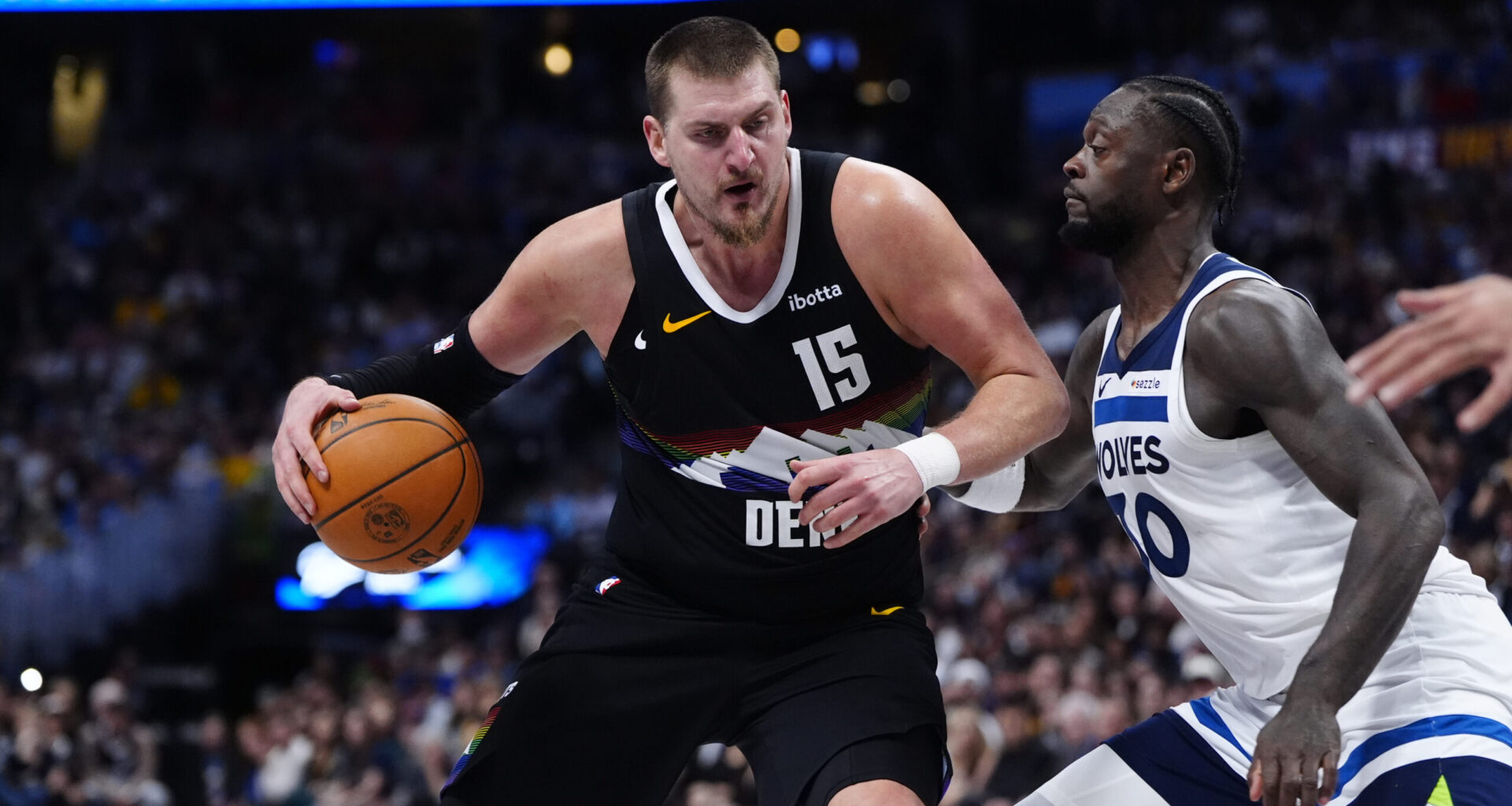
When the 2026 NBA Draft begins on Tuesday, June 23, franchises will look to change their trajectory with one savvy selection.
History shows most of the NBA’s all-time legends come from the first few picks of the draft. But there are exceptions. Diamonds in the rough.
MORE: 3 NBA players likely to be in blockbuster trades ahead of draft
In the lead-up to this year’s draft, The Big Lead put together an all-time NBA Draft. With the help of AI, TBL created a full 30-team, 12-player-per-team draft based on each player’s peak season of performance and playoff production. That’s 360 all-time NBA players ranked as draft picks with the benefit of knowing what they will produce.
The players are judged relative to their era, then placed in a modern five-on-five setting.
Now we take a look at players who made the all-time NBA Draft despite a relatively low draft position in real life. For this list’s purposes, a player who was not a pick in the current NBA lottery (top 14 overall) qualifies as a steal.
Below is a list of 11 NBA Draft steals, ranked by how high they were taken in our all-time draft. A note: the playoff-adjusted rankings used for this list do not include the 2026 postseason, which is why Jalen Brunson, taken No. 33 by the Dallas Mavericks in 2018, falls just outside the top 11.
Nikola Jokic, No. 41, Denver Nuggets (2014)
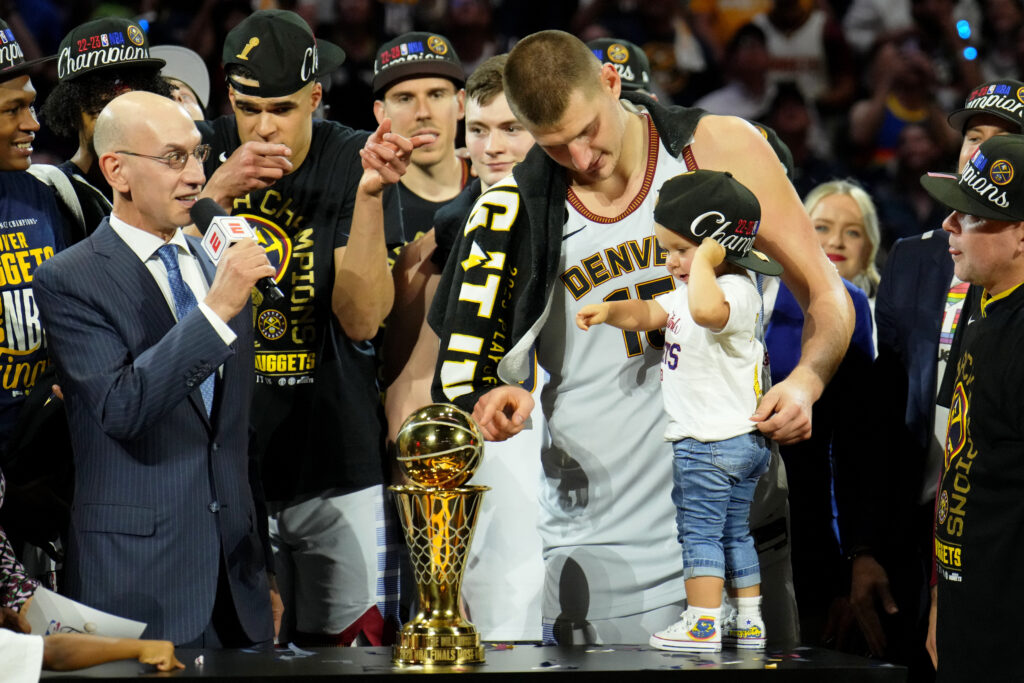 Denver Nuggets center Nikola Jokic (15) and his daughter point to the Bill Russell NBA Finals MVP Award trophy after winning the 2023 NBA Finals against the Miami Heat. | Kyle Terada-Imagn Images
Nikola Jokic, the No. 14 overall pick in our all-time draft, was selected during a Taco Bell commercial and looked like a standard second-round stash. Instead, the Denver Nuggets wound up with a playmaking center who has since piled up three MVPs, an NBA Finals MVP and a championship while posting efficiency and usage numbers that belong in their own category.
Denver slowly cleared the deck to build around Jokic. They chose his timeline, dealt veterans, and assembled a group of cutters and shooters who could thrive in a system where the center is the offensive fulcrum. Considering that virtually every team in the league had at least one chance to take him before pick 41, Jokic is arguably the greatest pure value find in draft history and a clear franchise anchor.
Kawhi Leonard, No. 15, drafted by Indiana, traded to San Antonio (2011)
 The Los Angeles Clippers’ Kawhi Leonard dunks over the Utah Jazz. | Kevork Djansezian/Getty Images
Kawhi Leonard, No. 19 in the all-time draft, entered the league as a defensive specialist with a shaky jumper, taken 15th in 2011 and flipped to San Antonio on draft night. The Spurs initially slotted him as a role player next to Tim Duncan, Tony Parker and Manu Ginobili, but his two-way growth forced an organizational shift. By the 2014 title run, Leonard was both the primary wing stopper and a crucial offensive option.
After Kawhi’s leap, San Antonio built schemes that maximized his length and isolation scoring, and then a different franchise later made him the centerpiece of another championship push in Toronto. Turning a mid-first-round defense-first forward into a Finals MVP-level engine is exactly the outcome every team dreams of when looking past the top 10.
Giannis Antetokounmpo, No. 15, Milwaukee Bucks (2013)
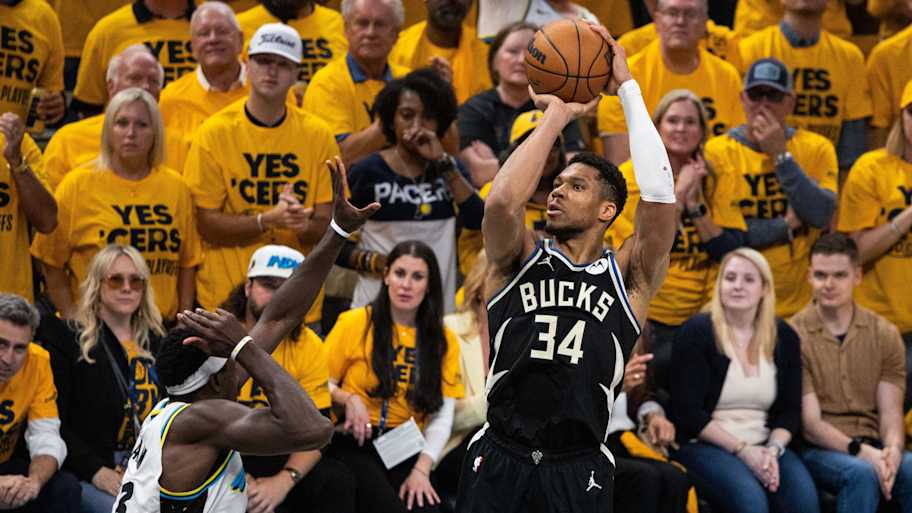 Milwaukee Bucks forward Giannis Antetokounmpo shoots the ball over Indiana Pacers forward Pascal Siakam during the 2024 NBA Playoffs. | Trevor Ruszkowski-Imagn Images
Giannis Antetokounmpo, who came in at No. 22 overall in the all-time draft, arrived in Milwaukee as a raw teenager from Greece with grainy YouTube clips and more questions than answers. Fourteen teams took different directions in 2013, and Milwaukee grabbed a long-term project at 15. Within a few years, that project turned into a two-way force, and eventually into a two-time NBA MVP, Defensive Player of the Year and NBA champion.
Once Giannis made his leap, the Bucks’ entire identity became an extension of his game. They surrounded him with shooting, added complementary stars, and tailored their defense to his length and versatility. When a late-lottery gamble turns into the face of your organization for a decade and delivers the franchise’s first title in 50 years, that is the textbook example of a draft steal becoming a cornerstone.
John Stockton, No. 16, Utah Jazz (1984)
 Utah Jazz guard John Stockton (12) drives to the basket between Orlando Magic forward Mark Acres (42) and Jerry Reynolds (35). | USA TODAY Sports
John Stockton, a 40th selection in the all-time NBA Draft, came out of Gonzaga University, then a little-known school in Stockton’s hometown of Spokane, Wash. He was a solid prospect, but nobody could have foreseen what the point guard became.
The ultimate floor general, Stockton enjoyed a 19-year career with the Jazz, leading them to the playoffs every season. Alongside running mate Karl Malone, Stockton played in five Western Conference Finals within a seven-year span. He remains the NBA’s all-time leader in assists (15,806) and steals (3,265).
Steve Nash, No. 15, Phoenix Suns (1996)
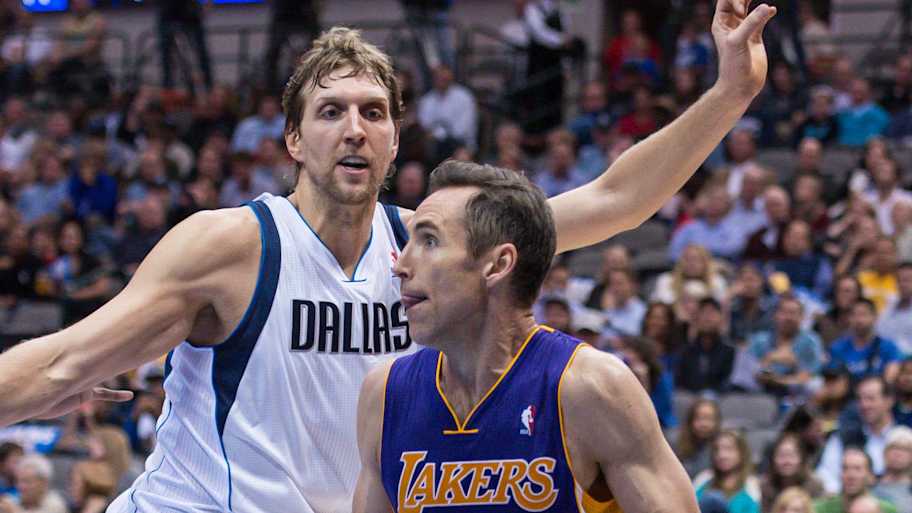 Los Angeles Lakers point guard Steve Nash (10) drives to the basket past Dallas Mavericks power forward Dirk Nowitzki (41). | Jerome Miron-Imagn Images
Steve Nash’s path is a little different because his true franchise-cornerstone stretch came in his second stint in Phoenix. Still, the Suns originally used the 15th pick in 1996 on a guard from Santa Clara who was not a can’t-miss prospect. He eventually became a two-time MVP and the centerpiece of the “Seven Seconds or Less” era that pushed offensive pace and spacing into modern territory. Nash is the No. 47 overall pick in the all-time NBA draft.
Phoenix transformed once it committed to Nash. The roster emphasized shooters and rim-runners, the playbook put the ball in his hands on almost every trip, and the franchise’s profile jumped as they became a regular fixture in the deep Western Conference playoff picture. That level of impact from the middle of the first round checks every box for a steal who grew into a system-defining star.
Manu Ginobili, No. 57, San Antonio Spurs (1999)
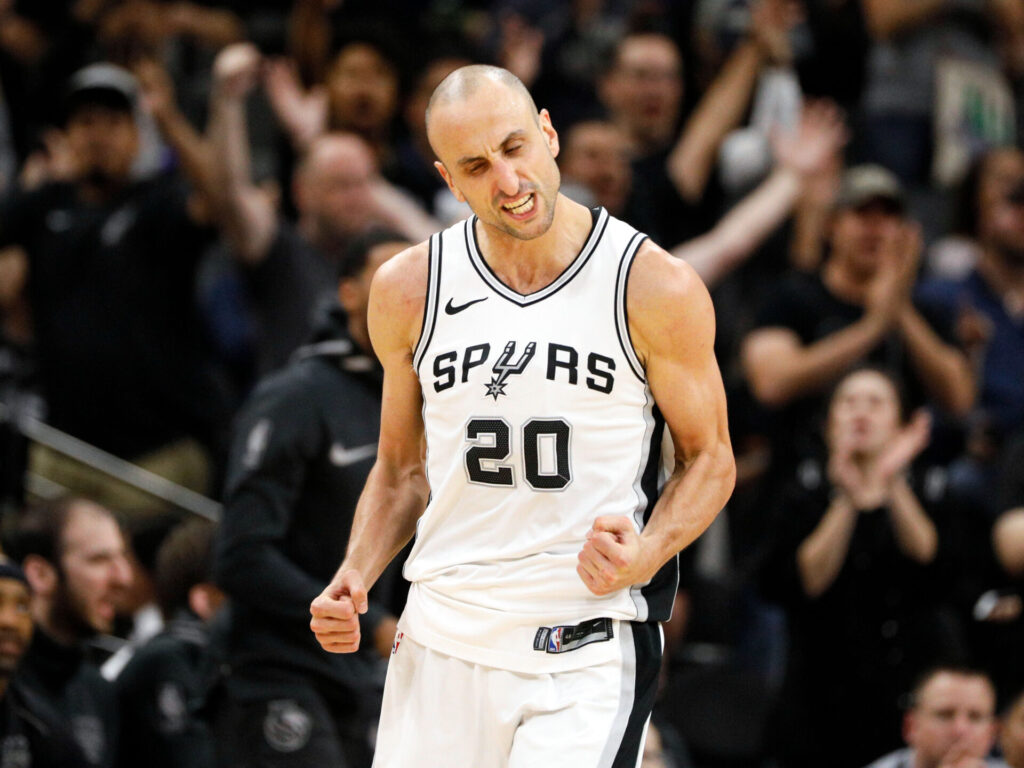 San Antonio Spurs shooting guard Manu Ginobili (20) reacts after a shot against the Sacramento Kings. Soobum Im-USA TODAY Sports
Manu Ginobili at pick 57 is proof that the second round can still offer Hall of Fame-level upside if teams are patient and creative. The Spurs waited for Ginobili, who was the No. 56 selection in the all-time NBA Draft, to come over, then unleashed him as a sixth man who closed games and ignited their offense with drives, passes and shot-making that constantly tested defensive rules.
While he was never the statistical top option, Manu was a structural cornerstone to four of the Spurs’ five championships between 1999 and 2014. San Antonio’s best lineups often had the ball in his hands, and the franchise trusted his decision-making in the biggest moments. Finding that level of impact in the 50sis essentially hitting the lottery twice.
Tony Parker, No. 28, San Antonio Spurs (2001)
 San Antonio Spurs point guard Tony Parker drives against the Miami Heat. | Imagn Images
San Antonio has a habit of making the back of the first round look like the middle of the lottery. Tony Parker was the 28th pick in 2001, a speedy point guard from France who quickly beat out veterans for the starting job. From there he became an essential piece of a dynasty, running the Spurs’ offense through four championship runs. Parker came in at No. 58 in the all-time NBA Draft.
Parker did not become the lone face of the franchise because Tim Duncan was already in place, but he clearly turned into a co-pillar. The Spurs trusted him with the ball late in games, shifted more on-ball responsibilities his way as he matured, and watched him grow into a Finals MVP-caliber guard from a slot where many teams are happy to just find rotation help.
Jimmy Butler, No. 30, Chicago Bulls (2011)
 Golden State Warriors guard Stephen Curry (30) dribbles past Miami Heat forward Jimmy Butler (22). | Cary Edmondson-Imagn Images
Jimmy Butler’s story is a reminder that the last pick of the first round can change the trajectory of multiple franchises. Chicago took him 30th overall in 2011 as a defensive wing with limited offensive baggage. By the middle of the decade he was their best player, an All-Star who could handle, create and take the toughest assignment on the other end. The all-time NBA Draft placed Butler at No. 61 overall.
In later stops, teams like Miami essentially made him the organizing principle of their culture. They built rugged, defense-first groups around his intensity and late-game shot creation. That is an incredible outcome for a pick that most teams use as a flier, especially when you factor in that he had to break through an established pecking order to even get consistent minutes early on.
Draymond Green, No. 35, Golden State Warriors (2012)
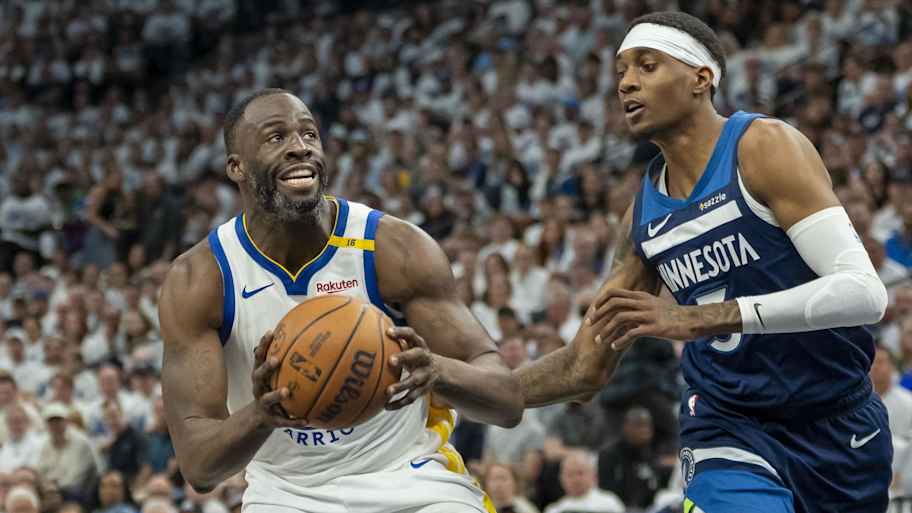 The Golden State Warriors’ Draymond Green battles the Minnesota Timberwolves. | Jesse Johnson-Imagn Images
Golden State drafted Draymond Green 35th in 2012, a tweener forward whose lack of a defined traditional position scared some teams off. Instead of being a liability, that positional ambiguity turned into his biggest strength. Green, the No. 62 overall pick in the all-time NBA Draft, became the Warriors’ defensive quarterback and a primary playmaker in their small-ball lineups, making their switch-heavy, pace-and-space system function.
Steph Curry is the face of the four-crown dynasty, but the Warriors’ identity on both ends is tied directly to what Green does. The franchise gave him the keys on defense, empowered him to run offense in the half-court, and built schemes that showcased his strengths. For a mid-second-round pick to become that central to a championship core, the steal label fits perfectly.
Dennis Rodman, No. 27, Detroit Pistons (1986)
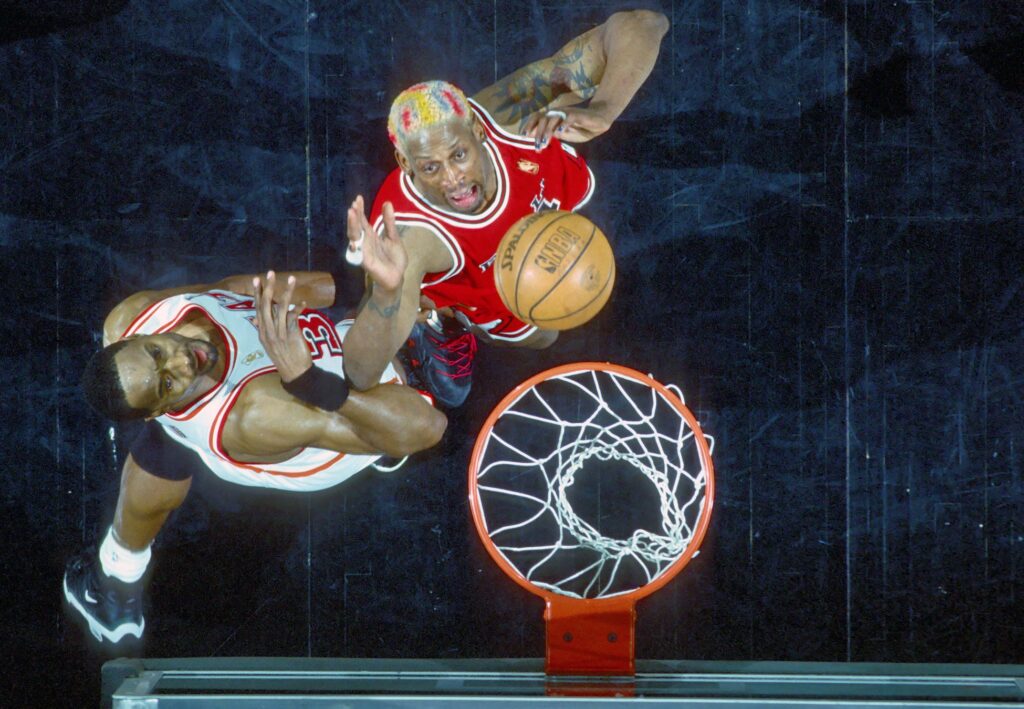 Chicago Bulls forward Dennis Rodman looks to rebound against Miami Heat center Alonzo Mourning. | USA TODAY Sports.
Dennis Rodman, the No. 68 overall selection in the all-time NBA Draft, emerged as a three-time NAIA All-American out of Southeastern Oklahoma. NBA scouts doubted his elite leaping ability and boundless energy would look as impressive at the highest level.
It did. The five-time NBA champion — he won two titles with Isiah Thomas’ Pistons and three with Michael Jordan’s Chicago Bulls — led the league in rebounds per game for a record seven consecutive seasons between 1991-92 and 1997-98. Rodman also collected a pair of Defensive Player of the Year awards.
Marc Gasol, No. 48, Los Angeles Lakers, traded to Memphis (2007)
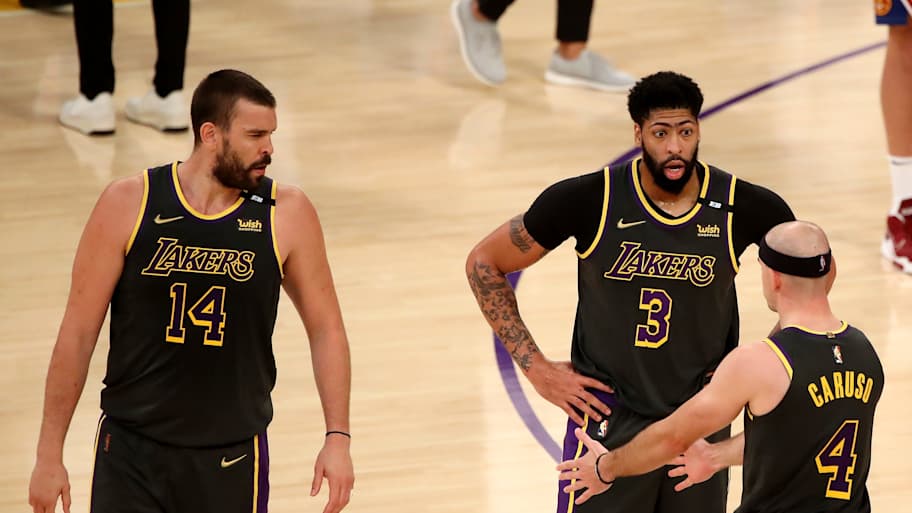 Los Angeles Lakers Marc Gasol, Anthony Davis, and Alex Caruso discuss strategy. | Katelyn Mulcahy/Getty Images
Marc Gasol, the No. 115 pick in the all-time NBA Draft, was taken 48th overall in 2007, and his rights were included in the Pau Gasol deal that sent his brother to Los Angeles. Memphis eventually brought him over and watched him turn into an All-NBA center, Defensive Player of the Year and the anchor of the “Grit and Grind” era.
The Grizzlies leaned into Gasol’s skills by running offense through him at the elbow, trusting him to organize their defense, and pairing him with rugged guards who matched his cerebral, physical style. For a late-second-round guy who was once mostly known as someone’s younger brother, Gasol became a defining piece of one of the most beloved eras in franchise history before winning an NBA title with the Toronto Raptors in 2019.