
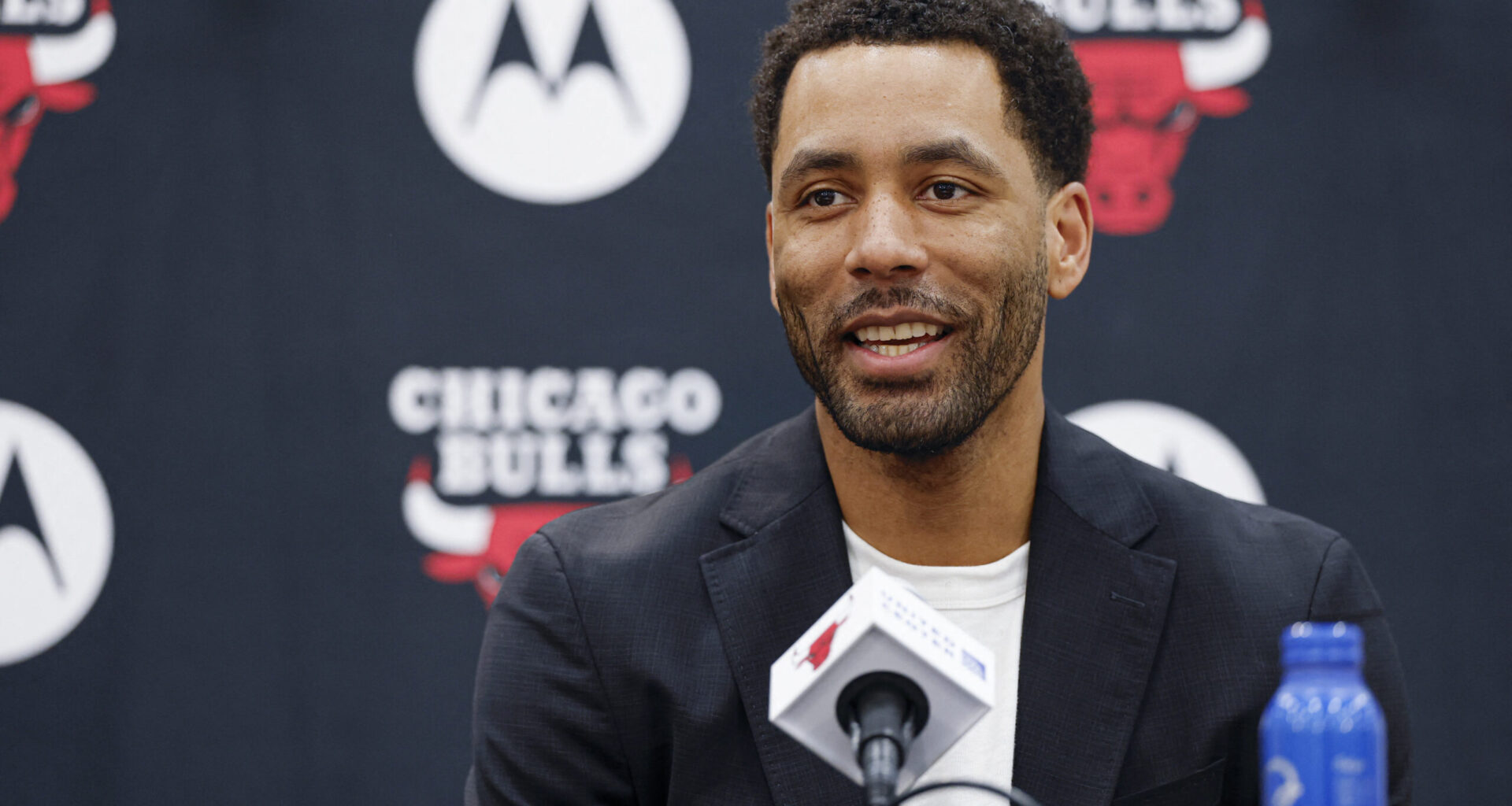
The Chicago Bulls took a unique approach on the second day of the NBA Draft, and added a lot of talent in their UDFA class.
The NBA’s second round was one for the ages. Every single pick, except for one (No. 50 for Toronto), was traded. In the case of the Chicago Bulls, they traded both of their picks away for cash or other assets, setting their sights on the future. Now with Bryson Graham’s first NBA Draft in the books, lets look at everything that happened on the second day and after the draft.
For starters, Tuesday night was a wild success for the Bulls. Caleb Wilson and Dailyn Swain are both huge additions to a franchise going in a new direction. In the trades on the second day, the Bulls received Kam Jones, along with cash and future pick swaps, for draft pick Braden Smith in a swap with Indiana. In addition, the Bulls received cash from the Los Angeles Lakers in a swap for their later pick.
The trades were maybe surprising, but Bryson Graham has good reason for the strategy. On 104.3 The Score, Graham spoke on his strategy, sighting roster flexibility and their draft targets as reasons for ultimately trading their second-round picks.
Graham is hoping that more moves are coming and teams need the cap space to offload contracts. It will be a notable opportunity for the Bulls to acquire future assets while filling out their roster. The Bulls have $30 million of cap space and can do a lot with that remaining money.
The UDFA Class
Following the draft, the Bulls brought in four undrafted free agents. Two players signed two-way deals, with Tobe Awaka of Arizona and Jaylin Sellers of Providence inking those deals. Then, the Bulls added Texas Tech’s Donovan Atwell and Alabama’s Houston Mallette on Summer League contracts.
Story continues below.
More Sports News
.wp-block-group__inner-container:has(> .embla),
.wp-block-group:where(.alignfull) > .wp-block-group__inner-container:has(> .embla) {
width: calc(100vw – (var(–side-spacing) * 2)) !important;
}
.embla {
position: relative;
overflow: hidden;
}
.embla__container {
display: flex;
flex-wrap: nowrap;
gap: 0 !important;
width: 75%;
}
.embla__slide {
margin-inline-end: var(–column-gap);
}
.embla__arrow,
.embla__arrow:active,
.embla__arrow:target,
.embla__arrow:hover,
.embla__arrow:focus-visible {
display: none;
position: absolute;
top: 50%;
transform: translateY(-50%);
width: 40px;
height: 40px;
margin: 0;
padding: 0;
line-height: 0;
background: rgba(255, 255, 255, 0.75);
color: var(–color-primary);
border-radius: 100vw;
svg {
width: 24px;
}
}
.embla__prev {
left: 0;
}
.embla__next {
right: 0;
}
]]>
Notably, the common denominator for their UDFA class is that they’re almost all shooters. Although Awaka figures as a depth scorer with size, Sellers shot over 42% from beyond the arc last season. As for Atwell, he shot almost 46% from beyond the arc and Mallette shot 35% from three, a down year from his usual 40% from downtown. Gathering shooting depth after the draft is masterful work from Graham, especially when they’re not guaranteed roster spots or could spend time in the G League.
At the end of the day, Bryson Graham’s first draft at the helm for the Bulls was a success. Although he took an unconventional approach on the draft’s second day, the team is in a good spot with free agency and a long offseason still to come as the roster rounds out.