
The Nets’ roster is full, but their offseason still doesn’t feel finished.
Brooklyn added Julius Randle, Mikel Brown Jr., Joshua Jefferson, Keon Ellis and Moe Wagner, plus Tyler Bilodeau on a two-way deal; re-signed Day’Ron Sharpe and Josh Minott; kept Malachi Smith on a non-guaranteed team option; traded Nic Claxton to the Chicago Bulls; sent the Minnesota Timberwolves the No. 33 pick, later used on Duke’s Isaiah Evans; and moved on from Ziaire Williams, Jalen Wilson, Ochai Agbaji and two-way guard Tyson Etienne.
Free agency didn’t necessarily bring Brooklyn a franchise-changing star, but it did push a 20-win team toward respectability while creating a minutes crunch. So, who gets the ball? Who gets the heaviest workload? Who becomes part of the long-term group, and who becomes part of the next deal?
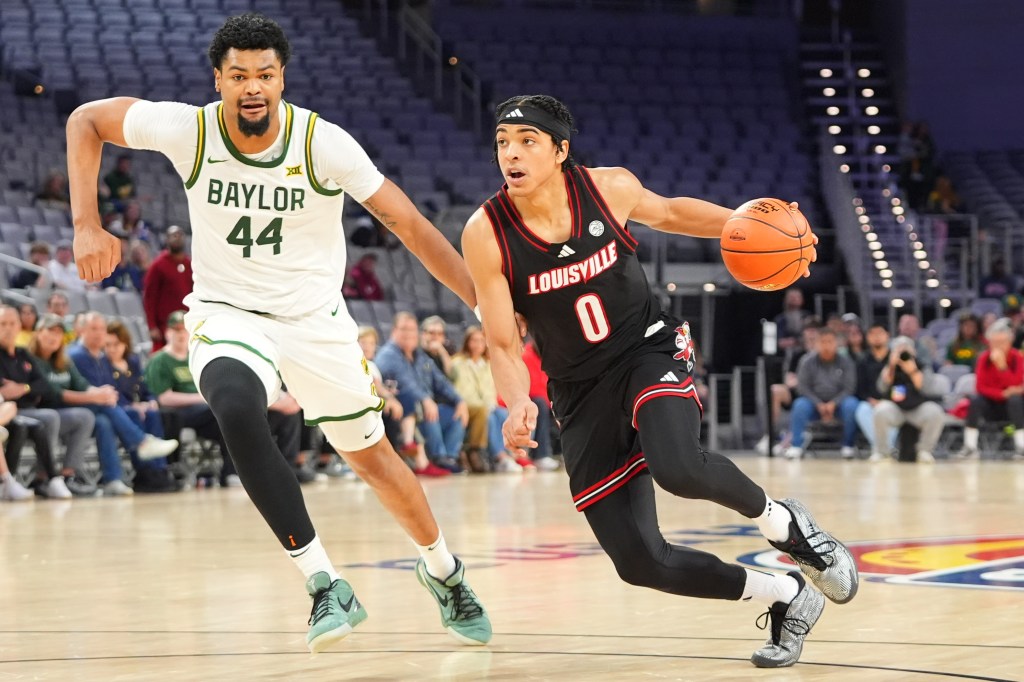
Brown, the No. 6 pick, and Egor Dëmin need priority reps. Nolan Traoré and Ben Saraf need evaluation minutes. Ellis deserves time because he brings point-of-attack defense Brooklyn desperately needs. Terance Mann remains useful for similar reasons, experienced and potentially movable. Smith, on a non-guaranteed deal, only adds to the backcourt chaos.
That’s why another move still feels possible.
The Nets obviously have a crowded guard room, 16 projected standard-roster players for 15 regular-season spots and, according to capologist Yossi Gozlan, just under $25 million in potential cap space if they structure one signing into the room mid-level exception. They no longer project to have room for a $41.2 million max salary, but can still take in salary through a trade, help another team shed money or attach themselves to a larger deal.
Brooklyn’s next move could consolidate guards, create a roster spot, absorb unwanted salary with an asset attached or find a center who protects the rim better than anyone currently on the depth chart.
On paper, the team is still more capable than it was when last season ended. Randle raises the floor. Michael Porter Jr. is still a bucket. Ellis is an agitator on the perimeter. Wagner is a capable hub big. Sharpe steps into a larger role after Claxton’s departure. Minott oozes untapped potential.
None of those moves turns the Nets into an Eastern Conference threat overnight, but they do add competence. While young players need minutes to develop, they also need veterans around them that can help the game make sense.
The frontcourt, however, still has an obvious question. Claxton was the Nets’ best rim protector and longest-tenured player. Trading him changed more than the payroll. Sharpe rebounds. Wagner will compete. Wolf and Jefferson need time to grow. Noah Clowney has tools. But none enter next season as a proven rim protector.
That could become Brooklyn’s biggest hole by opening night.
As built, though, this looks more like a team positioned to compete harder than one built for the playoffs. The backcourt is crowded, rim protection is thin and the highest ceiling on the roster still depends on projection.
The Nets have enough players now. The next move is figuring out which ones fit.