
It’s been a brutal summer for the Milwaukee Bucks.
First, they traded Giannis Antetokounmpo, the two-time MVP who delivered the franchise its first championship in 50 years, to the Miami Heat. Milwaukee is also carrying approximately $22.5 million in annual dead salary through the 2029-30 season after waiving and stretching the final $113 million owed to Damian Lillard.
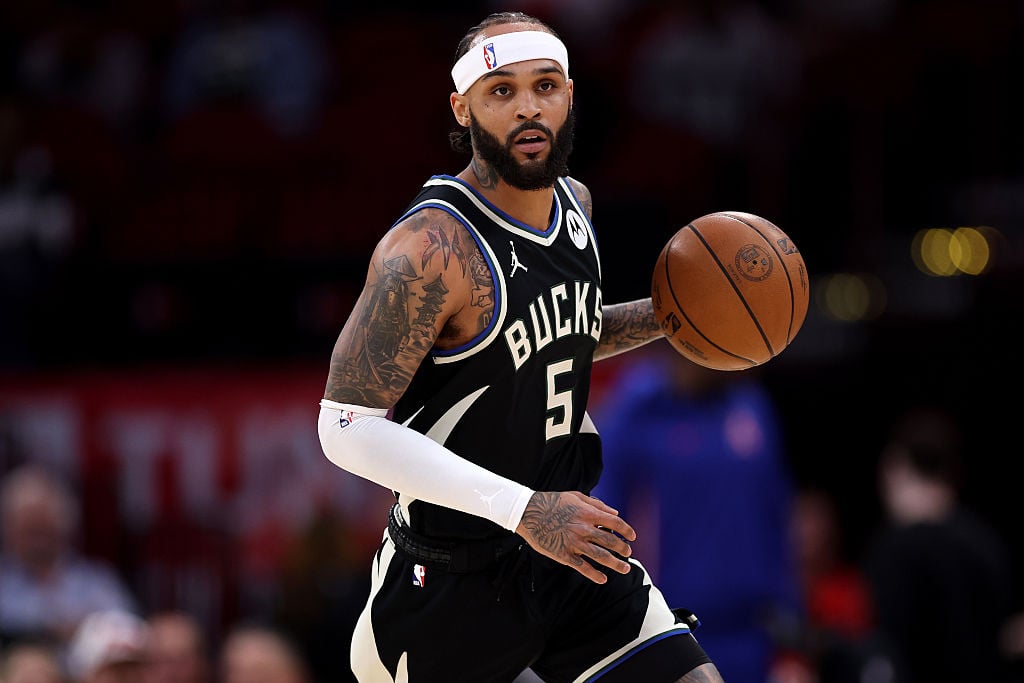
Now, the NBA is investigating one of the strangest contracts of the offseason: Gary Trent Jr.’s new four-year, $64 million deal.
The question is not simply whether Milwaukee overpaid. The league reportedly wants to determine whether the Bucks promised Trent a future payday in exchange for accepting two relatively inexpensive contracts—and whether that arrangement improperly circumvented the NBA’s salary-cap rules.
Trent joined Milwaukee in 2024 on a one-year contract worth approximately $2.6 million, the veteran minimum. After producing a strong postseason, he returned in 2025 on a two-year deal worth just under $7.6 million, including a player option for the second season.
He declined that option this summer and immediately received a fully guaranteed four-year, $64 million contract from the Bucks.
The timing raised eyebrows around the NBA.
Trent is entering his ninth season and will turn 28, so he should theoretically be in the prime of his career. However, he averaged only 8.1 points during the 2025-26 season, his lowest scoring average since his rookie year. His playing time and role also declined as Milwaukee stumbled to a 32-50 record and missed the playoffs.

Tim Warner/Getty Images
Trent can still provide valuable shooting and perimeter defense. He also performed well during Milwaukee’s 2025 playoff appearance, averaging 18.8 points and making more than 50% of his three-point attempts during the team’s five-game first-round loss.
But $16 million per season is a remarkable raise for a reserve coming off the least productive scoring season of his career—particularly when no competing offer approaching that amount was publicly reported.
Trent has earned approximately $62.7 million during his first eight NBA seasons. His new contract will pay him more than that in just four years.
There is another important piece of the puzzle: By remaining with Milwaukee for two consecutive seasons, Trent established Early Bird rights.
Early Bird rights allow a team to exceed the salary cap to retain one of its own free agents, subject to certain restrictions. In other words, after Trent spent two years playing on inexpensive contracts, the cap-strapped Bucks gained a mechanism that allowed them to give him a much larger deal.
That sequence does not prove anything improper happened. Trent may simply have accepted smaller contracts because he liked Milwaukee, believed in his ability and hoped to increase his value. The Bucks may view his new contract as a reward for that loyalty and a reasonable investment in an experienced shooter.
But the NBA is reportedly investigating whether the sequence was planned from the beginning.
If Milwaukee privately promised Trent that it would compensate him later for taking less money in 2024 and 2025, that could constitute an undisclosed prior agreement and an attempt to circumvent the salary cap.
There is a notorious precedent.
In 1998, Joe Smith signed a suspiciously inexpensive contract with the Minnesota Timberwolves. He returned on additional short-term deals despite having opportunities to earn more elsewhere. The plan was allegedly for Smith to accept reduced salaries until Minnesota acquired his Bird rights, at which point the Timberwolves would reward him with a massive long-term contract.
The arrangement was uncovered in 2000. The NBA voided Smith’s contract, fined the Timberwolves $3.5 million and stripped the franchise of five first-round draft picks, although one was later restored.
It remains one of the harshest penalties in NBA history.
The league has also issued lighter penalties for more conventional free-agent tampering. The Chicago Bulls, for example, lost a second-round pick after the NBA determined they had improperly contacted Lonzo Ball before free agency officially began in 2021.
But the Trent investigation potentially involves something more serious than premature contact. The key question is whether a secret compensation agreement existed before he signed either of his inexpensive Milwaukee contracts.
If the deal was negotiated legitimately, the Bucks may simply have handed out one of the offseason’s most surprising contracts.
If investigators uncover evidence of a prior promise, however, the consequences could extend well beyond a fine or the loss of a second-round pick. The NBA could potentially void the contract, suspend executives and take valuable draft selections from a franchise that desperately needs them as it begins rebuilding after Giannis.
After losing the greatest player in franchise history and committing nearly $100 million more in future dead money to Lillard, the Bucks can hardly afford another major setback.
But that is exactly what this unusual $64 million contract could become.