

Karim Lopez, the 21st overall pick in the 2026 draft, officially signed his rookie scale contract with the Grizzlies on Wednesday, making him the last of this year’s first-round picks to formally join his new NBA team.
However, while first-rounders are 30-for-30 in terms of signing their first NBA contracts, the completion rate for second-rounders so far is just 19-for-30, with 11 players having yet to sign. As our tracker shows, those unsigned players are as follows:
Memphis Grizzlies: Richie Saunders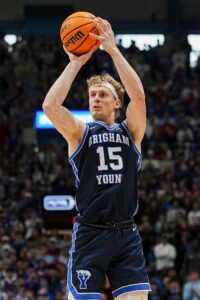
Indiana Pacers: Braden Smith
New York Knicks: Jack Kayil
Boston Celtics: Dillon Mitchell
New York Knicks: Tyler Nickel
Denver Nuggets: Bryce Hopkins
Golden State Warriors: Lajae Jones
Dallas Mavericks: Vsevolod Ishchenko
Los Angeles Clippers: Narcisse Ngoy
Minnesota Timberwolves: Trey Kaufman-Renn
Milwaukee Bucks: Malique Lewis
Some of these players are unlikely to sign NBA contracts at all before the 2026/27 begins. Narcisse Ngoy, for instance, had committed to the Auburn Tigers for the 2026/27 season and admitted he was surprised to be drafted by the Clippers last month. He and the Clippers were said after the draft to be discussing their options, but the expectation is that he’ll play at Auburn and essentially function as a domestic draft-and-stash.
A few players in this group could end up becoming international draft-and-stash players. Jack Kayil, Vsevolod Ishchenko, and Malique Lewis, each of whom had already been playing overseas, are the best candidates to end up in Europe or Australia in 2026/27, though their plans haven’t been confirmed yet.
Players drafted as high as No. 32 typically sign three- or four-year NBA contracts and often receive multiple guaranteed seasons, but Richie Saunders‘ situation isn’t so straightforward. The former BYU star suffered an ACL tear in February and may miss a significant chunk of his rookie season as he recovers from that injury. Additionally, the Grizzlies are facing a roster crunch and might not have room on their standard roster for him right now anyway.
It wouldn’t be a huge surprise if Saunders ends up on a two-way deal this season before being promoted to a standard contract further down the line. I wouldn’t even be totally shocked if he begins the year on a G League contract and then signs a standard deal after the trade deadline — by that time, Memphis may have opened up a roster spot or two and his ACL recovery process figures to be at or nearing an end.
Reporting on draft night indicated that the Pacers intended to sign Braden Smith to a two-way contract, but that plan has been complicated by the fact that Indiana has three two-way players it likes: Ethan Thompson, Jalen Slawson, and Kobe Brown. Indiana may have to decide between signing Smith to a standard contract to fill the final spot on the 15-man roster or waiving Thompson (or another two-way player) to open up a two-way slot for him.
I would expect the Knicks, Nuggets, Warriors, and Timberwolves are all taking their tax/apron situations into account as they weigh whether to sign Tyler Nickel, Bryce Hopkins, Lajae Jones, and Trey Kaufman-Renn, respectively, to standard contracts or two-way deals. A second-round pick who earns the rookie minimum has a cap hit of just $1.36MM, whereas a player on a veteran’s minimum deal counts for $2.45MM. That difference can be significant for a team right up against a hard cap or wanting to keep its tax bill somewhat in check.
As for the Celtics, they have an open spot on their projected 15-man roster and enough room below the luxury tax line to squeeze in a rookie-minimum contract for Dillon Mitchell. But I think the C’s will probably keep that 15th spot open to start the regular season in order to maximize their roster and cap flexibility. They have a pair of two-way contract slots open and it makes sense for Mitchell to fill one of those openings sooner or later.