
About 19 months ago, as Major League Baseball set out to begin a Texas Rangers-Arizona Diamondbacks World Series, the data analyst Nate Silver published the following to his social media feed: “This is the least compelling World Series matchup in a long time, maybe ever.”
By Silver’s standards, this was an anodyne observation. This is someone whose usual output concerns some of the most controversial issues and people of the day. But judging by the response, it is as if he said something about COVID school closings, the then-president’s age, or the 2024 campaign. The anger was visceral, and after a classic Game 1 decided in extra innings, his commentary was deemed discredited.
Then came the next four games, none of which were particularly memorable — and the ratings, none of which were particularly good. Rangers-Diamondbacks was, in fact, uncompelling. The record-low ratings were indicative of a broad lack of interest outside of Dallas and Phoenix.
A year later, the World Series had a virtually identical outcome. An all-time classic Game 1 decided in extra innings, but a series that was ultimately uncompetitive and decided in five quick games. In fact, one could argue it was less competitive than Rangers-Diamondbacks, as one team led 3-0. Yet viewership not only improved from the prior year, it was the highest for the World Series since 2017. The matchup, of course, was the New York Yankees against the Los Angeles Dodgers.
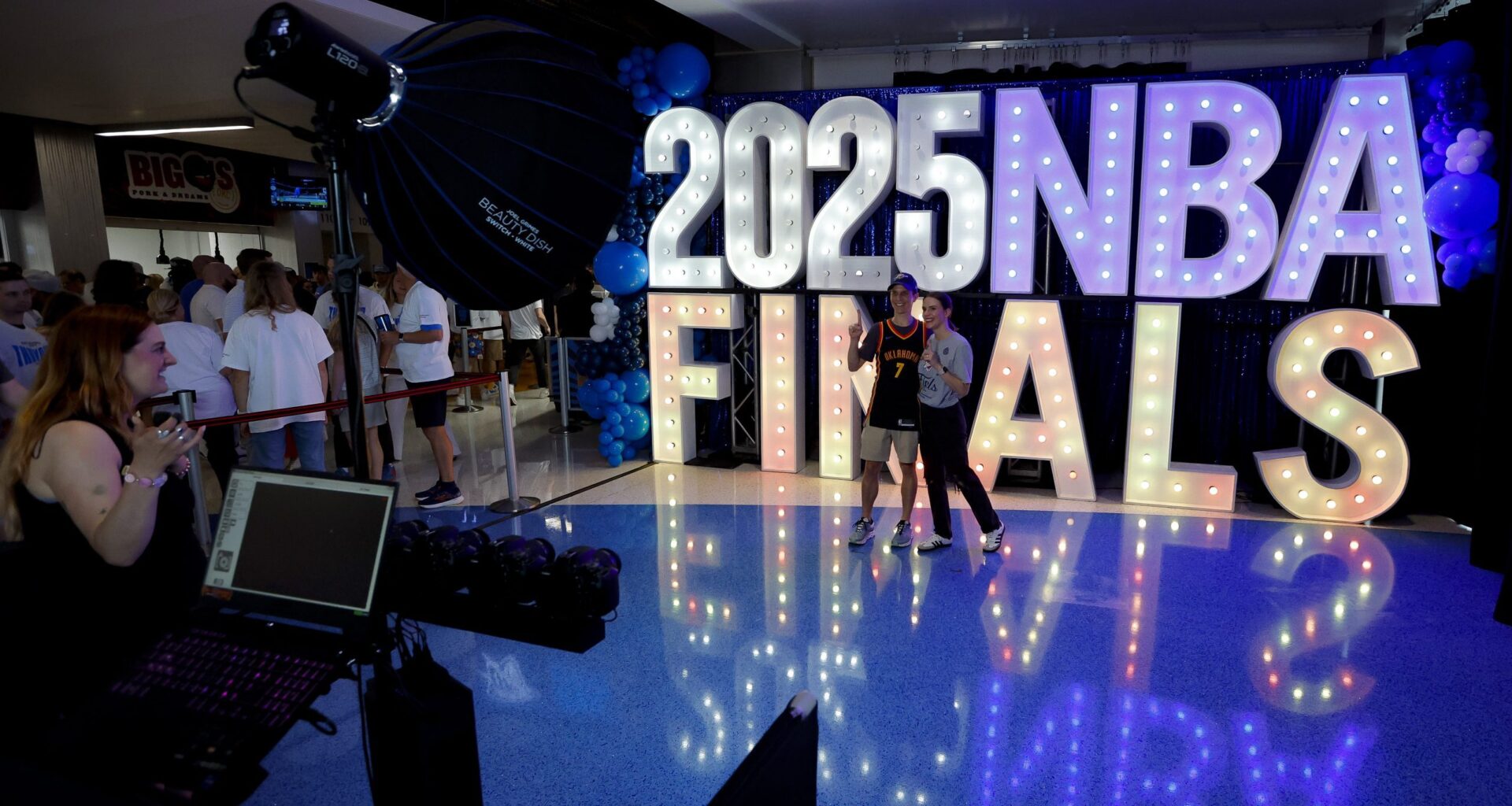
The talk entering the NBA Finals has focused almost as much on the market sizes as on the matchup itself. The pairing of the Oklahoma City Thunder and Indiana Pacers is believed to be the smallest market NBA Finals on record. If one were to combine Oklahoma City and Indianapolis, it would only be the nation’s #14 market (right behind Seattle, incidentally). The combined homes are fewer than in the 2019 Finals, when Golden State faced Toronto — a market that does not count toward U.S. television ratings.
Market size is not everything. Rangers-Diamondbacks — the least-watched World Series on record — featured a top ten market in Dallas-Fort Worth and a market just outside the top ten in Phoenix. As with that Fall Classic, the issue with Thunder-Pacers is less the size of the markets and more the lack of a compelling hook. The series may well end up a classic; the Pacers are certainly capable of defying expectations. But Indiana enters Game 1 a nearly ten-point underdog, and Oklahoma City is one of the biggest favorites in Finals history.
The Thunder had a record point differential of 12.9 during the regular season and have played games this postseason with unusually lopsided margins (including, oddly, one game that they lost by 40+ points).
If Oklahoma City was about to play Cleveland in the NBA Finals, the ratings forecast would probably be sunnier. Those were the two best teams all season, and a matchup between those teams — or between Oklahoma City and Boston — would have made this the first NBA Finals since 1998 between two 60-win teams. Whether or not the series would have actually played out competitively, the anticipation would surely be much higher than it is for the Thunder-Pacers series.
One could argue that the Pacers being lightly regarded is the fault of the league and its media partners not taking seriously a team that is now on its second-straight run deep into the playoffs. Coming off of a trip to last year’s Eastern Conference Finals, the Pacers were scheduled for just nine national games on TNT and ESPN this season. Perhaps had the league promoted Indiana more during the season, they would have taken fewer observers by surprise in this playoff run.
Instead, the NBA Finals has an air of randomness about it, which has been the key problem for the league the past few years. There was little if anything in the months-long NBA season that signaled an Oklahoma City-Indiana Finals was on the way, much the same as there was nothing signaling a Denver-Miami series two years ago, or Milwaukee-Phoenix in 2021. Throughout the regular season, there are certain ‘NBA Finals previews’ — Oklahoma City’s two matchups with Indiana were not on that list. The NBA seasons of the 2020s have not provided the kind of payoff justified by the months of build-up.
Thus there is little anticipation. Returning to the World Series example, consider why Dodgers-Yankees did so much better than Rangers-Diamondbacks. It was not just the massive markets, the storied history, the stars, the ‘mystique and aura’ — though all of those were of course factors — it was the fact that the two best teams were playing in a series that was widely expected to feature the best the sport had to offer.
This NBA Finals is, on paper, a mismatch. It pits teams with no meaningful head-to-head history (not even when the Thunder were the Seattle SuperSonics did they have a history with the Indiana Pacers). It features stars who have yet to break through on the national stage, though both Shai Gilgeous-Alexander and Tyrese Haliburton are at least on their way. The national audience is going to have to be convinced to tune in, and the only way to do that is with high-quality games in a close series.
Fans tend to take it personally when pundits suggest that a series is not compelling even before it starts, as Nate Silver did in 2023. The Rangers and Diamondbacks ultimately proved the doubters right. For the NBA Finals to avoid some ratings depths, the Pacers will have to pull off some more of that magic they displayed in Game 5 against Milwaukee, Game 2 against Cleveland and Game 1 against New York.
Ultimately, the question of how this NBA Finals will fare in the ratings will be determined on the court. If the Pacers can defy expectations of a blowout, there is no reason why this series cannot at least keep pace with the post-COVID norm.
Prediction
The best-case scenario for the NBA in this Finals involves a Game 1 Indiana win, which would set the tone that this Finals will in fact be a series. The Pacers are eminently capable of stealing Game 1, and the Thunder are just as capable of winning Game 1 by 40 points. The expectation here is that Oklahoma City will take a 2-0 lead back to Indiana, split at Gainbridge Fieldhouse, and wrap-up a third-straight 4-1 NBA Finals a week from Monday. If that expectation is correct, this could be the least-watched NBA Finals since the 2020 bubble.
— Game 1 (Thu Jun 5 ABC): 10.05M
— Game 2 (Sun Jun 8 ABC): 10.14M
— Game 3 (Wed Jun 11 ABC): 10.17M
— Game 4 (Fri Jun 13 ABC): 9.67M
— Game 5 (Mon Jun 16 ABC): 10.62M
Five-game average: 10.13M.