
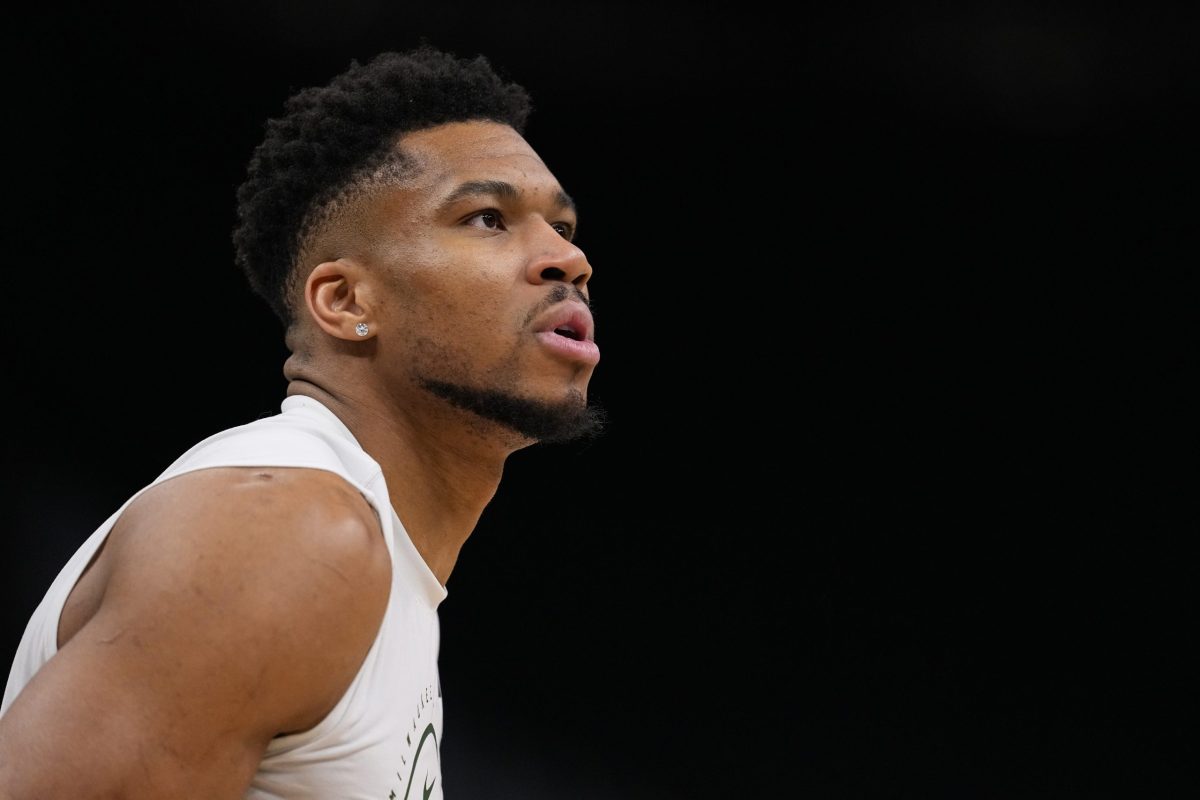
Giannis Antetokounmpo has already discovered that knowing where to throw a pass and knowing where a Miami Heat teammate will be are different challenges.
After Wednesday’s second training camp practice at Florida Atlantic University, the Heat newcomer described a possession that ended with his pass sailing out of bounds. He had anticipated a teammate’s location, only for that player to head in another direction.
“The spacing is different, the way that the guys move inside the board is different. Of course, the spots are different,” Antetokounmpo said. “Like, I think that’s going to be hard for me because I don’t want to only be good and just be out there; I want to understand. I want to know where I’m going, and I want to know what my teammates is doing, because sometimes, a lot of times, when I make plays, I predetermine.
“So I might throw a pass knowing that the guy will be there,” Antetokounmpo continued. “Like today I threw a ball out of bounds, and I expected the guy to be there, and the guy moved the other way. So that’s going to be the toughest thing for me.
The explanation gave Miami’s early chemistry work a specific focus. Antetokounmpo is learning new positioning and movement patterns after spending his NBA career in Milwaukee, and he wants to understand what everyone around him is doing before committing to a play.
He also welcomed continued instruction from the coaching staff. His account of the mistake was part of explaining how he learns an offense, with anticipation central to the way he creates for teammates.
That distinction matters when judging Miami’s first few practices. A pass aimed at an expected destination requires the receiver to share the same read. Until those expectations align, a player can identify an opening and still fail to complete the connection.
Miami’s transition offense gives Giannis a new rhythm to learn
There is measurable context behind the adjustment. In NBA.com’s Heat season preview, John Schuhmann reported that transition accounted for 24.9 percent of Miami’s possessions during the 2025-26 season, the highest share in Synergy’s 22 seasons tracking play types.
Schuhmann also noted that Antetokounmpo had produced 1.21 points per transition possession across the preceding five years, compared with 1.13 for the rest of the league.
Those figures support the appeal of the pairing: Miami has an established appetite for pushing the ball, while Antetokounmpo has been an efficient scorer in that setting. They describe separate track records, however, rather than results this Heat group has produced together.
The adjustment was already on Antetokounmpo’s mind before camp. In comments from Monday’s Media Day, he recalled trailing his new teammates during a pickup possession, an unfamiliar experience for him. He also pointed to Miami’s movement away from the ball as something that can create room for teammates to attack.
“We were playing pickup the other day, and I was the last guy in the transition, which is new to me,” said Antetokounmpo. “They were moving.”
Wednesday’s misplaced pass adds a different detail to that earlier observation. Keeping up with the pace and predicting a teammate’s next location are related tasks, but they demand different adjustments.
The first involves getting into the action; the second involves understanding what happens once everyone is there. Transition frequency also should not be mistaken for a complete description of an offense.
Miami still needs answers when opponents get back and force it to play against a set defense. That is where the responsibilities assigned to Antetokounmpo and Bam Adebayo become particularly important.
Erik Spoelstra wants Bam Adebayo creating alongside Giannis

Spoelstra has offered a more expansive view of Adebayo’s role than simply asking him to stand outside and provide shooting space.
The coach discussed using both big men to create opportunities, including possessions with Adebayo directing the action and Antetokounmpo moving without the ball.
“It’s about playmaking, it’s about cutting, it’s about Giannis sometimes playing off the ball and Bam making the play,” Spoelstra said.
For Antetokounmpo, that approach would involve learning the offense from both sides of a pass. When Adebayo initiates, his new teammate’s movement can help create the opening.
When Antetokounmpo handles the ball, he needs to recognize where Adebayo can receive it and continue the attack. Miami has already supplied a small example of the latter.
As Heat Nation covered Tuesday, team-released practice footage included Antetokounmpo advancing the ball to Adebayo and another sequence in which Adebayo caught a pass outside the paint before driving to score.
Those possessions help illustrate what a successful connection can look like. The footage is edited, though, and offers no way to measure how often the same actions failed during the session.
Wednesday’s comments provide useful context for viewing those highlights without treating them as a finished product. There are also perimeter options for Spoelstra to incorporate.
Klay Thompson had 202 made 3-pointers and 38.3 percent shooting from that distance during the 2025-26 regular season. Tim Hardaway Jr. finished that season with 224 makes and a 40.7 percent mark.
That shooting gives Miami options around its big men, but choosing the shooters is only part of arranging the floor. The timing of their movement still affects the passing reads. A strong percentage cannot tell Antetokounmpo whether a teammate will remain available or relocate on a particular possession.
Davion Mitchell puts the learning curve in perspective
Miami’s returning point guard has acknowledged the work ahead, too. Speaking Tuesday, Mitchell explained that even assembling capable individual defenders would leave the Heat needing to learn their collective help responsibilities.
“I mean, that’s why we have preseason,” Mitchell said. “That’s why we have training camp. Everything is going to be new. Even the defense thing is not going to come easy. Like, just because we’re good individual defenders doesn’t mean our defense can just be good just because we’re individual defenders. I think we got to figure out when to help, how to help, figure out when to help as far as if someone’s getting post up, as far as the help side. It’s a lot of things that we got to learn, but it’s the reason why we got preseason and training camp.”
His comments concerned the process on both ends, with defensive help serving as his example. They offer a useful parallel to Antetokounmpo’s passing account: talented players still need a shared understanding of when teammates will move and what assistance will follow.
For viewers following Miami through the preseason, that makes the possessions after the first action worth watching. Does Adebayo receive the ball with room to continue?
Can Antetokounmpo find the next receiver without stopping to locate him? Those are more revealing questions about this adjustment than whether either star makes an isolated practice shot.
Antetokounmpo’s account leaves the Heat with a concrete task for the remaining camp sessions. The next step is to make the movement he expects and the movement his teammates actually make part of the same play.