
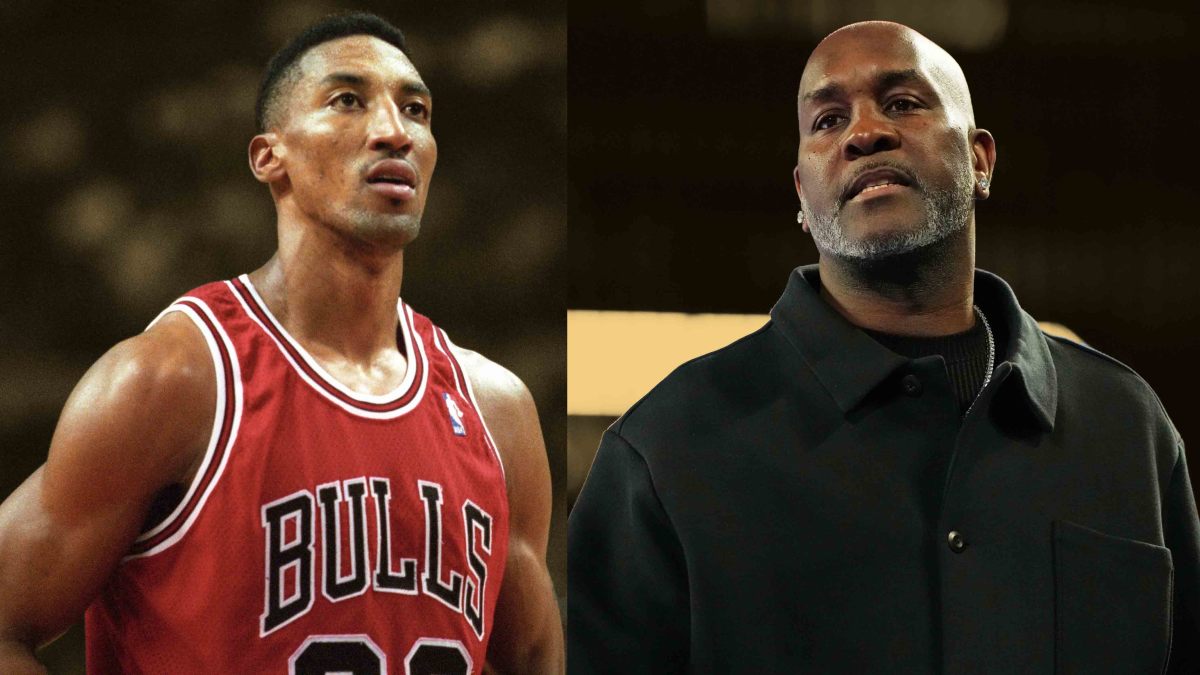
“Scottie Pippen changed a lot of things for the Chicago Bulls” – Gary Payton agrees with John Salley that Pippen was the best all-around player of the 1990s originally appeared on Basketball Network.
In the presence of Michael Jordan, Scottie Pippen was hardly the most popular name when mentioning the Chicago Bulls dynasty. The headlines, shoe deals, and cultural iconography were all wrapped around Jordan’s legendary fire.
Advertisement
But the story often read differently for those who shared the floor, who lived the wars and tracked the subtleties behind the banners. The glue wasn’t always flashy, but it held everything together.
Pippen’s impact
John Salley, who won championship rings with the Bad Boy Pistons and played alongside Jordan and Pippen in his late career, has long respected the architecture of greatness. He credits Pippen as the real engine behind Chicago’s shift from talent to triumph.
That sentiment caught some more traction when Hall of Famer Gary Payton, a defensive juggernaut in his own right, backed Salley’s claim with no hesitation.
Advertisement
“I’ll agree with that, yes [Salley] was,” Payton said. “Scottie Pippen changed a lot of things for the Chicago Bulls. If he wasn’t there, I don’t think they would have won a lot of the games because he did guard the best player, he made the crucial plays, he got the crucial rebounds, he got the crucial blocks, and things like that. I think that’s what John is really saying.”
Payton would know. He faced Pippen in the NBA Finals, played against him for over a decade, and built his Hall of Fame career by breaking down his opponents’ best options. His praise isn’t casual. It’s a nod from someone who understood the nuance of basketball beyond stat lines and highlight reels.
Between 1990 and 1998, Pippen was named to the All-Defensive First Team eight consecutive times and made seven straight All-Star appearances. He averaged 19.0 points, 6.4 rebounds, 5.2 assists, and 2.1 steals per game across that stretch — a stat line that, for most, would be the pinnacle of a career. For Pippen, it was just the cost of doing business behind the shadow of Jordan.
He led the Bulls in assists during each of their six championship seasons and often took the most challenging defensive assignments, allowing Jordan to conserve energy for the other end.
Advertisement
When the five-time MVP abruptly retired in 1993, Pippen nearly won the award the following season, finishing third in voting while leading the Bulls to 55 wins — only two fewer than the year prior.
The underappreciation
When ESPN’s “The Last Dance” dropped in 2020, it reignited the mythology of the Jordan-led Bulls but also stirred old tensions. While the docuseries brought nostalgia to fans, it brought frustration to Pippen, who felt that the portrayal reinforced Jordan’s supremacy at the cost of truth.
“You see that’s why he was a little salty about The Last Dance, because Michael wasn’t really giving them the credit that they were supposed to have,” Payton said.
Advertisement
Pippen initiated the team’s offensive fluidity, and Jordan executed it. In the 1991 Finals, Pippen’s defense on Magic Johnson was the tactical shift that turned the series in Chicago’s favor. In the 1996 Finals, his rebounding and help-side defense smothered a 64-win Seattle Supersonics team.
In 1997, Pippen’s block on Mark Jackson in the dying minutes of Game 1 against the Indiana Pacers saved Chicago from dropping homecourt. Even Phil Jackson, who coached both Jordan and Kobe Bryant, often described Pippen as the most versatile player he’d ever worked with.
This story was originally reported by Basketball Network on Jun 8, 2025, where it first appeared.