
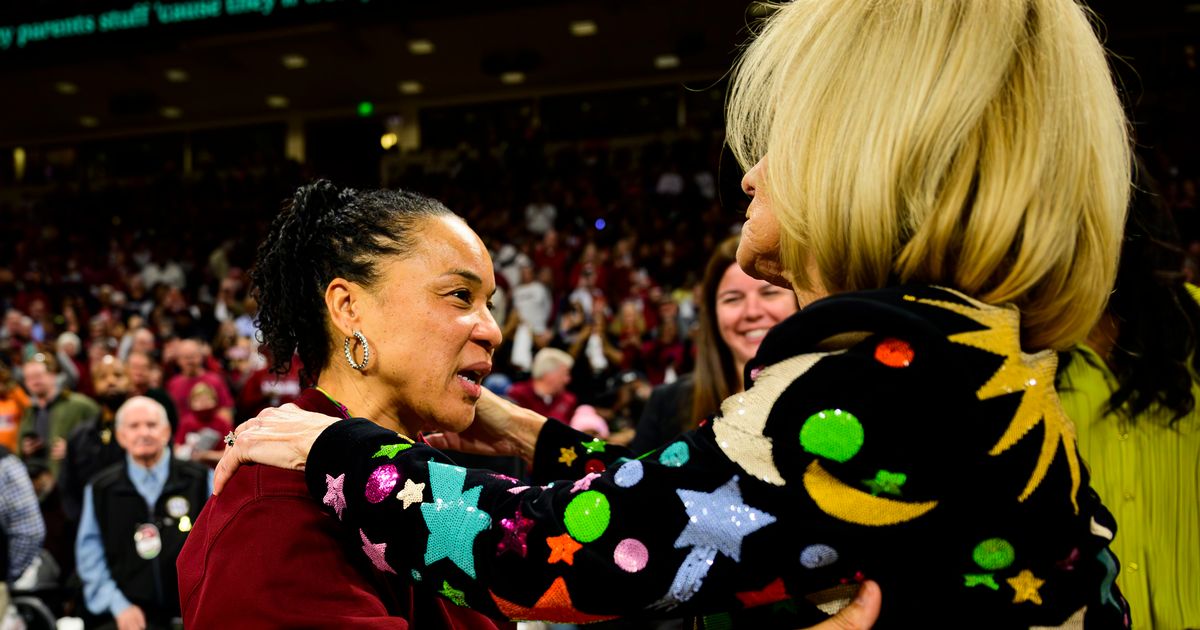
Kim Mulkey and Dawn Staley gain new in-game power as NCAA approves coach’s challenge for women’s basketball starting in the 2025-26 season
17:55 ET, 12 Jun 2025Updated 17:55 ET, 12 Jun 2025
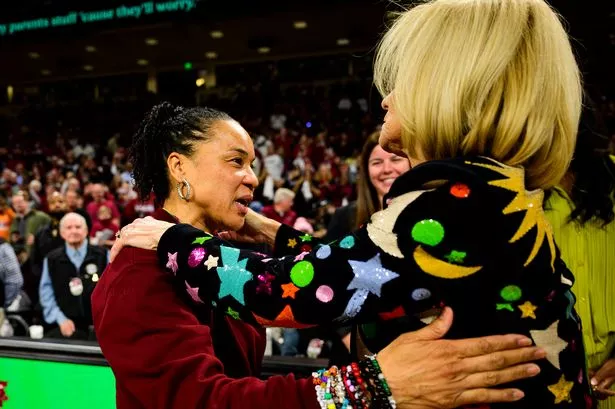 Dawn Staley, who is in her 17th season at South Carolina, is 5-2 all-time against Kim Mulkey(Image: Getty)
The NCAA’s recent decision to introduce a coach’s challenge system in women’s college basketball is set to dramatically shift the strategic landscape of the sport — and few stand to gain more than legendary coaches Kim Mulkey and Dawn Staley.
With the rule set to take effect in the 2025-26 season, coaches will now be able to challenge specific calls at any point in a game, giving them unprecedented influence over how contests are officiated.
The new rule allows head coaches to challenge four types of rulings: out-of-bounds violations, backcourt violations, whether a change in team possession occurred before a foul that would result in free throws, and whether a foul was charged to the correct player. It comes as the NCAA’s landmark settlement with power conferences paves the way for schools to directly pay student-athletes for the first time.
READ MORE: U.S. Open stars told to ‘man up’ as USGA slammed for Oakmont decisionREAD MORE: Tiger Woods suggestion on ‘horrible’ U.S. Open is music to Rory McIlroy’s ears
Crucially, coaches do not need to have a timeout remaining to issue a challenge. However, if the challenge is unsuccessful, the team will be penalized with a technical foul for taking an excessive timeout. This consequence adds a high-stakes element to every challenge and ensures that coaches must use this new power wisely.
Mulkey and Staley — two of the most prominent and successful coaches in the sport — the rule offers a new layer of control in high-pressure moments. Mulkey, known for her fiery demeanor and willingness to confront officials, could thrive with this rule. Her assertiveness and feel for momentum swings may lead her to challenge key plays that could shift the direction of a game.
Meanwhile, Staley’s composed and methodical style suggests she will use the rule sparingly, relying on precise judgment to preserve challenges for the most pivotal moments. Her attention to detail could make her one of the most effective users of the system.
Content cannot be displayed without consent
The change plays into the strengths of elite programs like LSU and South Carolina, who already benefit from top-tier talent and deep benches. The ability to correct officiating errors on crucial possessions or ensure that the correct players are penalized can be the difference in a tight SEC matchup or during March Madness.
With the stakes so high, being able to halt momentum with a successful challenge could give teams a new way to maintain control.
Beyond the coach’s challenge, several other rule changes were approved to enhance the flow and fairness of the women’s game. These include resetting the shot clock to 20 seconds when the offense is awarded the ball in the frontcourt after a dead ball, allowing untucked jerseys, and legalizing jump stops when both feet land simultaneously.
Defenders are also now allowed brief one-hand touches on offensive players, as long as the contact isn’t repetitive or disruptive.
Additionally, playing with six players or using excessive timeouts will now result in team technical fouls that count toward the foul total and give possession to the opposing team after free throws.