
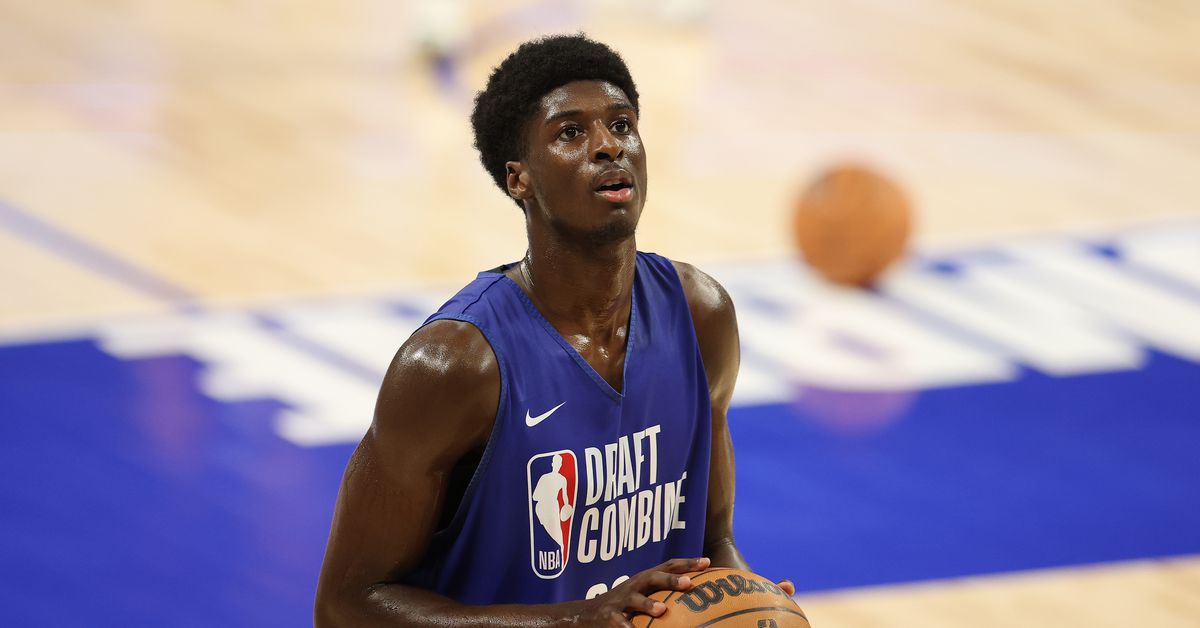
When Hubert Davis built the 2024-25 UNC basketball squad, a lot of eyes were on Ian Jackson to explode onto the scene and likely only be on the college court for one season. The thing is, there was another freshman who had a skill set that actually caught the eyes of scouts throughout the year, and that’s Drake Powell. For a while, he was seen as behind Jackson, but as Hubert Davis trusted him more and his minutes shot up, it looked more like he could actually be the better immediate prospect. Thus, when it came time to announce, Powell not only entered the draft but stayed in instead of transferring to another school. Clearly he felt secure in knowing he’ll go in the first round and get a guaranteed contract, so let’s take a look at Drake Powell’s Draft profile.
Introduction:
Powell is a North Carolina kid, born in Pittsboro and graduating from Northwood High School. Along with Jackson, he was named to the McDonald’s All-American Team, and word early on was that he was a strong defender for his age. He started the year coming off the bench, but beginning with the December loss to Alabama, he was inserted into the starting lineup. He spent those times starting at the four, which didn’t really suit him. Listed at 6’6”, he was undersized for a power forward, and while he could defend well and earned his minutes, he would go back to the bench for the next six games.
He ultimately was a victim of Carolina’s bad center options at first. Once Ven-Allen Lubin started taking over starting at the five, and Jae’lyn Withers was able to slide into the four, Powell found himself in his natural three position and thrived. By the end of the season, he was playing nearly the entire game in multiple instances, and it was a big disappointment to UNC fans when he decided to go pro.
Thanks to NBADraft.net, Yahoo, and Sports Illustrated for the information.
Strengths:
Athleticism: Perhaps the biggest thing that makes scouts excited about Powell is that, to go with his 6’6” frame, he has Jay Bilas’ favorite word: wingspan. At the Draft Combine he measured out at 7’0” in that metric, which gives him a ton of flexibility on the court and also explains a lot of his defensive capability. His 200-pound frame combined with the wingspan means he isn’t going to get bullied, and when you have someone with his level of athleticism you’re always going to make scouts excited. He showed it to Carolina fans with his minutes played by the end of the season, in that he not only earned the start at the three but that he was relied on to play heavy minutes against some of the best teams in the country. It had fans wondering why he hadn’t been playing in that spot earlier.
Catch and Shoot: Powell’s offense isn’t great in that he scores a ton—his season high of 18 occurred way back in November against Michigan State out in Maui. What he did show, however, was the ability to shoot well in catch-and-shoot situations. Yahoo noted that he shot 40.5% on catch-and-shoot threes in college, and did shoot about 38% overall which, if carried over into the pros, will get him some time. There’s a thought that if Carolina hadn’t been so loaded with ball-demanding guards that he may have been able to assert himself offensively more.
Team-friendly: Powell ultimately played because even as a freshman he could be trusted with actually playing defense on the floor, and to some extent it came at the sacrifice of his offensive game. Most players look for the reverse but Powell made a mark by trying to guard some of the best players that faced Carolina. That’s a mindset that teams love, even if it comes with some flaws that we’ll get to. Still, a more team-first player that wants to play defense and has to be coaxed into playing offense puts him ahead of a lot of younger players drafted onto teams.
Weaknesses
Offense: As noted, despite his ability to do well in catch and shoot situations, Powell was never really the big force for Carolina. He finished the season averaging a mere 7.4 points a game, and when the team could have used some of his shooting to get a few more wins he just would often instead defer. A team that drafts him is going to have to either be patient on getting that offense out, or just focus on using him for defensive situations and hope that the faster-moving and more three-point dominant style in the NBA will bring more offense out of him.
Assertiveness: It’s a tough balancing act for someone like Powell to earn minutes and do what you think will get you on the court while also trying to win over your teammates that want the ball and simultaneously make your own shot and get noticed for scoring points. Even before college, the book on Powell was that he would defer and disappear too much on the floor, and he didn’t do a lot at UNC to change that narrative. Playing defense is great in the NBA, but there are times a shot is there and you just have to take it.
Conclusion
With the transition going on at UNC, you would have thought that coming back to school with a thinned out back court and the ability to rise up the draft board would have been appealing to Powell, and certainly his decision to go pro was a huge loss for Hubert Davis. That also showed, though, that he and his agents are getting consistent feedback that he will not need to worry about dropping out of the first round. Even with NIL money and the House Settlement, there’s just no replacing that NBA contract and getting the clock going to the next deals. He’s likely going to be a later first round pick, meaning there’s a really good chance he’s going to go to a playoff team and that sort of structure can only be good for his overall development. It’s just a question of whether the team he goes to will be able to have the patience to give him time to learn. He’s going to have to score—not at ridiculous levels, mind you—but be more assertive on offense than he was in Chapel Hill to get extended minutes on an NBA court. There’s no doubt that his size, frame, athleticism, and commitment to playing defense—even if it needs work—are great starting points for any team that drafts him.