
Yes, Josh Kroenke uttered unfathomable words.
No, the Nuggets are not trading Nikola Jokic.
The Denver Gazette on Tuesday asked Kroenke, the Nuggets’ team president, and vice president of basketball operations Ben Tenzer how their views on the second apron of the salary cap have evolved over the last two seasons.
The second apron is a new feature in the most recent collective bargaining agreement that was passed in 2023.
Tenzer started with an answer befitting a new hire who didn’t want to say too much.
“It’s a fascinating one, because when there’s this new CBA, there’s unintended consequences that come with that. So, we’re studying everything right now,” Tenzer said. “The second apron is challenging because it’s very restrictive if you go over that. So, yeah, we’re looking at everything, and we’re very aware of those rules. Ownership has always provided us the resources we need, and we feel like we’ll always have that.”
The five best and worst draft picks in Denver Nuggets’ modern NBA Draft history
Then, Kroenke accepted an invitation to chime in and raised eyebrows in the process. It started with a mention of Kentavious Caldwell-Pope, whose potential return likely would’ve landed the Nuggets in the second apron last season.
“We really did every exercise looking through retaining him and what that meant under the new rules. … For us as an organization, going into that second apron, is not necessarily something that we’re scared of,” Kroenke said.
How Josh Kroenke, Ben Tenzer, Jon Wallace plan to make Denver Nuggets’ new front office structure work
Kroenke veered in a completely different direction moments later and said the unthinkable — even after Dallas reset the unthinkable standard by trading Luka Doncic to the Lakers.
Your daily report on everything sports in Colorado – covering the Denver Broncos, Denver Nuggets, Colorado Avalanche, and columns from Woody Paige and Paul Klee.
Success! Thank you for subscribing to our newsletter.
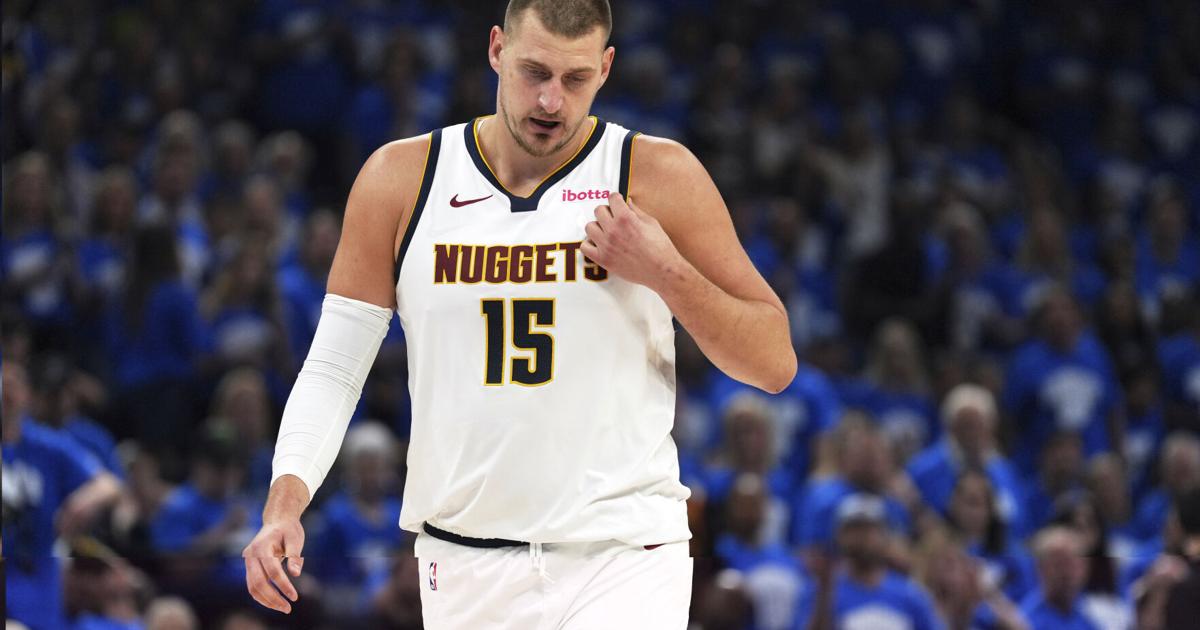
“There are rules around (the second apron) that we needed to be very careful of with our injury history,” Kroenke said. “The wrong person gets injured and very quickly we’re in a scenario that I never want to have to contemplate and that’s trade No. 15.”
His thought was hypothetical. If the Nuggets entered the second apron and lost a key player to injury, the options moving forward would be significantly limited. Second-apron teams are not allowed to use the taxpayer mid-level exception, a key asset the Nuggets used on Dario Saric last year and one of the team’s few ways outside of veteran-minimum contracts to add to the rotation this offseason.
“We have to be really conscious of margins. We got to be very deliberate, and obviously the time is now,” new vice president of player personnel Jon Wallace said Tuesday. “Joker is obviously a generational talent and how he helps out and how he elevates the level play of so many people around him, we’ve got to make sure that we find some more shooting, obviously, address some of the defensive concerns.
“But I think we have both young individuals here that can step up and do that as we continue to develop them, as well as, you know, we’ll look outside and see what makes sense.”
Mark Kiszla: With championship window closing on Nikola Jokic, Nuggets promote two minor leaguers to run front office
Teams are capped at the second apron if they use either the taxpayer midlevel exception, as Denver did with Saric, sends out cash in a trade or moves a player via sign and trade.
“It’s important to hit on the margins more than ever,” Tenzer said.
“You’re hard capped in certain situations, so you should have to be aware of what you spend and how that affects you.”
Teams that operate in the second apron are also limited in trades and could have their first-round pick moved to the back of the round if they stay in the second apron for three of five seasons. The Celtics were a second-apron team last season and traded away Jrue Holiday and Kristaps Porzingis in the last couple of days, presumably to avoid that status for next season.
“We’re very conscious of that pushing forward, and providing the resources that we can when the moment arrives,” Kroenke said.
“That second apron, is it a hard cap? I’m not 100% sure, but it’s something that teams are obviously very aware of going forward.”