

Swampcast discusses how Florida football recruiting 2026 class is shaping up so far
The Sun’s Kevin Brockway and Noah Ram talk about Florida football recruiting with Nick Wilson of the USA Today Gannett Florida Network.
The year was 1985. Patrick Ewing patrolled the paint at Georgetown. Chris Mullin was sinking deep jumpers at St. John’s, a year before the NCAA adopted the three-point line.
Three of four teams from the Big East reached the Final Four at Kentucky’s Rupp Arena, with Villanova pulling off an improbable upset of Georgetown by shooting 78.6% from the floor.
Could those salad days for the Big East return? Possibly, depending on how schools prioritize future revenue share following the House vs. NCAA Settlement.
A revenue share split of 75% for football players, 15% to men’s basketball, 5% to women’s basketball and 5% to other sports has been recommended for power four conference schools to split the $20.5 million available to all athletes beginning July 1.
The Big East, however, gave up on its aspirations of becoming a big-time football conference in 2013, returning to its basketball roots. Connecticut still operates an independent FBS football program, while Butler, Georgetown and Villanova play FCS football. But none of the four schools will likely pay its football players as much as they will in basketball, where the hardwood is now king.
For a power four basketball conference such as the SEC, which had a record 14 teams in the NCAA Tournament in 2025 and four reach the Elite Eight, revenue share presents a tricky dilemma. Football reigns supreme at every school but Kentucky. Will SEC coaches have enough in their coffers to fend off the Big East schools for Blue Chip recruits?
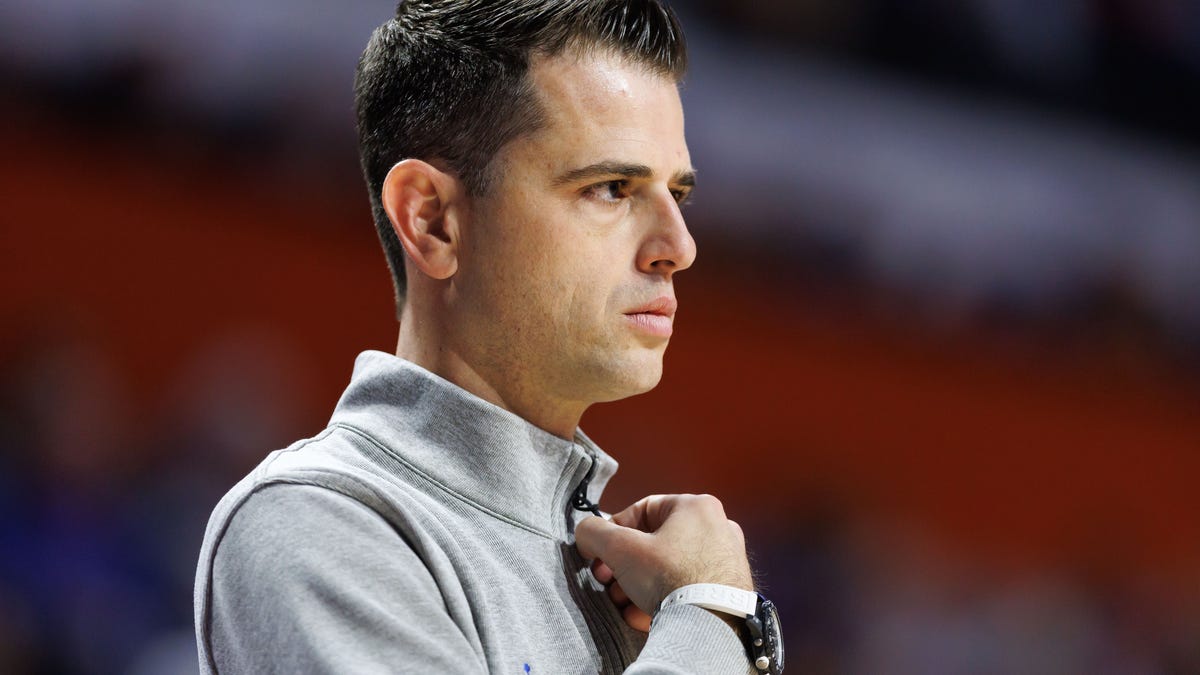
Florida basketball coach Todd Golden, who guided the Florida Gators to their third national title in school history and first basketball national title for the SEC since 2012, said it’s a fair concern.
“Rev share obviously, deservingly so a majority of it goes to football, and that’s something that they don’t have to deal with,” Golden said. “And so, there’s a chance that they have more resources than we do in the rev share model, and that’s something that we’ll have to adjust for.
“But I think we’ve got to let it see how it operates for a little bit. I know there’s already a Title IX lawsuit. I assume there’s going to be other lawsuits that come up in a short period of time. Holistically, I think the rev share model makes sense. I think our guys definitely deserve a piece of the pie. I think the intent behind the House Settlement and the rules are good, and I’m hopeful that they’re able to be executed.”
How Florida basketball, SEC can adjust to revenue share
There’s still no limit to how many Name, Image and Likeness deals schools can offer to student-athletes, though the market value of those will undergo more scrutiny. Per terms of the settlement, all NIL deals of more than $600 will go through a third-party clearinghouse, NIL Go, to review their validity. The clearinghouse system, run by the company Deloitte, is an attempt to crack down on direct payments to athletes from NIL Collectives.
Whether NIL Go will stand up to potential judicial challenges remains to be seen. Some are more skeptical than others.
“I’m not a lawyer, but I have read from multiple attorneys, when you start taking things away, you wind up in court,” said Sporting News national college basketball analyst Mike DeCourcy. “And that’s why I believe this settlement; it will solve a lot of problems that already existed in terms of past athletes, who wanted their share of what came after them. But I don’t see how, at the numbers they are talking, it will solve future problems.”
There’s also questions as to whether schools in the Big East, without big-time football, will have enough resources to pay all athletes up to the full $20.5 million. But some high-level college basketball coaches are already reading the tea leaves. Kevin Willard left Maryland, a Big Ten school, for Villanova after leading the Terrapins to the Sweet 16 due to the potential promise of more resources at his disposal. Richard Pitino left New Mexico for another Big East school, Xavier, despite the prospect of having to play his Hall of Fame father, Rick Pitino, at St. John’s on an annual basis.
Florida already secured NIL deals with impact transfers Boogie Fland and Xaivian Lee before the settlement. With forwards Alex Condon and Thomas Haugh returning for UF as well, the Gators appear poised for another national title run in 2025-26. Beyond that remains more uncharted waters, for Florida and the rest of college basketball.
Kevin Brockway is The Gainesville Sun’s Florida beat writer. Contact him at kbrockway@gannett.com. Follow him on X @KevinBrockwayG1. Read his coverage of the Gators’ national championship basketball season in “CHOMP-IONS!” — a hardcover coffee-table collector’s book from The Sun. Details at Florida.ChampsBook.com