
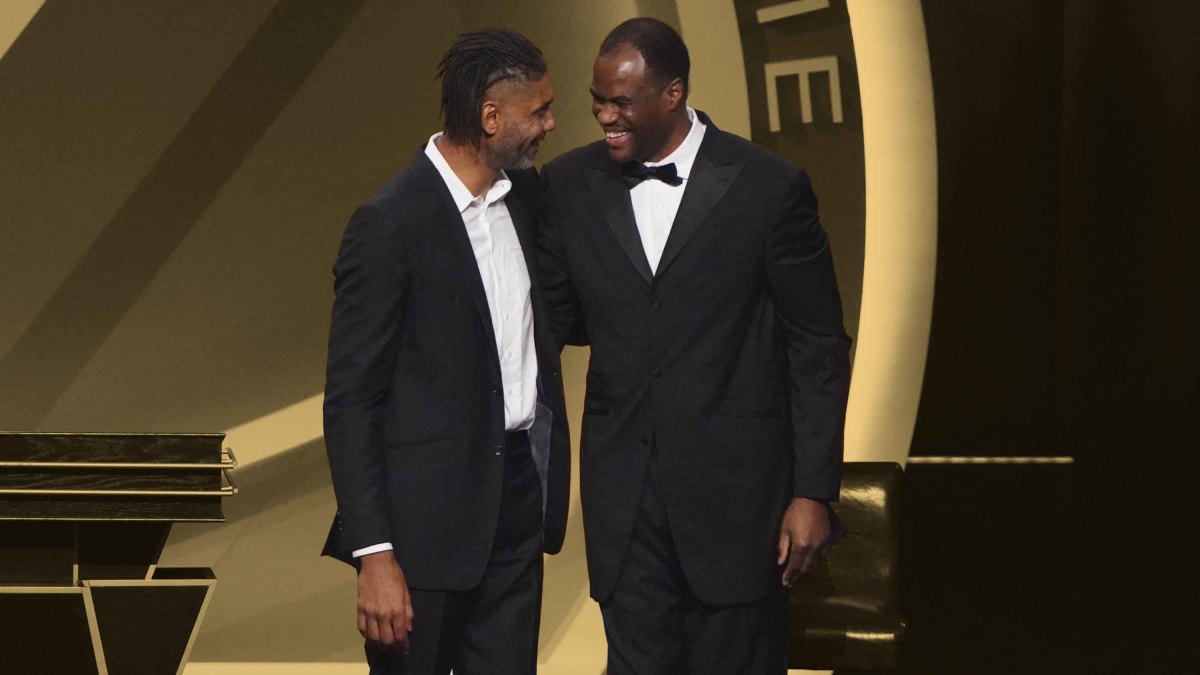
“Did I struggle with it at times? Yes” – David Robinson admitted seeing Tim Duncan become the face of the Spurs was initially a tough pill to swallow originally appeared on Basketball Network.
Up until the late 1990s, one man alone embodied the San Antonio Spurs. That was David Robinson.
Advertisement
He was the franchise’s anchor and their ticket out of obscurity and into relevance. When he arrived in 1989, the Spurs were coming off a disastrous 21-win season. The city loved their team, but they had grown weary of losing seasons and first-round exits.
Robinson’s arrival changed everything.
He was athletic, articulate, disciplined and built like a champion. He turned San Antonio into a contender. However, with the emergence of Tim Duncan later on, the franchise had a new face.
Advertisement
And Robinson had to surrender any sort of ego for the team.
Handing over
Duncan wasn’t flashy and didn’t talk much. But he possessed a rare kind of steadiness that settled the Spurs instantly.
Within weeks of his rookie year, it became clear San Antonio had landed the cornerstone of a new dynasty. For Robinson, who had carried the weight of the franchise for nearly a decade, this shift wasn’t without its growing pains.
“Did I struggle with it at times? Yes,” Robinson said. “And even now I still do and I know physically I don’t do the same things I did at 24. But still, I even struggle with it mentally at times and the Lord just teaches us that we have a place.”
Advertisement
That honesty to make way spoke volumes. Few former MVPs could confess to the emotional tug-of-war that comes with fading from the spotlight. Robinson realized that his era was ending and handed over leadership.
Under Robinson’s leadership, the Spurs had made the playoffs year after year. He won the league MVP in 1995, led the NBA in scoring in 1994 and had them consistently hovering around 55–60 wins a season. However, a championship remained elusive. The Spurs were excellent but not elite. They ran into dynasties like the Houston Rockets and the Utah Jazz, teams that exploited their lack of depth and sometimes even their emotional composure.
Advertisement
Robinson shouldered the burden, but there was always a lingering sense that something was missing. Then, in 1997, fortune turned in the Spurs’ favor, painfully at first, when Robinson missed most of the season due to injury, but miraculously in the end, when they landed the No. 1 pick and drafted Duncan.
Duncan era
Duncan and Robinson were a dominant duo. The 1998–99 Spurs, led by the newly coined “Twin Towers,” tore through the lockout-shortened season and bulldozed their way to the championship. It was the first title in franchise history. Duncan won Finals MVP, but Robinson’s impact, both on the court and in the locker room, couldn’t be overstated. The veteran didn’t just make room for the rising star, he built the platform he stood on.
Advertisement
Before Duncan, the Spurs had identity. After him, they had a legacy.
And Robinson, even with the internal adjustments he had to make, was still the quiet architect behind it all.
There’s a quiet grace in knowing when to step back. For Robinson, the second half of his career was defined by that. He wasn’t chasing scoring titles or looking for individual accolades anymore. He was helping mold a younger, more balanced Spurs team into something sustainable.
Advertisement
“Especially after winning the championship, I understood it more,” Robinson said. “It was such a rich thing for me, even though I wasn’t that headline guy, the MVP guy. It was such a joy to fit the pieces of the puzzle.”
He had already proven he could be the centerpiece. Now he was learning how to be the connective tissue, the leader whose humility became a lesson for every player who came after him. As Duncan took the torch and eventually guided the Spurs to five titles, Robinson’s fingerprints remained all over the foundation.
In 2003, Robinson retired on the highest of notes, riding off with another championship next to Duncan. By then, the transition was complete. The face of the franchise had changed, but its soul remained the same, rooted in discipline, humility and selflessness.
Advertisement
Robinson had once been the hero. He became the mentor. And in doing so, he ensured the dynasty would thrive long after he was gone.
This story was originally reported by Basketball Network on Jul 22, 2025, where it first appeared.