
The Chicago Bulls and Detroit Pistons rivalry is on of the most talked about and storied in NBA history. Over the decades, perhaps only the Los Angeles Lakers and Boston Celtics rivalry of the 1980s comes close.
However, the lack of coverage and a new generation of NBA fans who weren’t old enough to appreciate it mean it often falls short in current popularity. The heart of the rivalry, and an aspect that is always discussed, is the physicality the Pistons played with.
Advertisement
The way in which they approached the game, bullied Michael Jordan, and used their brute force to out-muscle the Bulls in the early 80s has transformed into NBA folklore. Even to this day, every avid fan is aware of “The Jordan Rules,” which added to the rivalry and the mystique of MJ’s career.
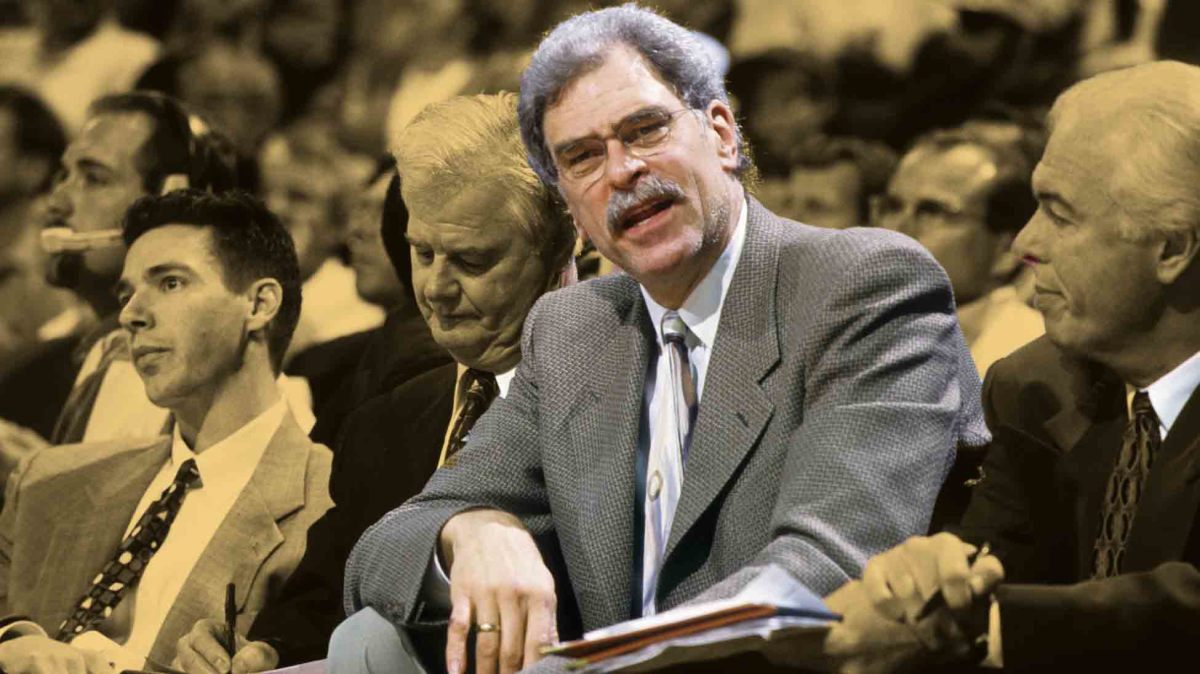
It may be hard for the new generation of NBA fans to fully grasp just how difficult it was to play the “Bad Boy” Pistons in the late 1980s and early 1990s, but luckily for us, Phil Jackson can break it down.
Phil’s experience
Coaching against the Pistons in the 1980s was every coach’s worst nightmare. They were physical and intimidating and often crossed the line of what constituted play within the rules of the game. On top of that, they were riddled with talent. From star point guard Isiah Thomas to defensive stopper Joe Dumars, the roster possessed all the ingredients of an elite team.
Advertisement
Figuring out the puzzle was no easy task. On one hand, you had to match their intensity and physical demands; on the other, you had to ensure the main priority still revolved around putting the ball in the basket more than they did.
It was as much of an exercise in mental gymnastics as it was in physical punishment, and no team could crack the code in 1989 and 1990 as the Pistons won back-to-back championships.
Eventually, the young Bulls got over the hump in their third attempt in 1991, but at this point, it was clear the Pistons were past their prime in their attempts at three-peating.
Even still, Jackson’s squad made a monumental effort, and when asked why it was such a difficult obstacle to conquer, he unsurprisingly pointed to Detroit’s overwhelming collective intimidation.
Advertisement
“Every time we got into the playoffs with the Detroit Pistons, it was about their intimidation. They would intimidate the team and retaliate,” Jackson said. “Retaliation never worked. Retaliation worked if someone got thrown out if someone got into foul trouble, Scottie Pippen got a concussion, and all these things.”
“They had the muscle, they had the beef, and they were applying it. They would bring the game to a certain point where it became so physical that you almost had to react. So we developed this hate; maybe even fear was a part of it. Michael was never fearful, but he was getting knocked out by 2 or 3 guys, and that was just part of their defense to knock him down,” he added.
Shaping up today
Whenever these comments arise from former players and coaches who were in the middle of these great rivalries, it’s always an interesting exercise to explore how these all-time teams would stack up in today’s NBA.
Advertisement
The evolution of the game from natural means and league office rule changes suggests that teams that were successful in previous generations wouldn’t necessarily be successful in the modern Association.
This seems especially true for the “Bad Boy” Pistons, who relied heavily on their physical advantages as their main difference maker. Their most powerful weapon would be nullified, and it would, in turn, require them to lean more on talent if they were to compete in today’s NBA.
Ultimately, it wouldn’t be enough when weighing it up, as they would be up against a league full of advanced baseline talent that could match them in this area toe-to-toe.
Additionally, their overwhelming body-on-body assertiveness would also be significantly reduced due to the pace and space nature of the league, which has steadily moved away from the need to bang down low possession after possession.
Advertisement
This leaves a less physical, albeit talented team needing to face the very best athletes and skilled players in the league’s history. Unlike other all-time teams like the 96′ Bulls or the three-peat Lakers, the Pistons’ style doesn’t seem to translate as well through the generations.
This doesn’t take away what they achieved in their era, and by all accounts, at least in Jackson’s book, they were one of the tallest tasks he had to overcome in his storied Hall of Fame career.