
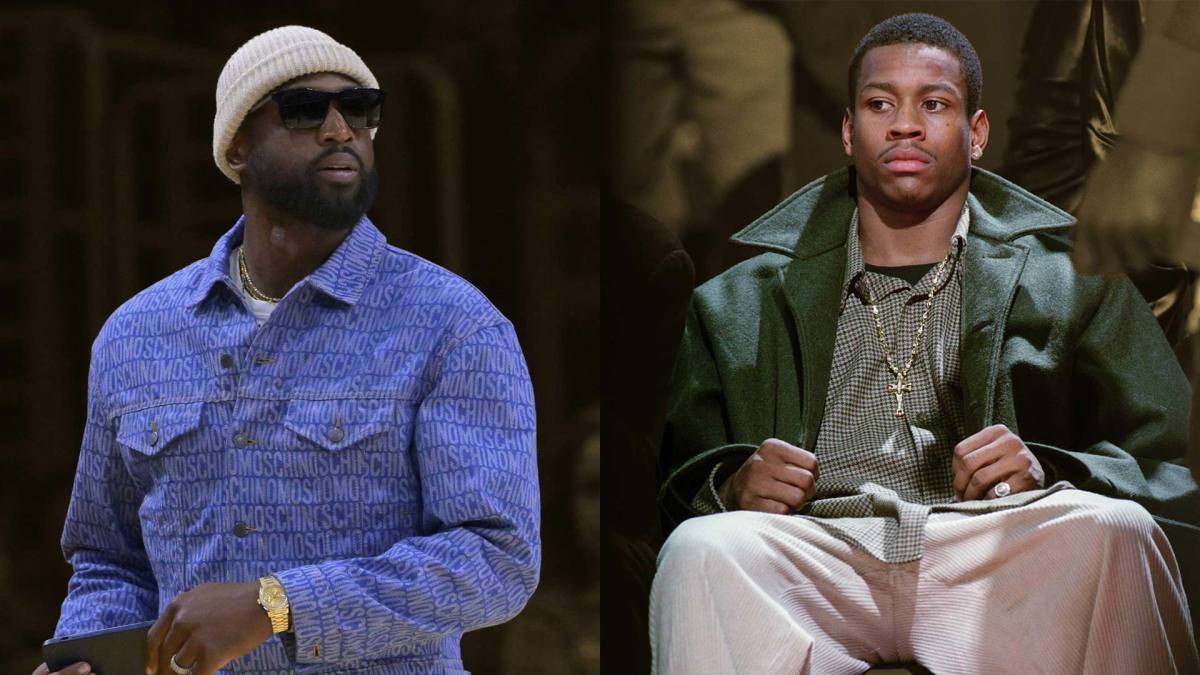
Dwyane Wade compared the Heatles backlash to what Allen Iverson endured for breaking norms: “People don’t like change” originally appeared on Basketball Network.
In August 2011, Dwyane Wade weighed in on one of the NBA’s hottest debates: the rise of superteams.
Advertisement
Wade was the perfect man to speak on it — having joined forces the previous summer with fellow All-Stars LeBron James and Chris Bosh in Miami — and he offered some interesting points.
For one, he explained that while the trend was seen as controversial, his perspective was different: sometimes being the first to do something isn’t seen as cool, but once everyone follows, it becomes cool. With that in mind, Wade pointed to Allen Iverson, who himself broke many molds on his way to reshaping the culture around basketball.
The Heatles
In the early 2010s, the Miami Heat set the standard for the modern superteam. After all, this wasn’t just any trio coming together — it was three future Hall of Famers who enjoyed elevated status in the game. Especially two of them: Wade, the 2007 Finals MVP, and James, who came over from the Cleveland Cavaliers as the league’s best player.
Advertisement
It would be redundant to explain why the two teaming up with Bosh — who had long been a franchise cornerstone for the Toronto Raptors — was met with criticism. There were many reasons why fans were upset, and Wade pointed out one himself.
Referencing the unprecedented talent coming together, he said, “People don’t like change,” adding that they always resist something “new.”
“We changed the way things were done. People don’t like that,” he said, per ESPN. “It takes time to get used to it. Whenever you’re the first to do something, it’s not always the best thing.”
Advertisement
Breaking NBA norms
While Wade understood the backlash that comes with breaking the mold, he believed people eventually come to realize it actually “wasn’t that bad.” He pointed to 2001 MVP Iverson as a prime example of change facing resistance before gaining acceptance.
Wade explained that when Iverson entered the league as a top pick in 1996, his style and attitude sparked confusion and rejection. Baggy shorts, oversized jerseys, headbands, wristbands, and braids — all part of his signature look with the Philadelphia 76ers — were far from “cool.”
Advertisement
“It was cool on the outside, but in the NBA world it wasn’t,” Wade said, before noting how that attitude eventually shifted.
“He (Iverson) was one of the first ones, as an athlete, to do it. And you’ve seen that he got a lot of backlash, but now it’s a cool thing to do. Anybody can get braids now, anybody can get tattoos now, and it’s not as bad. When you’re the first one to do something, it’s always the worst, but eventually it comes around,” the Heat legend said.
The Flash’s reflection shows real thought and deserves praise, yet the comparison only goes so far.
Advertisement
After all, the authentic Iverson — a vocal opponent of superteams — did his own thing without disrupting the league’s balance or the efforts of other players.
By contrast, when Wade and his star teammates joined forces, it immediately reshaped the league’s landscape and clearly impacted others. Critics would certainly adhere to that view, arguing the formation of The Heatles came at the expense of other teams. They also claim it undermined competitiveness and the traditional grind required to achieve success, favoring a shortcut instead.
This story was originally reported by Basketball Network on Aug 16, 2025, where it first appeared.