
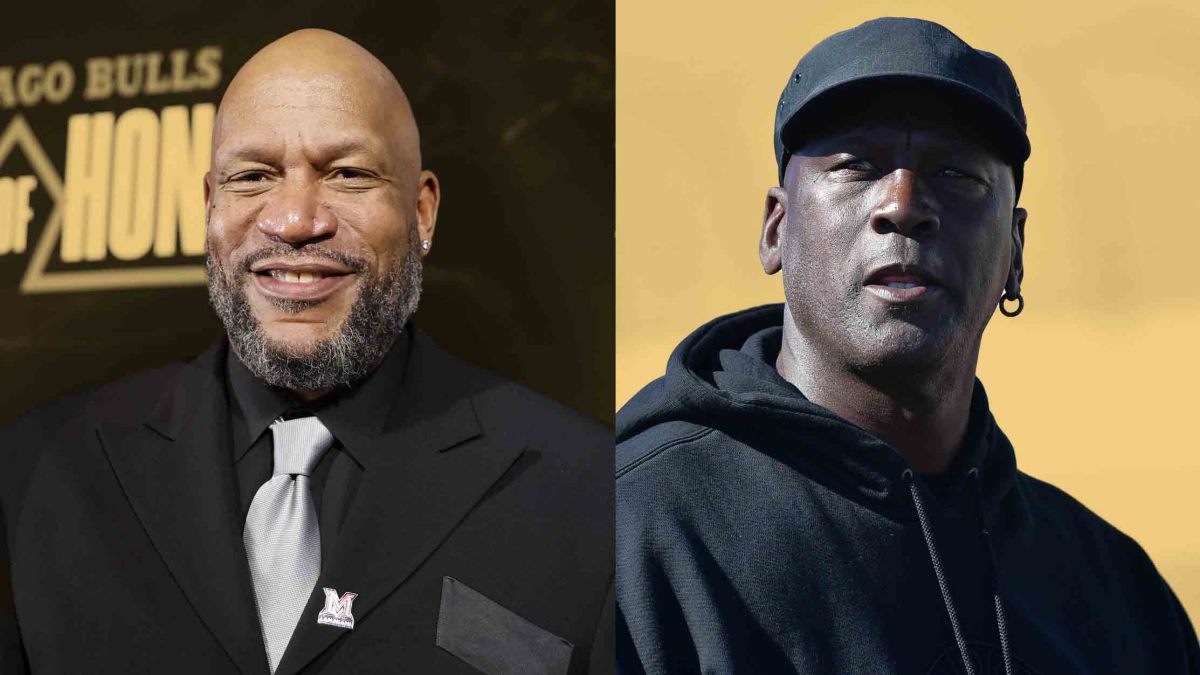
When it comes to debates about the greatest shooting guard of the 1980s and 90s, there’s only one definitive answer: Michael Jordan. No argument could hold a candle to his dominance. While Clyde Drexler, Reggie Miller and Joe Dumars could make solid cases, Jordan was just in a league of his own.
Another player who could hold his own against Jordan was Ron Harper. While many remember Harp as the gimpy but savvy defensive-oriented guard who helped the Chicago Bulls and Los Angeles Lakers win title after title, he was an explosive scorer during his first eight seasons in the NBA.
Advertisement
Picked eighth in the 1986 NBA Draft, he was a key cog in those Cleveland Cavaliers teams that battled Jordan’s Bulls for Eastern Conference supremacy in the late 80s. And even though knee injuries slowed him down during his time with the Los Angeles Clippers, he still averaged 19.3 points for that team, which he led to two postseason appearances.
More than the numbers was the respect he gained from his peers, including MJ himself.
The ultimate green light
During his four seasons with the Cavaliers, Harper averaged 19.4 points per game, peaking at a remarkable 22.9 points per contest in his standout rookie season. Even more impressively, he achieved this while competing alongside highly skilled teammates. During his final season in Cleveland, he played with All-Stars Mark Price, Larry Nance and Brad Daugherty, as well as Sixth Man of the Year contender Rod Williams.
Advertisement
While stopping short of claiming he was just as good as Jordan, Harper said the latter enjoyed being the first, and, at times, only offensive option on the Bulls.
“When I played against MJ, he always gave me my respect and I always gave him his. But he had the ultimate green light,” Ron stated. “I always had guys on my teams who were great, too. I had a Brad Daugherty, a Mark Price. I played with Hot Rod. So it’s not like I could shoot as much as him.”
Harper clarified that he didn’t think he could keep up with Jordan’s scoring. However, he felt confident in his ability to stay within striking distance every time they matched up.
Advertisement
“I’m not saying if I did shoot as much as him what would have happened,” Harp conveyed. “I always told my teammates, MJ gonna score 32-35, and I’ll be within 10 points. So I need one of you guys to outscore his teammates.”
The two faced off 33 times in the NBA, with Jordan winning 18 games. He also dominated the scoring column, averaging 35.1 points to Harper’s 18.9.
Harper had to make adjustments
As fate would have it, Harper and Jordan became teammates late in the 1994-95 season when the latter returned from a brief hiatus. With MJ set to take most of the shots and Scottie Pippen also coming into his own, Harp knew he had to do something else to make himself valuable to the Bulls.
Advertisement
He realized he had to lock in on the defensive end and take on the assignment of defending the opposing team’s best perimeter players to keep Jordan and Pip fresh for the long run.
“I felt that I could be a very good defensive ballplayer,” Harp explained. “You’ve got to understand, I’m playing with MJ. This guy’s God to the game of basketball. He’s done everything on the basketball court, and once he came back last season, everybody was saying, ‘Well, what is Ron Harper going to do now?’ I had to change some. So I changed my role.”
While Harper never regained his status as a big-time scorer, he became a steady and reliable defender who helped the Bulls win three straight Larry O’Brien trophies in the 1990s.
Advertisement
After the Bulls’ dynasty crumbled, he went with Phil Jackson to the Los Angeles Lakers where he won two more championships.
This story was originally reported by Basketball Network on Aug 29, 2025, where it first appeared in the Old School section. Add Basketball Network as a Preferred Source by clicking here.