
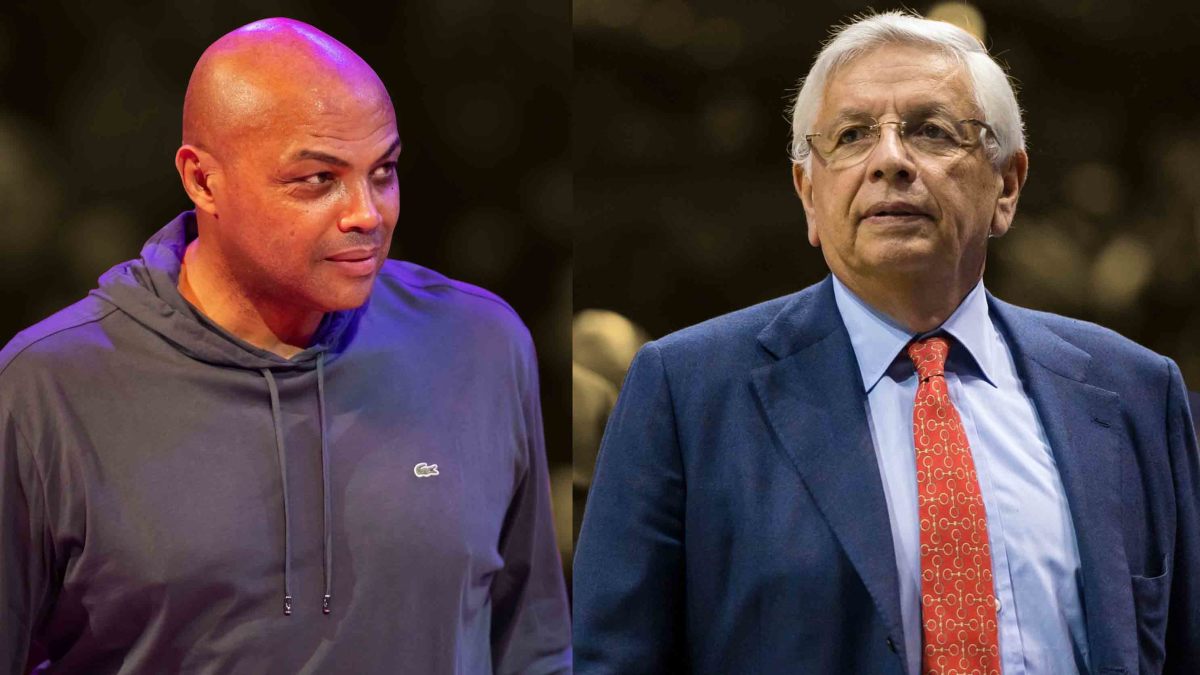
Charles Barkley‘s recent swipe at the NBA’s new broadcasting deal, which he called a “huge dilemma,” was more than just a critique. It was a reminder that the Hall of Fame forward has never been shy about voicing his opinion on the league he played in from 1984 to 2000.
For anyone missing the pattern, September 1999 provides the perfect example. The reason? Back then, Barkley openly challenged the association’s leadership, primarily then-commissioner David Stern, over how they handled the situation once the NBA lockout was resolved.
Advertisement
Inside the NBA lockout
At the time, the league, now generating massive revenue across the board, faced the exact opposite fate. Many teams were losing money, partly because they couldn’t keep up with rapidly rising player salaries.
Kevin Garnett’s contract extension in October 1997 tells the story. After lengthy negotiations, he signed an unprecedented six-year, $126 million deal with the Minnesota Timberwolves. For a player drafted just two seasons earlier, straight out of high school, earning that kind of money was eye-popping, to say the least.
Advertisement
Many franchise owners wondered how things would develop from there. Meanwhile, the NBA administration was also under pressure to find a solution. Both sides eventually pushed for a new collective bargaining agreement (CBA) that included a hard salary cap. However, talks with the players’ union stalled all summer of 1998.
In late June, a lockout was imposed. Players, staff and all team operations were frozen. Then the preseason was canceled, and the start of the regular season was delayed. When the first two weeks of games were officially scrapped, the league faced a ticking clock.
50 games, endless frustration
When no agreement could be reached, the NBA experienced its first real lockout. The starting months of the planned regular season were wiped out until the league officially ended the work stoppage in early 1999, reducing what would have otherwise been a full 82-game season.
Advertisement
On paper, everything was finally set: a deal was reached, and NBA basketball returned. It should have been a welcome sight for everyone involved. In reality, however, the shortened 50-game season left many, including Barkley, frustrated.
Some players weren’t in shape, he said, per ESPN, while others were tired from the brutal schedule, sometimes playing three games in three nights.
Naturally, the product suffered. Instead of the beautiful game, something very different appeared on the hardwood, said the 1993 Most Valuable Player.
Advertisement
“It was terrible basketball,” noted Barkley, quickly pointing fingers.
“I like David Stern,” he added, “but that was just a bad decision he made.”
However, the then-Houston Rocket didn’t just criticize what could be seen as poor crisis management by Stern; he also offered a thoughtful perspective in hindsight.
Barkley said that teams should have stayed within their own conferences, playing three games a week against familiar opponents. That, he argued, would have created a mini-turnover playoff scenario where every game “would have been more important.”
Advertisement
While the NBA, now run by Adam Silver, doesn’t appear headed toward another lockout anytime soon, if it ever does, Barkley’s insights shouldn’t be overlooked. Few figures speak as honestly and thoughtfully as the former 11-time All-Star, and it’s safe to say that when asked, the legendary forward certainly won’t shy away from sharing his opinion.
This story was originally reported by Basketball Network on Sep 6, 2025, where it first appeared in the Old School section. Add Basketball Network as a Preferred Source by clicking here.